
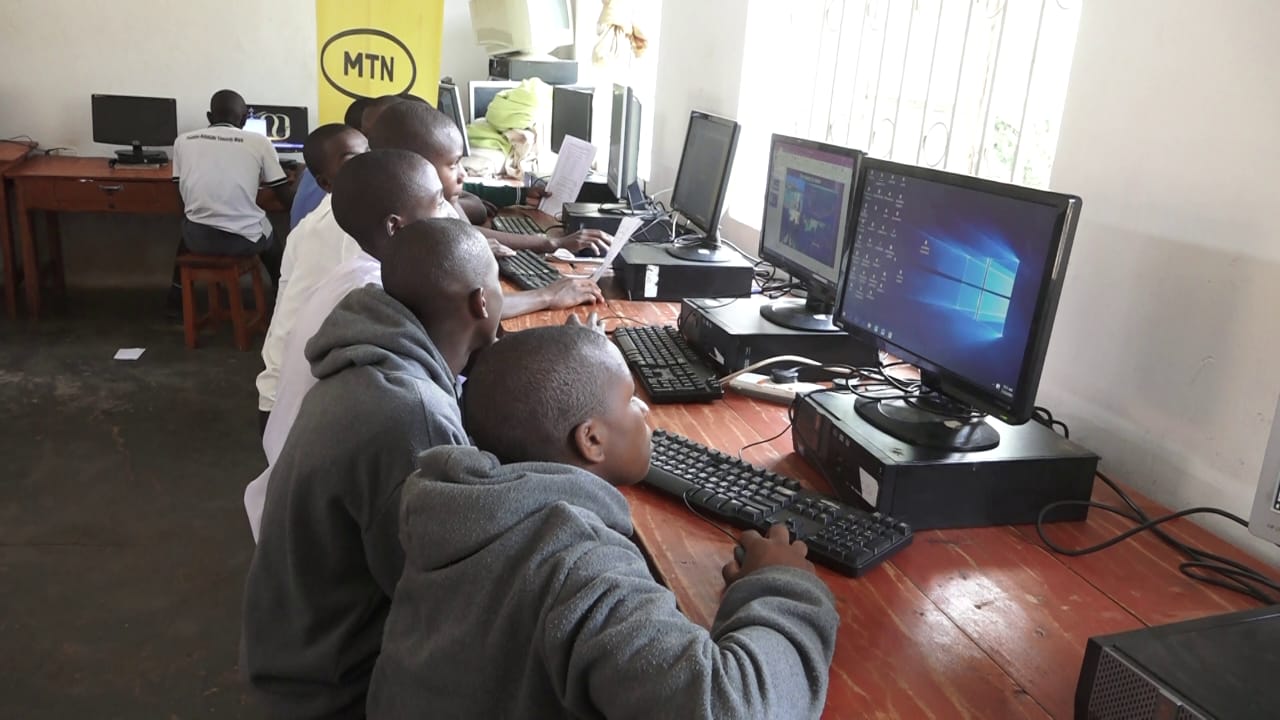
MTN Uganda has extended its digital education drive with the commissioning of a fully equipped ICT lab at St. John’s Secondary School Nyabwina in Sheema District, under the MTN Foundation’s Digital Access Project.
The facility, handed over this week, includes 10 modern computers, a one-year free internet subscription, and a backup power solution—marking a significant step in the telecom’s nationwide effort to reduce the rural-urban digital divide.
“This is more than the provision of computers. It is a gateway to accessing digital opportunities,” said Fazil Damulira, MTN Uganda’s Regional Business Manager for the South West, during the handover ceremony.
“At MTN, we believe digital access is not a privilege—it is a right. Every student, no matter their background, should have the tools to thrive in a modern, connected world.”
The new facility is expected to benefit over 1,000 students at St. John’s, providing access to digital tools for coding, academic research, innovation, and skill-building.
Part of a Shs1 billion initiative supporting 11 schools—including five that cater to learners with disabilities—the donation reflects MTN’s broader mission of inclusive digital empowerment.
Uganda’s 2024 Census revealed that just 4% of households own a computer, underscoring the critical need for such interventions in schools.
Beyond education, the investment responds to wider socio-economic challenges. Youth unemployment in Uganda stands at 16.3%, in a country where more than 70% of the population is under 30.
Equipping students with ICT skills is increasingly seen as essential preparation for future jobs in a rapidly digitizing economy.
Head teacher Constantine Byabakama welcomed the donation, calling it transformative.
“This ICT lab donated by MTN isn’t just for students—it’s open to the whole community,” he said.
“We’re hopeful this facility will boost research and help our students gain essential digital skills.”
Evelyn Kenyangi, the Sheema District Education Officer, praised MTN’s support for the government’s push to strengthen ICT in education.
“This is a timely and strategic investment. The future belongs to the digitally literate. By equipping our schools with ICT infrastructure, we are laying the foundation for inclusive national development,” she said, urging students to use the lab responsibly.
St. John’s joins a growing list of MTN-supported institutions under the Digital Access Project, including Iganga SS, Ngetta Girls Primary School, St Francis School for the Blind, and several schools in Kabale, Gulu, and Iganga.
The initiative aligns with MTN Group’s “Ambition 2025” strategy to lead digital solutions for Africa’s progress and supports Uganda’s Vision 2040 and the National Digital Transformation Roadmap, both of which prioritize technology as a driver for inclusive economic growth.
“This lab is a symbol of our long-term commitment to building a Uganda where no student is left behind,” Damulira added.
“It’s not just about equipment—it’s about empowerment, and giving young people the tools to lead, innovate, and shape the future.”
To date, MTN Uganda has established 63 ICT labs across the country, including nine in technical and vocational institutions.
The company says it will continue to scale the Digital Access Project to reach more underserved communities.
