
Government expects domestic revenue collections to increase to Shs45.6 trillion in the 2026/27 financial year, up from Shs35.7 trillion collected in 2025/26, as Uganda continues efforts to finance a larger share of its budget from locally generated resources.
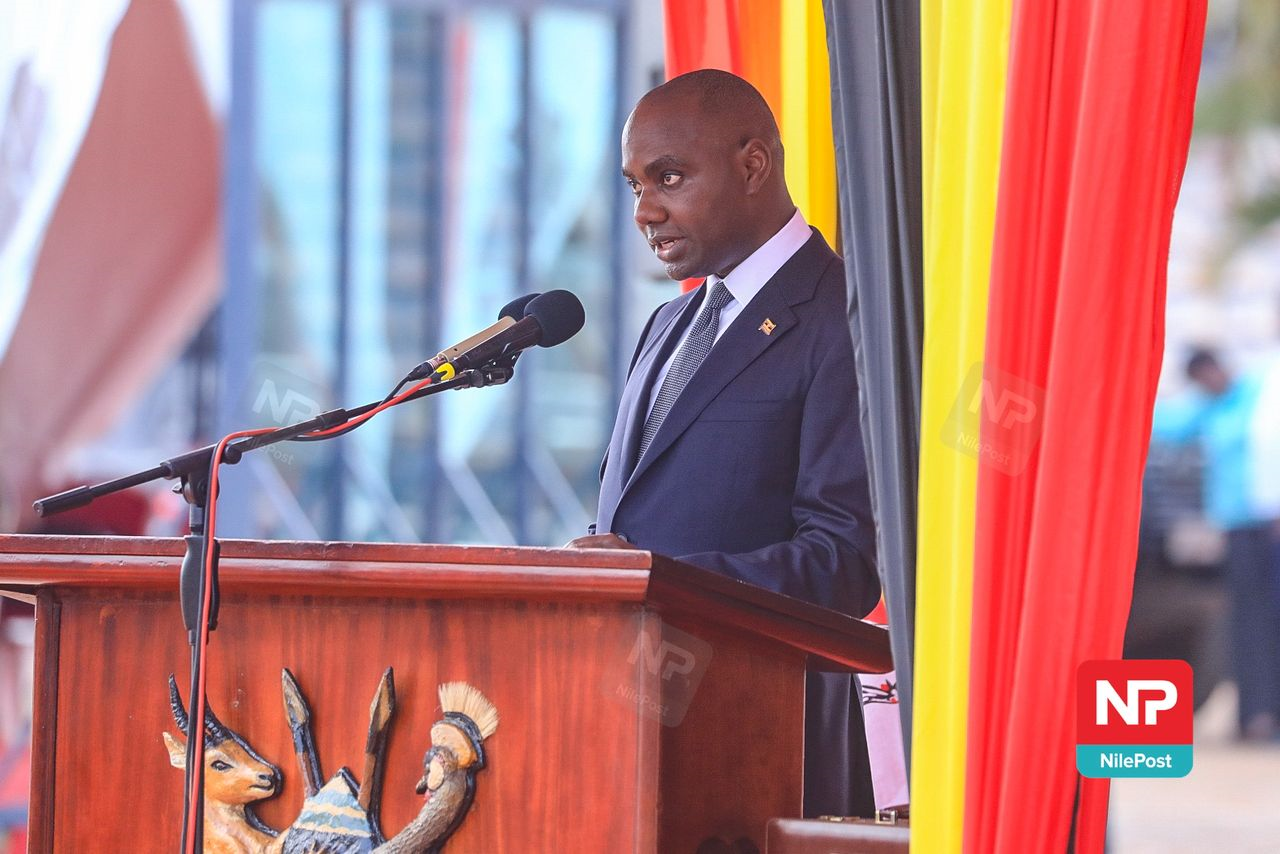
The projection was announced by Minister for Finance, Planning and Economic Development Henry Musasizi while presenting highlights of the 2026/27 national budget on Thursday.
According to Musasizi, the projected collections will be equivalent to 15.9 percent of Uganda’s Gross Domestic Product (GDP), reflecting continued growth in tax revenues, non-tax revenues and local government collections.
The minister said domestic revenue financed 80.9 percent of the country’s discretionary budget during the 2025/26 financial year.
“Increasing domestic revenue is not merely a fiscal objective. It is a sovereignty objective. A country that finances its development from its own resources enjoys greater policy independence, resilience and sustainability,” Musasizi told Parliament.
Government says the additional revenue will be used to support wealth-creation programmes, infrastructure development and other priority investments identified under the National Development Plan.
Musasizi said revenue collection efforts will continue to be guided by the Domestic Revenue Mobilisation Strategy, which seeks to increase government revenues while maintaining a supportive environment for businesses and investment.
The minister said authorities would focus on improving tax administration, broadening the tax base and strengthening compliance measures without imposing excessive pressure on private sector growth.
The revenue projections were announced alongside an update on Uganda’s public debt position, which remains a subject of public debate amid rising borrowing requirements to finance infrastructure projects and economic development programmes.
According to the Ministry of Finance, Uganda’s total public debt stood at USD 34.86 billion (approximately Shs126.19 trillion) as of December 2025.
Of this amount, USD 15.84 billion comprised external debt, while USD 19.02 billion was domestic debt.
The debt stock represents approximately 53 percent of Uganda’s GDP.
Musasizi said the government remains confident that the country’s debt levels are manageable and sustainable over the medium and long term.
“Uganda’s public debt remains sustainable and is projected to stay so over the medium and long term,” he said.
The minister argued that public borrowing has largely been directed toward investments intended to support long-term economic growth rather than recurrent expenditure.
According to figures presented to Parliament, 31.1 percent of public debt accumulated over the past decade financed transport infrastructure projects, including roads and related networks.
Another 19.3 percent was invested in electricity generation and transmission infrastructure, while 10.3 percent financed water sector projects.
Musasizi said the economic value of infrastructure investments should be considered when assessing the country’s debt burden, arguing that many of the projects financed through borrowing are expected to improve productivity, facilitate trade and support industrialisation.
The government has consistently maintained that strategic borrowing remains necessary to bridge infrastructure gaps and accelerate economic transformation.
The latest revenue projections and debt figures come as Uganda seeks to expand domestic resource mobilisation, reduce dependence on external financing and strengthen the sustainability of public finances amid growing expenditure demands.
If achieved, the projected Shs45.6 trillion in domestic revenue would represent one of the highest annual collections recorded by the Uganda Revenue Authority and provide government with greater capacity to finance development programmes using locally generated resources.
