
Uganda’s post-election economic and fiscal update has painted a picture of stability and resilience, with government maintaining a strong growth outlook despite global economic uncertainties and a politically active year.
Under the provisions of the Public Finance Management Act (PFMA) Cap 171, the Finance Minister is required to release a post-election economic and fiscal update within four months after a general election.
According to the latest report, Uganda’s macroeconomic environment remained broadly stable during and immediately after the election period.
The report indicates that most macroeconomic indicators have remained largely unchanged from pre-election estimates despite continued global challenges, including subdued growth, geopolitical tensions and volatile commodity prices.
Domestically, economic activity has continued to demonstrate resilience, with high-frequency indicators pointing to stronger momentum, particularly in the third quarter of the current financial year.
As a result, Uganda’s economy is projected to grow by 6.6 percent in the 2025/26 financial year, driven by improving domestic demand and activity across key sectors.
The update also notes that inflation has remained low and stable, creating a favourable environment for businesses and households.
At the same time, Uganda’s external sector has strengthened, supported by increased export earnings and steady inflows of foreign exchange from tourism, foreign direct investment (FDI) and remittances.
Government linked the positive performance to ongoing implementation of the Fourth National Development Plan (NDP IV), which focuses on increasing household incomes and improving living standards.
The report further aligns current economic strategies with Uganda’s long-term Ten-Fold Growth Strategy, which aims to expand the economy to 500 billion US dollars by 2040 through investments in infrastructure, productive sectors and human capital development.
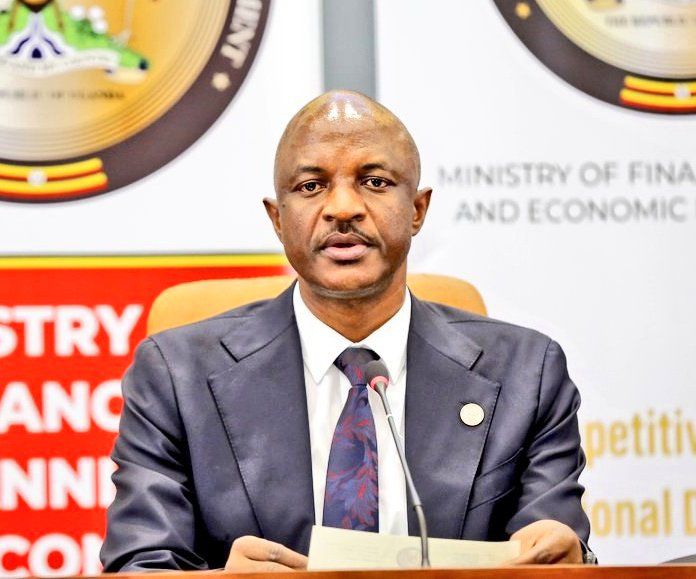
Speaking after the release of the report, Ramathan Ggoobi said the conclusion of the elections presents an opportunity for government to strengthen fiscal policy and accelerate socio-economic transformation.
Ggoobi said government will continue prioritising investments under the ATMS agenda, which focuses on Agro-industrialisation, Tourism, Mineral-based development including oil and gas, and Science, Technology and Innovation.
He added that government would also continue implementing the Parish Development Model (PDM) as part of efforts to transition households into the money economy.
While outlining the government’s ambitious growth targets, Ggoobi stressed that fiscal discipline and debt sustainability would remain central to economic policy.
“Government will focus on improving domestic revenue mobilisation and ensuring more efficient public spending to support self-sustaining and inclusive growth,” Ggoobi said.
