
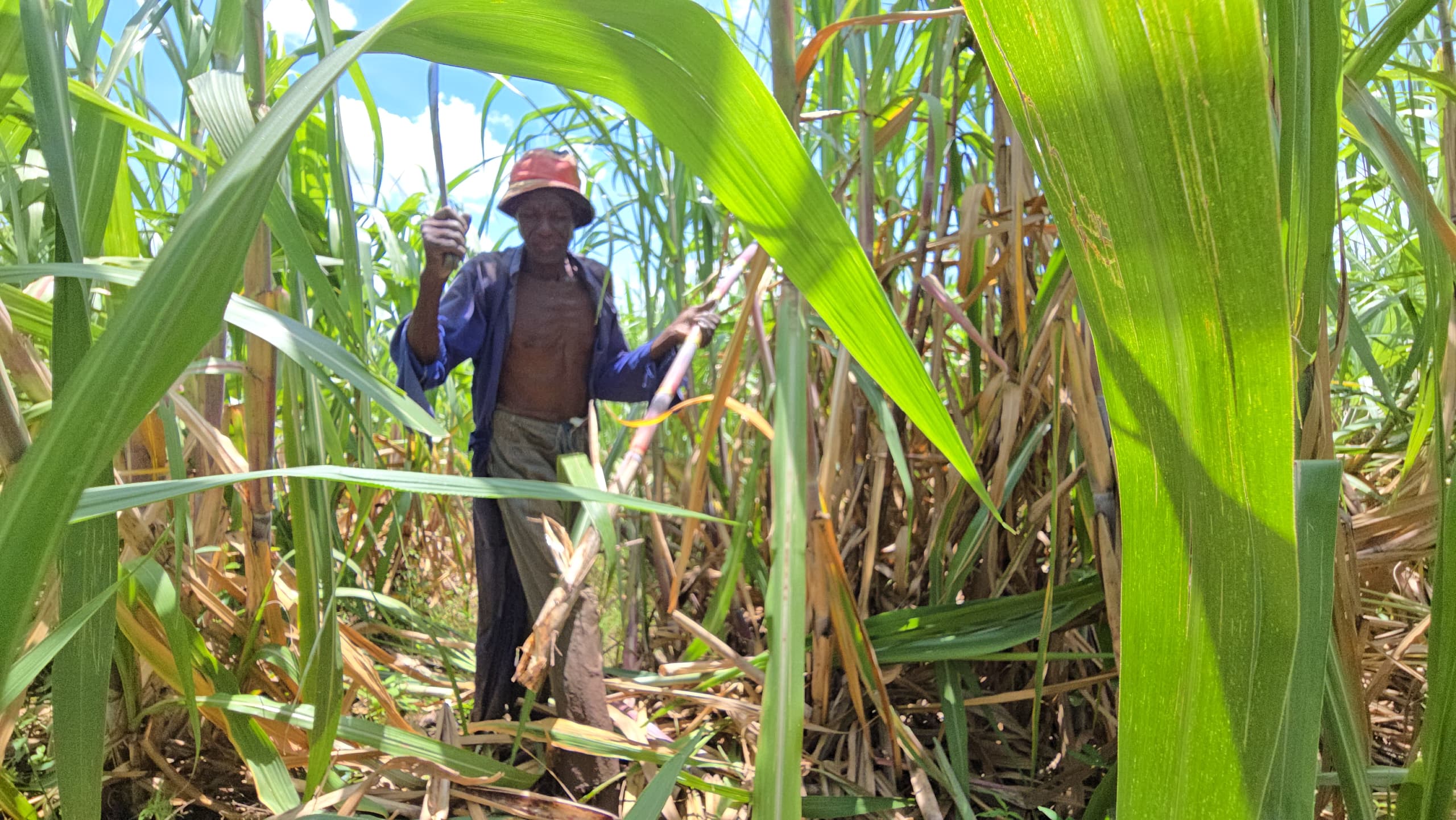
Farmers in Agururu B3 Village in Tororo Municipality have accused Kenyan traders of exploiting them despite a surge in sugarcane production that has transformed the area into a key growing hub.
The village has in recent years seen a shift from traditional crops to sugarcane, with many farmers describing it as more profitable.
Some have even built temporary shelters within their gardens to guard the crop against theft as demand continues to rise.
Sugarcane farming in the area has grown steadily, with local estimates indicating that more than 30,000 tonnes of red sugarcane are produced annually, largely by individual farmers.
Previously, growers sold their cane within local markets at prices ranging between Shs100 and Shs1,000 per piece. However, the entry of traders from Kenya has reshaped the market, with buyers now sourcing directly from farms in bulk.
Despite this increased demand, farmers say they remain stuck with low prices, often earning as little as Shs500 per cane due to weak bargaining power and lack of organised marketing systems.
“I have now spent two years in sugarcane growing, but what has dragged us behind is the price. The Kenyans only pay us Shs500 per cane, which is too low considering what we go through,” said Salim Zaidi, a farmer in Kyamunula.
Farmers also accuse traders of selectively purchasing only high-quality cane, leaving behind lower-grade produce.
The rejected cane is later sold in local markets at higher prices due to scarcity.
According to Geoffrey Hasakya, the Local Council One chairperson, repeated complaints have been raised with the municipal production office over exploitation and declining returns.
Hasakya said the absence of farmer organisations has left growers vulnerable to middlemen, who he claims buy cheaply and resell across the border at significantly higher prices.
“These Kenyans are really cheating our people. Imagine cane sold here at Shs500, yet that same cane is sold in Kenya at Shs3,000. Our people need help,” he said.
Farmers are also grappling with falling yields. Hasakya noted that sugarcane which previously grew between seven and ten feet five years ago now averages about five feet, raising concerns over soil fertility and seed quality.
Roda Nakawuka, another farmer, said government support has been inadequate, arguing that targeted interventions could improve productivity and incomes.
In response, the Tororo Municipal Council production department said it has developed both short-term and long-term strategies to support farmers.
Production Officer Joel Ofufa urged growers to form associations to strengthen their bargaining power and improve market coordination, while also calling for government action to protect local producers from exploitation without undermining cross-border trade.
He added that addressing the issue requires a balanced, multi-sectoral approach that preserves trade relations between Uganda and Kenya.
The concerns come weeks after Rebecca Alitwala Kadaga, who also serves as Minister for East African Community Affairs, called for a ban on Kenyan traders buying agricultural produce directly from Ugandan farms, arguing that the practice exploits local farmers and entrenches poverty.
As debate over the issue continues, farmers in Agururu B3 remain hopeful that government intervention will restore fairness in the sugarcane trade and secure their livelihoods.
