
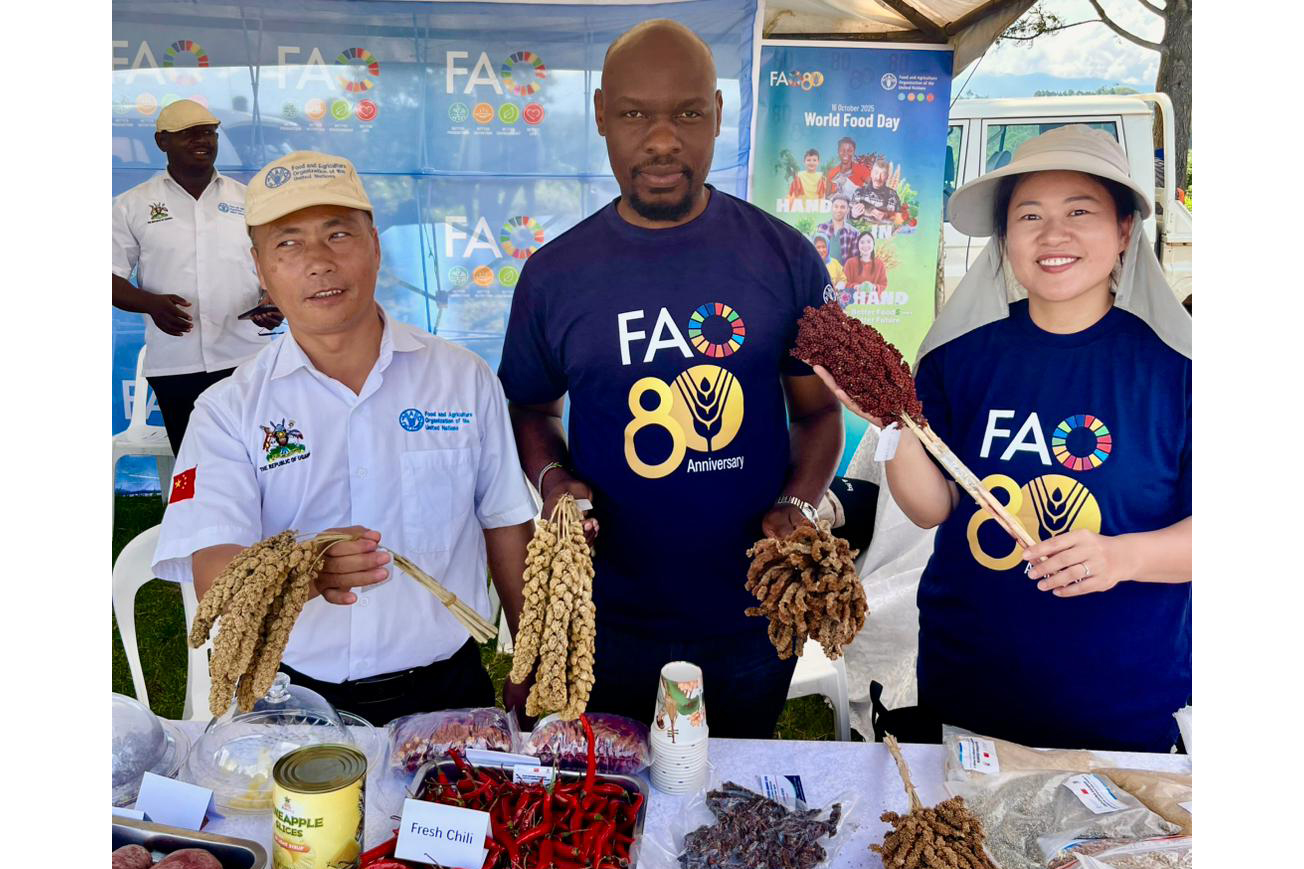
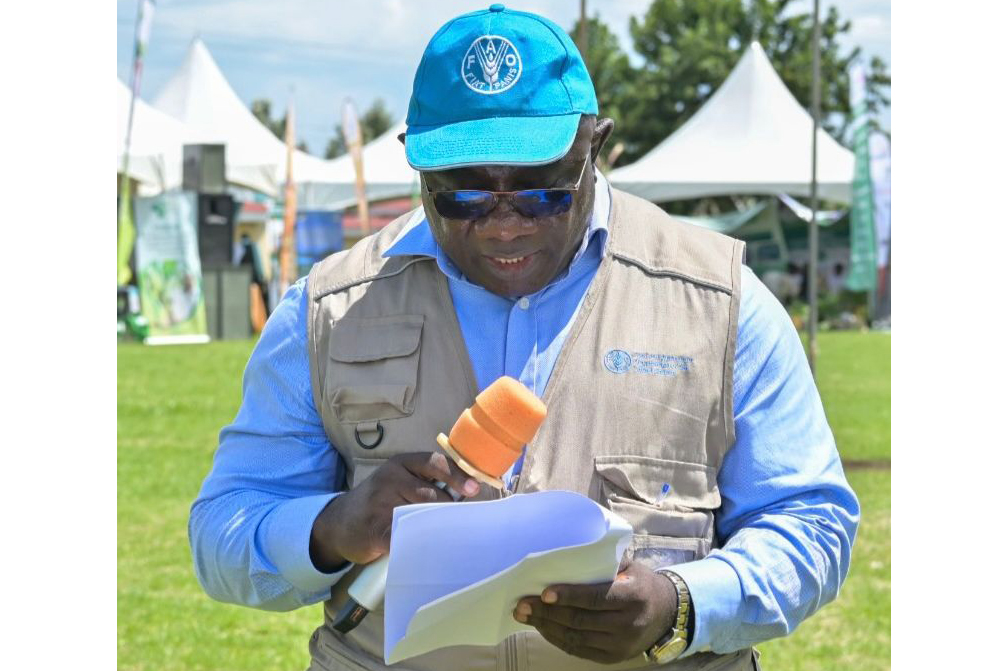
Uganda joined the global community on World Food Day 2025, commemorated this year at Rwebitaba ZARDI in Kabarole District under the theme: “Hand in Hand for Better Food and a Better Future.”
The theme emphasizes that the fight against hunger and malnutrition cannot be won alone. It calls for partnerships, solidarity, and shared commitment across communities, sectors, and nations.
Uganda has made strides towards food security, but significant challenges remain. About 1.7 million people still face acute food insecurity, 29% of children are stunted, and nearly half of all women suffer from anaemia.
Agricultural productivity remains low, post-harvest losses are high, and 40% of land is degraded.
These challenges underscore the need for continued collaboration and investment to build resilient agrifood systems and achieve a food-secure Uganda.
FAO works hand in hand with the Government of Uganda through the Ministry of Agriculture, Animal Industry and Fisheries (MAAIF), the Ministry of Water and Environment, the Office of the Prime Minister, and many other institutions.
In collaboration with agencies such as the National Agricultural Research Organization (NARO), FAO supports agricultural research and development, while working with district local governments, civil society, and farmer groups to promote innovation, enhance production, add value, and strengthen market linkages.
FAO’s initiatives in Uganda include:
- Building resilience to climate shocks: Small-scale irrigation facilities across regions, capable of serving multiple households and boosting productivity.
- South-South and Triangular Cooperation: Technology and knowledge exchanges with countries like China have advanced rice, millet, fish farming, and dairy development.
- Research and technology dissemination: In partnership with NARO, FAO promotes innovations in crops, livestock, fisheries, and forestry for better production, nutrition, and environment.
- Agrifood investment planning: Evidence-based investment plans target milk processing, animal feed, maize processing, hides and skins, banana processing, and mechanization centers, connecting opportunities with private sector and impact investors.
- Youth, women, and refugee livelihoods: Promoting agribusiness, value chain development, and nutrition-sensitive agriculture.
- Natural resource management and policy support: Supporting forest cover expansion, sustainable soil and water management, and resilient agrifood policy frameworks.
World Food Day reminds us to:
- Invest more in smallholder farmers, especially women and youth.
- Reduce post-harvest losses and improve market access.
- Adopt sustainable practices that protect soil, water, and biodiversity.
- Ensure every Ugandan has access to nutritious and affordable food.
Ending hunger is not just a development goal—it is a moral duty and shared responsibility.
Uganda has the potential to feed itself and the wider region. Achieving this requires combining science with community wisdom and innovation with inclusion.
Let Rwebitaba ZARDI stand as a symbol of partnership and progress—where researchers, farmers, and policymakers unite for better food and a better future.
Together, we can make hunger history. Together, we can nourish Uganda. Together—Hand in Hand—we will build a food-secure and prosperous nation.
