

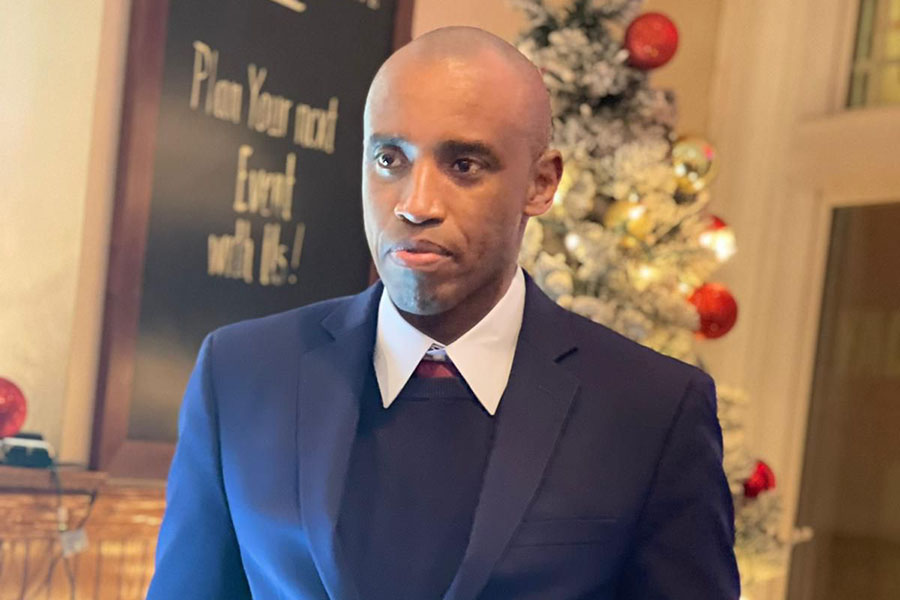
By Godwin Agaba
On Monday June 1, 2026, the Appointments Committee of the Parliament of Uganda declined to endorse Dr Lawrence Muganga’s nomination as Minister of State for Internal Affairs. In their motion, the Parliament’s Appointments Committee cited what they referred to as “Dr Lawrence Muganga’s unresolved citizenship concerns”.
The rejection has sparked controversy. This controversy has two strands. Some members of the Banyarwanda community argue that Muganga was denied the opportunity to serve in Cabinet because of his ethnicity as a Munyarwanda. While most Ugandans have applauded the decision of the Parliamentary Committee on Appointments for being diligent on what many view as a matter of law.
In the interviews he has given after Parliament rejected his appointment as Minister of State in the Ministry of Internal Affairs, Muganga squarely blames his rejection on his ethnicity, saying he was rejected because he is a member of the Banyarwanda community.
Muganga is the Vice Chancellor of the privately owned Victoria University. He claims to have been born in Uganda, studied in Uganda, worked in Rwanda and Canada, and returned to Uganda in 2021.
Whereas the controversy surrounding Muganga’s rejection may be viewed as a citizenship dispute or as a matter of parliamentary oversight over the Executive, there are broader strands to consider.
There are several broader dimensions to this matter. The first is the assumption that Muganga is an agent of foreign interests. The second is that he holds citizenship from multiple countries.
The third is that the process that led to his acquisition of Ugandan citizenship was fraught with irregularities. The fourth is his denial of holding Rwandan citizenship.
The fifth is the framing of his situation in ethnic terms, playing into a Banyarwanda victimhood narrative.
The sixth is the lack of clarity in articulating his situation. The tone and delivery of his public communication lack the weight of intellectual authority. His speech is so flat that one may even wonder whether he fits the office he was designated to run.
The most significant incident was his recording of a phone conversation with the Deputy Speaker and his subsequent attempt to publicly expose it, which was widely interpreted as an attempt to pressure the Deputy Speaker over his failed appointment as Minister of State for Internal Affairs.
The recording of a private phone conversation and its circulation on social media portrayed a man who, to some observers, could raise concerns about susceptibility to foreign influence. This brings to mind the case of Eli Cohen, the Israeli spy who infiltrated the Syrian state establishment with grave consequences for Syria.
Whether one supports his appointment or not is ultimately secondary. The real issue is more important: what does the Muganga affair reveal about Uganda’s vulnerability to foreign influence, penetration, and state security risks?
If it is true that Muganga represents foreign interests in any covert sense, then there is a need to review state security vigilance. History teaches us that states rarely fall victim to hostile intelligence operations because they lack laws, soldiers, or security services. States become vulnerable when they stop asking difficult questions, ignore warning signs, and allow trust to replace verification.
One of the most famous examples in modern intelligence history is Eli Cohen, the Israeli operative who successfully penetrated the Syrian political and military establishment in the 1960s.
Contrary to popular belief, Cohen’s greatest achievement was not stealing secrets. His greatest achievement was becoming trusted. He gained acceptance among influential figures, developed relationships with senior officials, accessed elite circles, and positioned himself close to the centre of decision-making.
The lesson of Eli Cohen is simple but profound: the most dangerous penetrations do not arrive carrying secret radios or wearing military uniforms. They arrive as respected professionals, academics, businessmen, advisers, philanthropists, or reformers. They arrive through relationships, trust, credibility, and access. This is why the Muganga affair deserves careful scrutiny.
Media reports have described Dr. Muganga as a Rwandan national living in Canada. Others have referred to him as a Rwandan-Canadian citizen. Publicly circulated accounts have raised questions regarding previous Rwandan citizenship and subsequent Canadian citizenship.
In 2021, Muganga was arrested by Ugandan security agencies on allegations related to espionage and immigration status. He was later released without prosecution. To many Ugandans, it was therefore not surprising that the Parliamentary Committee on Appointments questioned his proof of renunciation of previous citizenship. His denial of ever holding Rwandan citizenship or passports has raised further questions about his citizenship history.
None of these facts, individually, may prove wrongdoing. However, security professionals are trained to look at patterns rather than isolated incidents. The concern is not a single event but the accumulation of unresolved questions.
With his nomination as Minister of State in the Ministry of Internal Affairs, security functionaries would be expected to examine the matter beyond Parliament’s rejection. This is not an ordinary ministry. Internal Affairs sits at the heart of state sovereignty. It oversees immigration, citizenship, national identification systems, border management, refugee administration, passports, and internal security coordination.
This raises an important question: what if an individual with unresolved foreign allegiance concerns were to occupy a senior position in such a ministry?
Muganga’s citizenship controversy was previously the subject of security attention. His nomination therefore warranted scrutiny, not only administrative but also, where necessary, intelligence assessment, particularly in matters touching national security.
The basis of scrutiny is not his professional competence, but concerns about overlapping affiliations that may affect the sovereignty of Uganda.
And so, the most important question may not be about Muganga himself. The more important question is: who opened the doors?
Who introduced him to the highest levels of government? Who vouched for him? Who recommended him for Cabinet? Who defended him against concerns? Who believed he was suitable for a ministry responsible for citizenship and internal security? Were security agencies consulted, and if so, what advice did they provide?
These questions matter because successful penetrations are rarely individual efforts. They depend on sponsors, facilitators, defenders, and access brokers. In nearly every historical penetration case, the critical vulnerability is not the operative, but the trusted insiders who enable access.
This is precisely why the Eli Cohen case remains relevant more than sixty years later. Cohen did not penetrate Syria because Syria lacked security officers. He penetrated Syria because influential people believed he belonged in their circles.
Uganda should draw an important lesson from this.
The danger facing modern states is no longer limited to espionage in the traditional sense. The greater danger is influence: influence over appointments, policy, institutions, and the individuals who make decisions.
Whether one believes Muganga has answered all questions or not remains a matter for Parliament, immigration authorities, and security agencies. But the broader issue remains.
The Muganga affair exposes the need for stronger vetting, more rigorous citizenship verification, enhanced state security review, and greater transparency in appointments to sensitive offices.
This debate should not be reduced to personalities or political loyalties. The real question is whether Uganda’s institutions are sufficiently resilient to identify and manage foreign influence risks before individuals gain access to positions touching national security and state sovereignty.
The people of Uganda deserve clear answers, not because of one man, but because the security of a nation depends on its ability to distinguish trust from verification, influence from loyalty, and access from accountability. That is the enduring lesson of Eli Cohen. It is also the lesson Uganda should remember today.
Muganga is the holder of a Ugandan-issued diplomatic passport. It is alleged that Gen. (Rtd) Kahinda Otafiire approved the issuance of the passport.
The pathway to acquiring this passport has gaps. Before he acquired Ugandan citizenship, he reportedly already held Canadian citizenship. This would imply dual citizenship of Uganda and Canada.
He is also reported to have acquired a Ugandan National Identity Card before formally acquiring Ugandan citizenship, whereas procedure requires citizenship first before issuance of a National ID. These are indications, some argue, that he was enabled by individuals within decision-making structures at the highest levels.
Security sources indicate that Gen. (Rtd) Kahinda Otafiire, then Minister of Internal Affairs, approved Muganga’s diplomatic passport. Otafiire was recently nominated as Minister for Water and Environment after serving as Minister for Internal Affairs for five years.
Muganga’s citizenship status remains controversial. In 2021, he reportedly faced deportation for allegedly residing and working in Uganda without proper documentation. He entered Canada as a Rwandan citizen and later obtained Canadian citizenship, with Rwandan citizenship as his original nationality.
This implies dual citizenship of Rwanda and Canada. His application for Ugandan citizenship does not clearly account for this history. When questioned about Rwandan citizenship, he has denied ever holding it.
Muganga returned to Uganda in 2019 and was later appointed Vice Chancellor of Victoria University. As a dual citizen of Rwanda and Canada, questions have been raised about his initial work authorisation in Uganda.
In 2021, he was arrested by the Chieftaincy of Military Intelligence (CMI, now Defence Intelligence – DI) and faced deportation proceedings.
During this period, Brigadier Johnson Namanya, then Commissioner for Citizenship and Passport Management at the Directorate of Citizenship and Immigration Control under the Ministry of Internal Affairs, was reportedly approached by the late Rajiv Ruparelia. Brig. Namanya is said to have assisted in securing a work permit for Dr. Muganga.
The pressing question is therefore not only about dual citizenship, but how an individual with such a contested immigration history could be considered for a sensitive ministerial role.
While some ministers-designate have held dual citizenship, Muganga’s case is said to differ, with claims of links to a third citizenship. Ugandan law does not permit triple citizenship.
The constitutional provision governing dual citizenship and public office is found in Article 15(7) of the Constitution. It provides that Parliament shall prescribe offices of state which persons holding citizenship of another country are not qualified to hold.
In line with this, Section 19D of the Uganda Citizenship and Immigration Control Act and the Fifth Schedule provide that persons holding dual citizenship are not qualified to serve as Cabinet Ministers or other ministers.
This restriction is intended to ensure undivided allegiance to Uganda in matters of governance and security. The restricted positions include President, Vice President, Prime Minister, Cabinet Ministers and other ministers, Inspector General of Government and Deputy IGG, Chief of Defence Forces and service commanders, heads of intelligence agencies, Commissioner General of Prisons, Inspector General of Police, among others.