
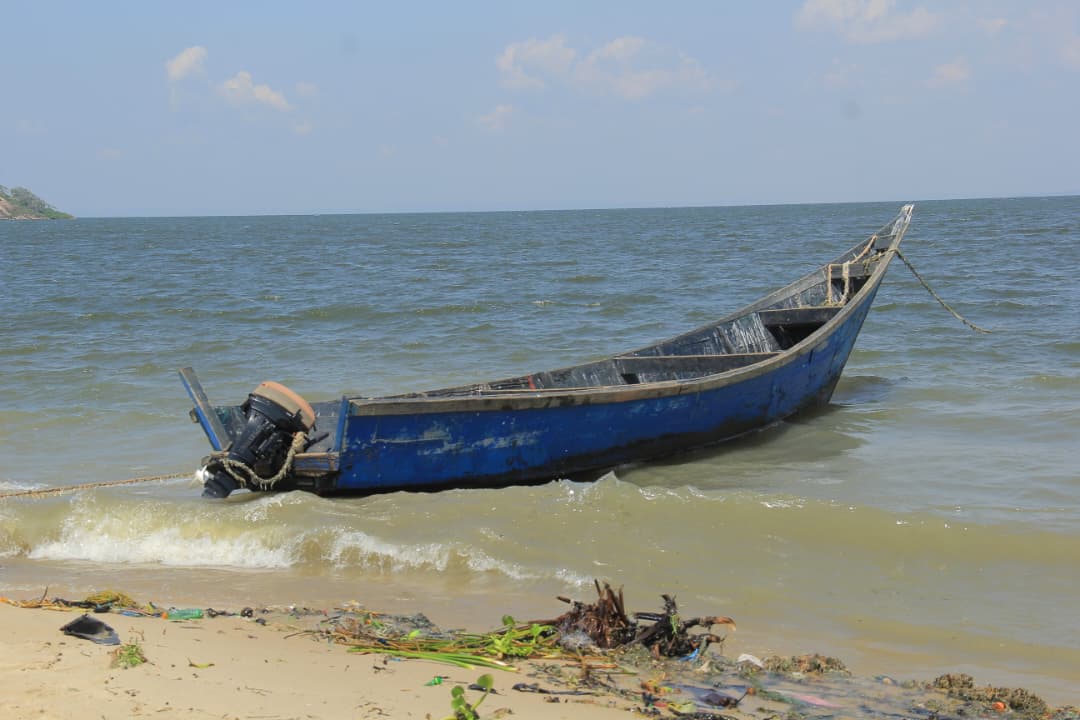
Local leaders in Buwama Sub-county, Mpigi District, have warned that the introduction of strict new fishing regulations on Lake Victoria could lead to increased crime if affected communities lose their livelihoods.
The concerns were raised by Sub-county Chairperson Deo Sendegeya and several councillors, who argue that the measures risk destabilising fishing-dependent communities if not reviewed or supported with alternative livelihood options.
They say many residents who rely on fishing and related activities now face uncertainty following new requirements they describe as too costly and restrictive for ordinary fishermen.
Buwama Sub-county is among the areas where an estimated 60 percent of residents depend directly or indirectly on fishing and fish-related businesses, including trading, boat repair, transport, and mukene drying.
Landing sites such as Senyondo, Bukiina, Golo, Buganga and Kamaliba support thousands of workers across the fishing value chain.
Councillor Joseph Senkumba questioned the feasibility of limiting landing sites to 66 boats and 200 fishermen, saying the policy could exclude many from the industry.
“If a standard boat costs about Shs30 million as indicated by the authorities, then most of our fishermen cannot afford one. This effectively pushes them out of the industry,” Senkumba said.
He also criticised restrictions on silverfish fishing, particularly the ban on use of lights, arguing that it would make the activity unviable.
“Silverfish fishing relies on lights. If fishermen are told they can no longer use lights, then it simply means they are being forced out of business,” he said.
Sendegeya warned that rising unemployment in fishing communities could create conditions for increased crime, citing recent incidents such as cattle theft in the area.
“These are crimes we had largely managed to control because people had jobs and sources of income,” he said.
He added that Buwama has a large youth population, including migrants from neighbouring countries, many of whom depend on fishing for survival.
“When you have many young people with no jobs and no land for farming, the situation can easily become difficult,” he said.
The leaders are now calling on government to review some of the regulations, including boat standards, limits on fishing vessels and fishermen, and other operational requirements they consider unrealistic.
They have also proposed support measures such as affordable credit schemes and provision of boats and fishing gear on loan to help fishermen transition into compliance without losing livelihoods.
“You cannot save the lake while sacrificing entire communities,” the leaders said, warning that economic exclusion could undermine efforts to enforce sustainable fishing practices.
The concerns follow recent directives issued during sensitisation meetings led by UPDF Deputy Commander Lt Gen Sam Okiding, who outlined stricter enforcement measures on Lake Victoria, including licensing requirements, boat limits, and penalties of up to eight years in prison for illegal fishing activities.
The debate highlights the growing tension between environmental enforcement and livelihood protection in fishing communities around Lake Victoria.
