

ADJUMANI — Authorities in Adjumani District have intensified environmental restoration efforts through large-scale tree-planting campaigns targeting schools and public institutions, as the district grapples with accelerating environmental degradation.
District officials attribute the degradation to rising population pressure, driven largely by the influx of refugees from South Sudan, rapid demographic growth, expansion of agriculture, and increasing demand for firewood and settlement land.
Adjumani currently hosts more than 233,000 refugees, a factor that has significantly increased pressure on forests, wetlands, and other natural resources as communities compete for land for farming, settlement, and energy needs.
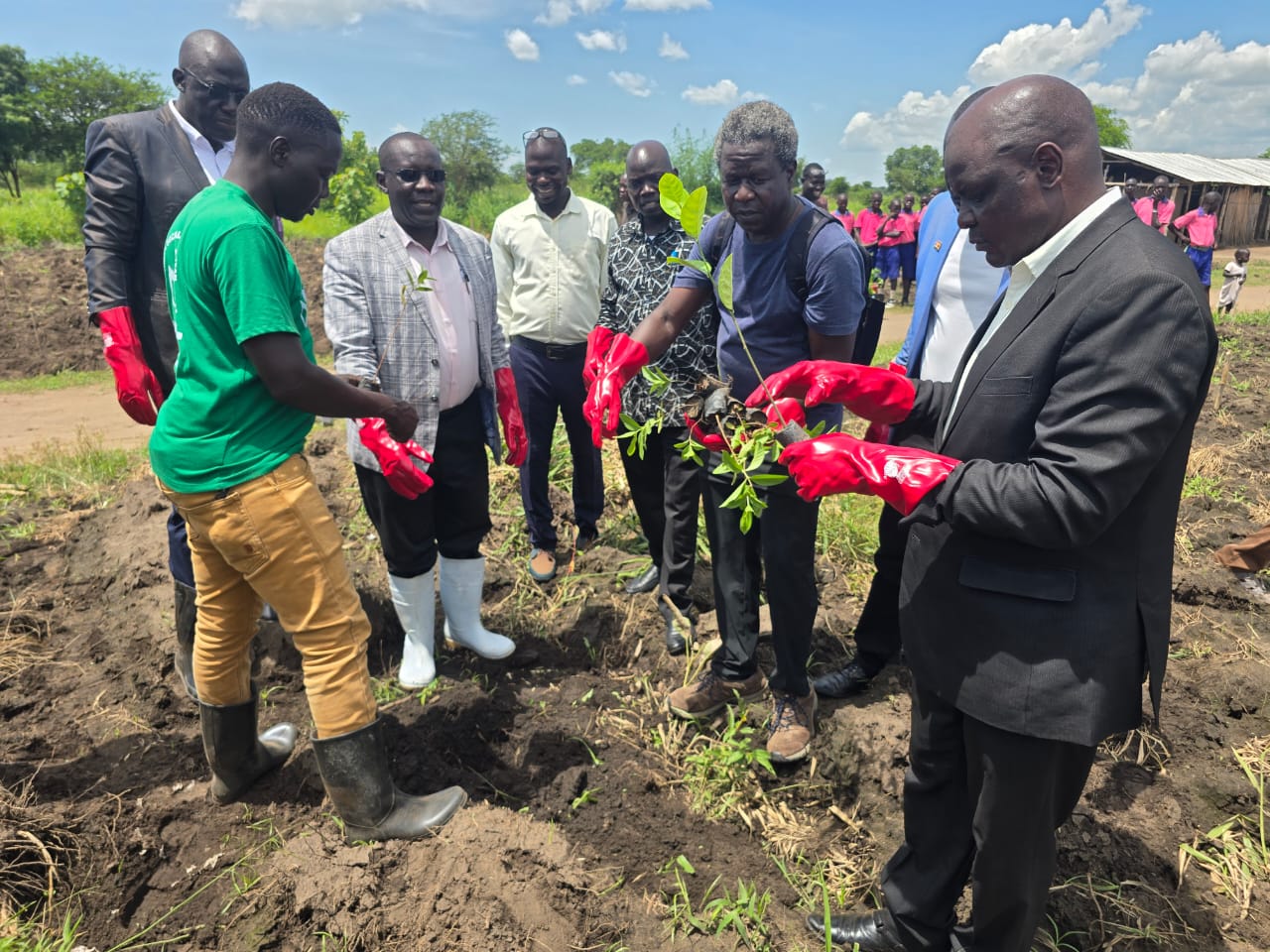
Speaking during a tree-planting exercise at Elegu Primary School in Arinyapi Sub-county, District Natural Resources Officer Charles Giyaya said the initiative is aimed at mobilising institutions and households to actively participate in restoring tree cover.
“We are witnessing increasing pressure on our environment due to population growth, agricultural expansion, and demand for fuelwood.
Through this campaign, we want schools and communities to take the lead in restoring tree cover and protecting natural resources,” Giyaya said.
He noted that widespread cutting of trees for firewood, charcoal production, construction materials, and farmland expansion has significantly reduced vegetation cover across the district.
“Schools are important partners in this effort because learners can become ambassadors of environmental conservation in their homes and communities. Planting trees today is an investment in a healthier and more sustainable future,” he added.
During the exercise, district leaders, pupils, development partners, and community members planted fruit trees and other species on a two-acre section of school land, which will serve as a demonstration woodlot for environmental learning and conservation practices.
Adjumani District Local Council V Chairperson John Anyanzo Ambayo urged residents to take personal responsibility for environmental protection, warning that continued deforestation and wetland destruction would have long-term consequences.
“Environmental conservation is everyone’s responsibility. If we continue destroying forests and wetlands without replacing what we lose, future generations will suffer the consequences,” Ambayo said.
Resident District Commissioner Swaib Toko also called for joint action between host communities and refugees, emphasising that tree planting offers both environmental and economic benefits.
“Tree planting offers environmental, social, and economic benefits. It helps communities adapt to climate change, protects water sources, and provides future sources of income and energy. We must all work together to restore our environment,” Toko said.
Environmental activist Lesile William Amanzuru, Team Leader of Friends of Zoka, warned that continued degradation of natural forests poses a serious threat to ecological survival, calling for urgent protection of remaining forest reserves.
“Environmental degradation is a threat to our survival. We must protect our forests, especially Zoka Central Forest Reserve, which remains Northern Uganda's only tropical rainforest,” Amanzuru said.
He stressed that conservation efforts must be collective and sustained to safeguard biodiversity and climate resilience in the region.
The tree-growing campaign is being implemented in partnership with development agencies and local stakeholders as part of broader efforts to restore degraded ecosystems, strengthen climate resilience, and promote sustainable land management across Adjumani District.