

For years, science lessons in many Ugandan primary schools lived only in notebooks and chalk on dusty blackboards. learners memorized definitions they could hardly visualize, while teachers struggled to make abstract concepts come alive. The joy of discovery the heartbeat of science was missing.
But in 2021, that story began to change when River Flow International (RIFI), in partnership with the Ministry of Education and Sports (MoES), launched a transformative hands-on training program for science teachers. The goal was simple yet powerful; to turn classrooms into laboratories of wonder where pupils could touch, see, and feel science for themselves.
In the heart of Wakiso district at Buloba Church of Uganda Primary School, 42 teachers from 20 primary schools from government-aided schools gathered for what would become a defining moment in their teaching careers. They experimented, discussed, and rediscovered the excitement of learning through doing.
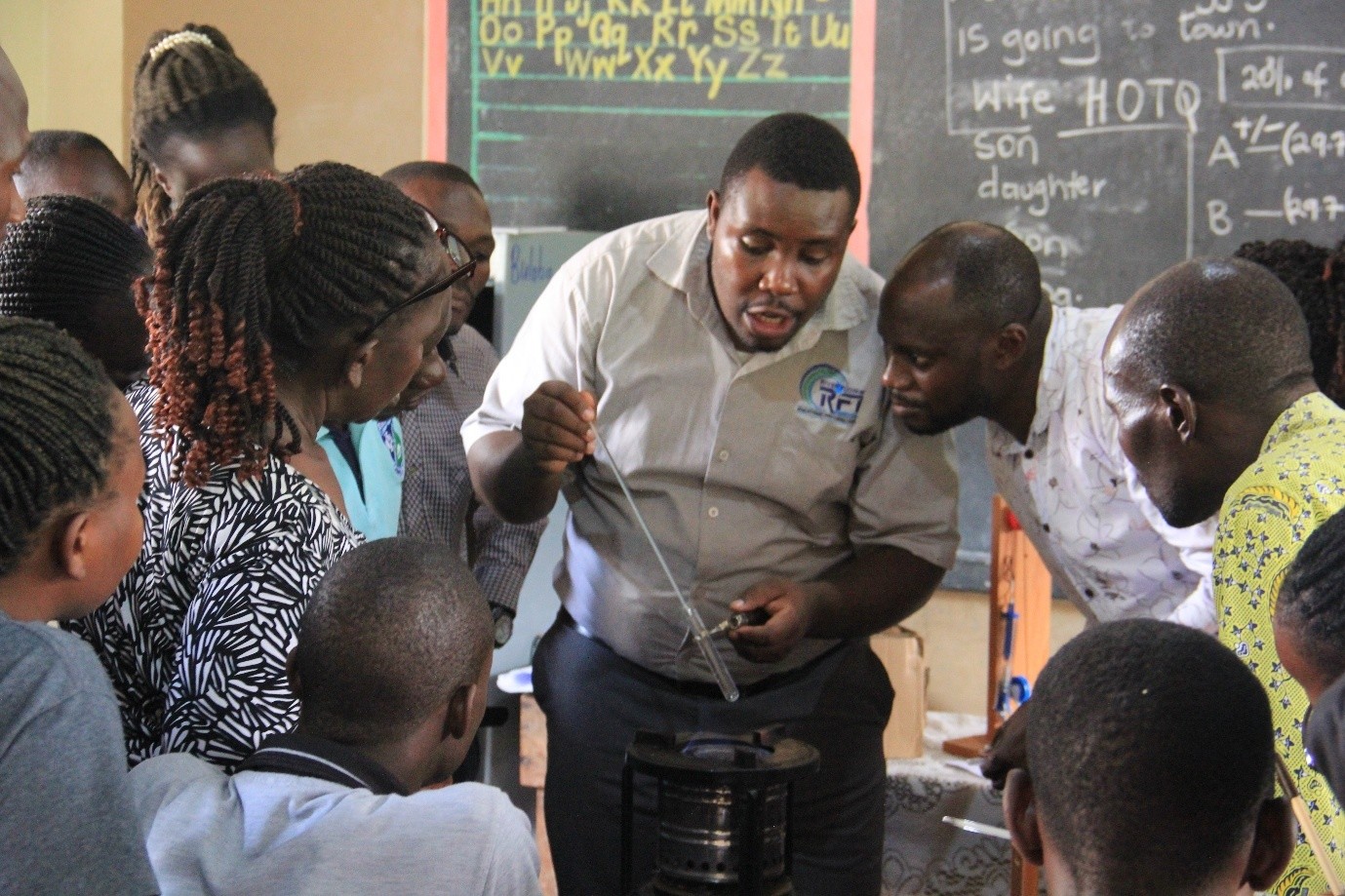
Using the science kits innovated by River Flow International, teachers demonstrated concepts like refraction, reflection, and separation of mixtures. For many, it was their first time handling real scientific tools. One teacher shared emotionally,
“I will always remember the first time I saw and learned how to use a microscope.”
That single experience symbolized a profound shift teacher were not just being trained; they were being transformed into facilitators of discovery.
Wakiso District and other 98 districts, have appreciated the extraordinary uniqueness of the science kit where science was once trapped on chalkboards and textbooks, but is now alive bubbling in beakers, glowing through microscopes which have built curiosity and eagerest eyes of young learners. This is not what you would expect in a typical Ugandan classroom yet it is happening.
Through laughter-filled sessions and collaborative activities, teachers learned how to make science practical, interactive, and relatable to learners’ daily lives. They left the training not only equipped with skills but inspired with purpose.
“The training made me remember practical methods of teaching,” said one teacher.
“I have learned how to make science easy and fun. I liked teaching the heart, head, and hands,” added another.
What these science teachers will “never forget” goes beyond a simple training that lasted few days, it is a story of renewal in how science is taught, felt, and experienced. It empowers teachers to ignite curiosity and critical thinking among learners, bridging the gap between theory and practice.
The impact of this training goes far beyond Buloba. Each teacher returned to their school with renewed enthusiasm and a toolkit that makes science visible and alive. Learners who once feared science are now exploring, experimenting, and asking “why?”
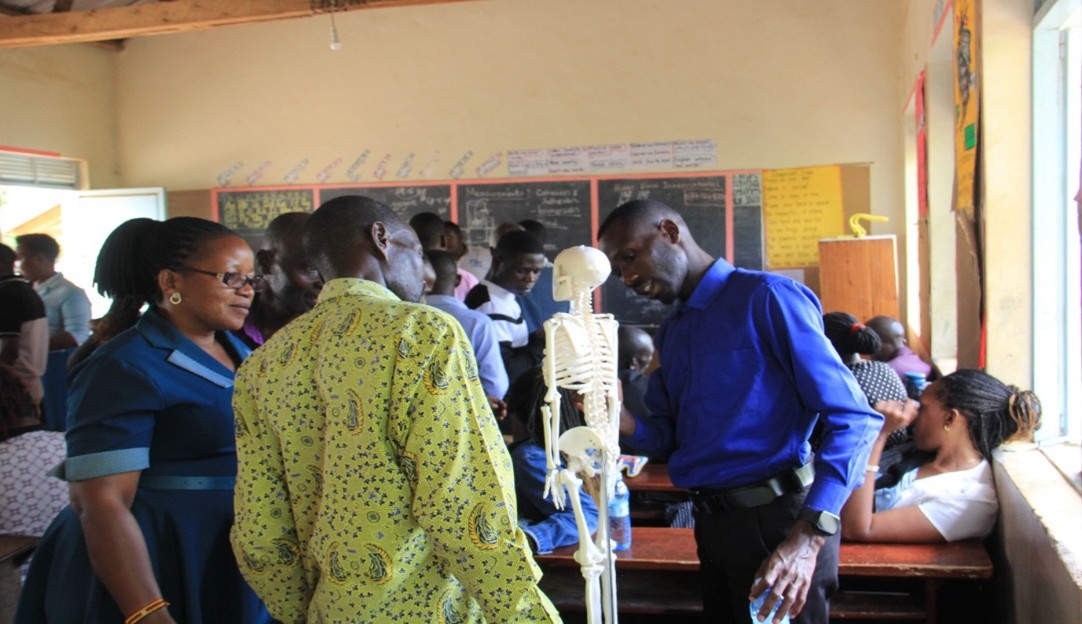
From microscopes to human body models, and from practical experiments to renewed confidence, a silent revolution is unfolding in Wakiso’s classrooms. The change is not loud, but steady — a river flowing gently, transforming young minds one experiment at a time.
As one participant wrote in her reflection note:
“The workshop was interesting because at least many science facts were verified for example moments, refractions, and reflections”.
And indeed, much was attained not only new skills but a new spirit. A spirit that carries forward a vision where every child, regardless of their school’s location or resources, can experience science as a living adventure.
Figure 2: One of the groups of participants discussing concepts about the human skeleton.
The moment of discovery represents thousands of future learners who will now experience science not as a subject, but as a living adventure. The training sessions were designed to make teachers think, create, and collaborate. They were not just learning, they were innovating. They shared ideas, questioned traditional methods, and rediscovered the joy of problem-solving.
“The training made me remember practical methods of teaching, good ideas and sharing about complicated concepts,” said a participant. Another teacher reflected, “I have learnt how to make science easy and practical to learners. I liked teaching the heart, head, and the hands.”
The teachers expressed heartfelt appreciation to the Ministry of Education and Sports (MoES) for providing the science kits and supporting the initiative that is transforming their classrooms into centers of creativity and discovery
River Flow International’s teacher training initiative is proving that with the right tools and support, education can be transformed from rote learning to discovery-based learning. In Wakiso District, the future scientists of Uganda are already in the making curious, creative, and confident.