
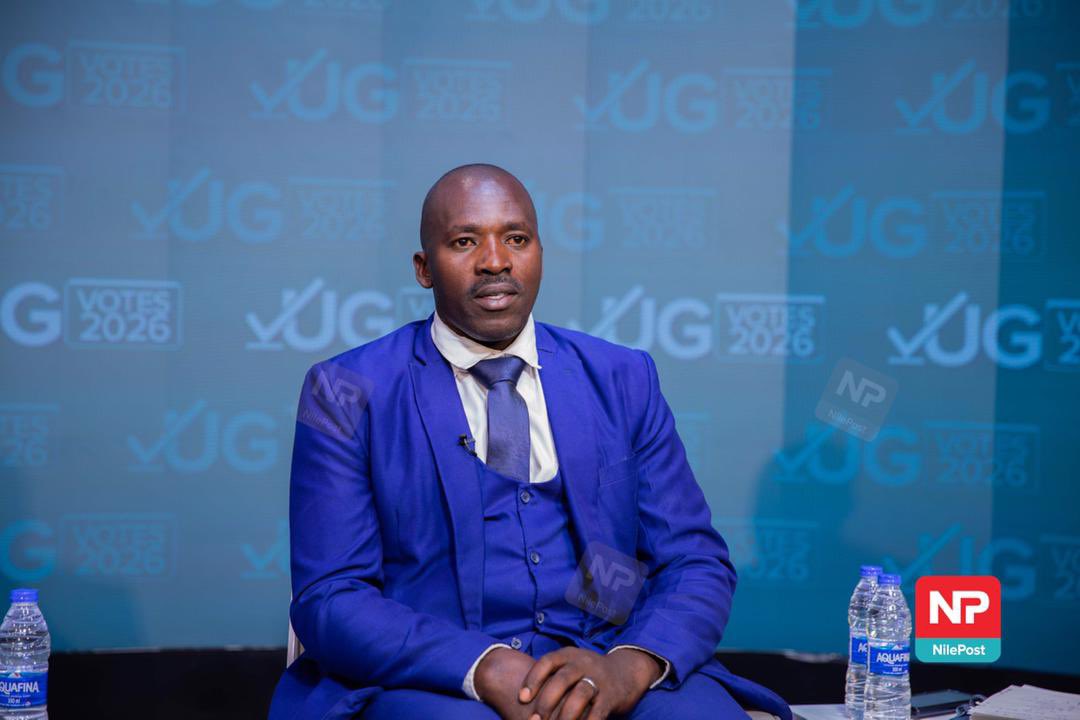
Democratic Front (DF) candidate Unicent Ainebyona has launched a strong attack on Lwemiyaga County MP Theodore Ssekikubo, accusing the veteran legislator of presiding over more than two decades of neglect, particularly in the education sector.
Speaking during a heated political debate on NBS TV on Wednesday, Ainebyona said the constituency is suffering from a collapse of basic public services, with the education system in a state of crisis.
“Lwemiyaga has been abandoned for 25 years. Most of our brothers and sisters drop out of school at P7,” Ainebyona said.
“Our children are studying in tents. How can we have one of the most cheerful MPs in the country, yet our students sit in leaking tents as classrooms?”
He described the situation as “a betrayal,” saying it compelled him to join the race.
“I decided that I have to fight for my people. We must restore dignity to our children and create a future where education is not a privilege,” he said.
Ainebyona criticised Ssekikubo’s long parliamentary record, arguing that the incumbent focuses on national political battles at the expense of the constituency’s pressing needs.
“Ssekikubo has been in Parliament speaking, yes, but I have never heard him speak for Lwemiyaga,” he said. “He is always fighting for unnecessary things while our people suffer.”
Ssekikubo, running as an Independent, has long defended his performance, arguing that his national prominence stems from his fight against corruption and governance abuses.
But Ainebyona insisted that this visibility has not translated into tangible development for the constituency.
The debate brought together all four candidates — Ainebyona (DF), Migadde Juugu Amooti (Independent), Ssekikubo (Independent), and Emmanuel Rwashande (NRM) — and highlighted the deep frustrations among voters over stalled government projects, the absence of a government secondary school, and chronic underinvestment in health services.
Analysts say Lwemiyaga is headed for one of the most competitive races in Sembabule District, with candidates facing increasing pressure to address long-standing gaps in education, infrastructure, and basic service delivery.
As campaigns intensify, Ainebyona has positioned himself as the voice of a new generation, calling for accountability and a shift from national political battles to community-focused development.
