
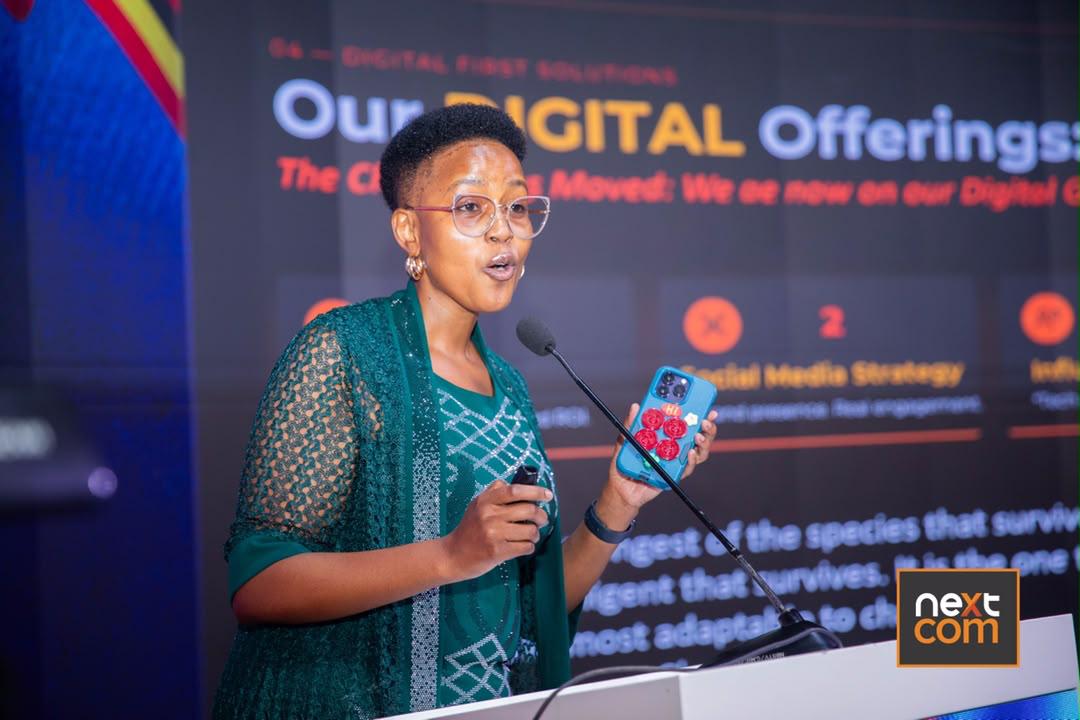
Uganda's digital transformation must now be measured not by the number of people connected to the internet, but by how technology creates jobs, strengthens businesses and improves lives, Next Media Chief Marketing and Ventures Officer Joy Mwangi has said.
Opening the third State of the Digital Economy (SODE) conference at the Next Conference Centre, Mwangi said the country has reached a point where conversations about connectivity must evolve into practical action that generates economic value.
Organised by NextCom in partnership with the Ministry of ICT and National Guidance and other partners, this year's conference is being held under the theme, "Beyond Connectivity: Turning Access into Opportunity."
The event has brought together government leaders, technology companies, innovators, academia and development partners to examine how Uganda can translate digital access into inclusive economic growth.
"We are saying that if we want to build the digital economy, we cannot simply take part in conversations. We must own those conversations, create change and build systems that work for the economy," Mwangi said.
Her remarks established the central theme that would dominate discussions throughout the conference: Uganda's next digital milestone is no longer expanding connectivity, but ensuring citizens, businesses and institutions benefit economically from digital technologies.
Mwangi described NextCom as a digital-first communications agency that helps organisations engage audiences where they increasingly spend their time—on mobile and digital platforms.
"Our role is to help brands move away from broad conversations and communicate directly with consumers through digital platforms," she said.
She outlined the agency's integrated services, including creative and brand design, audiovisual production, photography, digital content, social media strategy, influencer marketing, analytics and research, saying organisations must adapt to rapidly changing consumer behaviour.
She also highlighted the growing role of the Next Creata Hub, which provides a collaborative space where creators, agencies, brands and influencers produce digital content while developing sustainable careers within Uganda's expanding creator economy.

Mwangi said NextCom is also investing in digital employment through the Next Creata Programme, implemented in partnership with the Mastercard Foundation, which aims to equip 3,300 young people annually with practical digital and content creation skills across 14 regions of Uganda.
"How do we help a young person use their mobile phone and turn it into a job opportunity? That is the question we are answering," she said.
She said the creator economy is becoming an increasingly important pillar of Uganda's digital ecosystem, with content creators influencing purchasing decisions, shaping public discourse and helping businesses reach new audiences.
Through Next Influencer, she said, NextCom is helping organisations build credible partnerships with creators while supporting young people to develop sustainable careers through digital content.
"Our promise is that we don't simply connect brands with influencers. We create credibility, sustainability and measurable value that allows organisations to see real returns on their investment," Mwangi said.
Turning to artificial intelligence, Mwangi urged organisations to view AI as a tool for innovation and productivity rather than a threat to employment.
"The question is no longer whether AI will change jobs. The question is who is ready to use it. I don't see AI as a threat. I see it as an enabler that helps us become more efficient and create more opportunities for young people and businesses," she said.
She said SODE continues to provide a platform where policymakers, innovators, businesses and development partners can shape ideas that strengthen Uganda's digital future.
"As you leave today, we hope you learn something new about technology and discover new opportunities to create value. We are here to serve you, and we welcome the opportunity to work together in building Uganda's digital economy," she said.
Now in its third edition, SODE has grown into one of Uganda's leading digital policy and innovation forums. Discussions at this year's conference would go on to explore how stronger partnerships, practical digital skills, trusted digital services, affordable access and artificial intelligence can help Uganda move beyond connectivity and unlock new economic opportunities for its citizens.
