
NEBBI — A shortage of Caf-qualified coaches is threatening the future of several football clubs in the West Nile region, with teams facing possible sanctions, demotion and licensing challenges as the new football season approaches.
The region currently has only two Caf A-licensed coaches and two Caf B-licensed coaches, all of whom are contracted to clubs outside West Nile.
In addition, there are only about seven active Caf C coaches available, a number that falls short of the needs of more than 10 clubs expected to compete in the regional league next season.
Under Article 14 of Fufa's men's club licensing regulations, Uganda Premier League clubs must have Caf A-licensed coaches, while Fufa Big League clubs are required to have at least Caf B-licensed coaches on their technical benches.
Regional league clubs must have Caf C-licensed coaches.
West Nile's two Caf B-licensed coaches, Ahmed Borni, who serves as assistant coach at Police, and Bosco Dudu, who recently joined newly promoted Uganda Premier League side Ntungasaze, are no longer available to clubs in the region.
This leaves clubs such as Calvary, Packwach Young Stars, Onduparaka and Paidha Black Angels with limited options as they seek to comply with Fufa licensing requirements.
Brian Bob Ogwang, the chief executive of Ntungasaze and a native of West Nile, warned that the coaching deficit is undermining the region's football development.
"West Nile continues to produce talented footballers, but the region struggles to retain and develop them because clubs cannot meet licensing requirements," Ogwang said.
"We have boys who can play in the Uganda Premier League, but there is no Caf A coach to guide them there. Without qualified coaches, West Nile will keep exporting raw talent while other regions export finished players."
Former Calvary coach Simon Otim attributed the region's struggles at higher levels of competition to the lack of qualified coaches.
According to Otim, coaches without Caf certification often miss out on modern football concepts such as tactical periodisation, match analysis, sports science and injury management.
"You can have talent, but without periodisation, match analysis and injury prevention, players break down before the season ends," Otim said.
"That is why some West Nile clubs start strongly but struggle to sustain performance when the pressure increases. Nebbi Central's campaign last season is a good example."
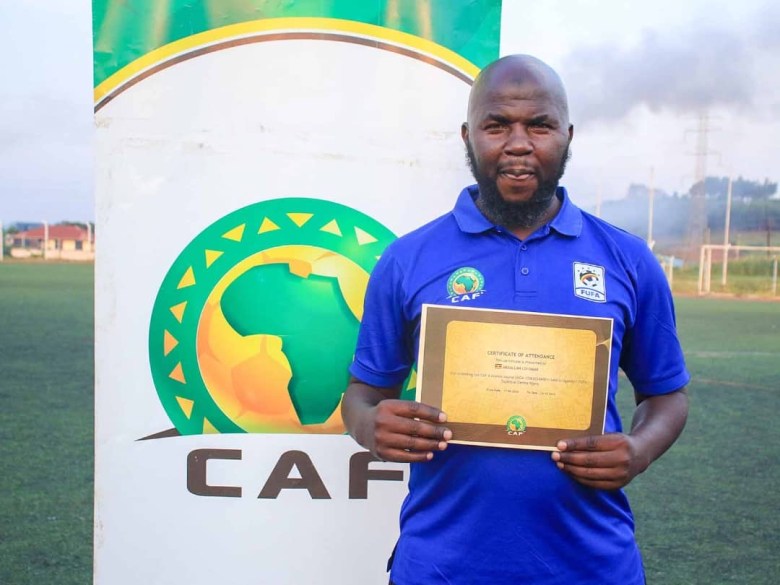
Among the active Caf C coaches currently available in the region are Samson Caesar Okuti, who guided Packwach Young Stars to promotion to the Fufa Big League, Villa Oromcan of Paidha Black Angels, Abraham Ogusi, Geria Stanley and Bruno Oribi.
However, football officials say the actual number of certified coaches may be lower because some coaches who undertook training under Caf's revised curriculum have not yet received their certificates.
The situation has been worsened by the low financial returns associated with coaching, prompting many former coaches to leave the profession despite the abundance of football talent in the region.
Fufa West Nile Competitions Committee chairman John Rwothomio said clubs that fail to meet coaching requirements risk serious penalties.
"Fufa regulations require Uganda Premier League clubs to have Caf A-licensed coaches, Caf B for the Big League and Caf C for regional league clubs," Rwothomio said.
"Clubs without qualified coaches risk match forfeits, points deductions and restrictions on player registration. The rules are clear and apply to all regions."
Rwothomio added that the regional football authorities will begin enforcing coaching qualification requirements more strictly in regional competitions next season.
"We are also instituting those requirements in regional league competitions next season. We encourage coaches to take advantage of available training opportunities so that they meet competition requirements," he said.
Although Fufa has opened opportunities for coaches to enrol in Caf B licensing courses, officials say very few candidates from West Nile have expressed interest.
Football analysts warn that unless clubs, local football leaders and other stakeholders invest deliberately in coach education, the region risks remaining a source of untapped football talent rather than a centre of sustained football success.
With talent in abundance but qualified coaches in short supply, West Nile's clubs face mounting pressure to address the coaching gap before Fufa's licensing regulations take effect.
