
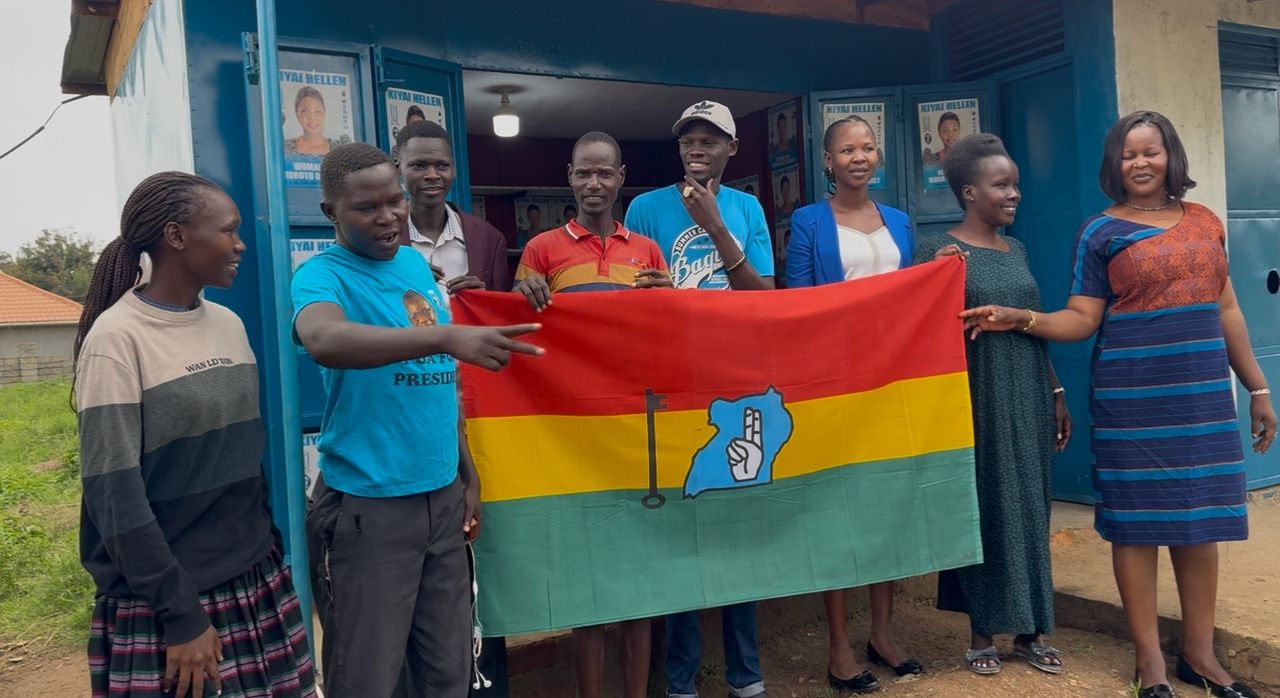
For decades, Karamoja has been a bastion of the ruling National Resistance Movement (NRM), often described as a “no-go zone” for opposition politics. But ahead of the 2026 general elections, that loyalty is showing signs of strain.
Opposition parties—including the Forum for Democratic Change (FDC), Democratic Party (DP), National Unity Platform (NUP), and Uganda People’s Congress (UPC)—have intensified activities in the region, opening offices and recruiting members.
In Moroto town, FDC unveiled its regional office, with former NRM youth leader Hellen Kiyayi crossing over to serve as FDC regional coordinator.
“I joined FDC because Karamoja deserves alternative voices,” Kiyayi said. “For too long, we have been left behind. I believe the opposition can champion real change.”
FDC president Patrick Amuriat Oboi, who presided over the launch, said, “This is the beginning of a new chapter in Karamoja’s politics. We want to assure the people here that they, too, can be part of Uganda’s wider struggle for democracy.”
NUP has also established a presence in Moroto. Despite setbacks in the 2021 elections, party coordinators say they are rebuilding grassroots structures to present candidates for local council and parliamentary positions.
“We are determined to give Northern Uganda people a new option for leadership,” said Brian J. Mungu, NUP’s Northern Uganda coordinator. “Our presence here is not symbolic—it is strategic.”
The UPC is making a quieter comeback, with posters of party president Jimmy Akena increasingly visible in trading centers, even without a formal office.
Observers link the opposition’s growth to local frustrations, including poor roads, incomplete dam projects, and failed agricultural programs that have left pastoralist communities struggling with food insecurity.
“We’ve been loyal for decades, but promises are never fulfilled,” lamented Emmanuel Guti, a resident of Moroto.
Internal disputes within NRM have also contributed to openings for the opposition. Local leaders claim chaotic primaries and perceived favoritism have left voters disillusioned.
“The primaries were chaotic. Many felt cheated, and that bitterness is pushing them to explore other parties,” said Simon Longoli, a Moroto Municipality councilor.
Hassan Loyoro, an aspiring councilor for South Division, added, “The presiding officers supported particular candidates of their interest and made them win.”
Still, analysts note that the NRM’s grip remains strong.
“For every opposition poster you see, there are still ten with President Museveni’s face,” said Simon Nangiro, a Moroto-based political analyst.
“Karamoja may be opening up politically, but the ruling party remains deeply entrenched.”
As Uganda approaches the 2026 elections, Karamoja is no longer a one-party region.
While the NRM continues to dominate, the opposition’s growing foothold signals a shifting political tide in an area once considered impenetrable.
