
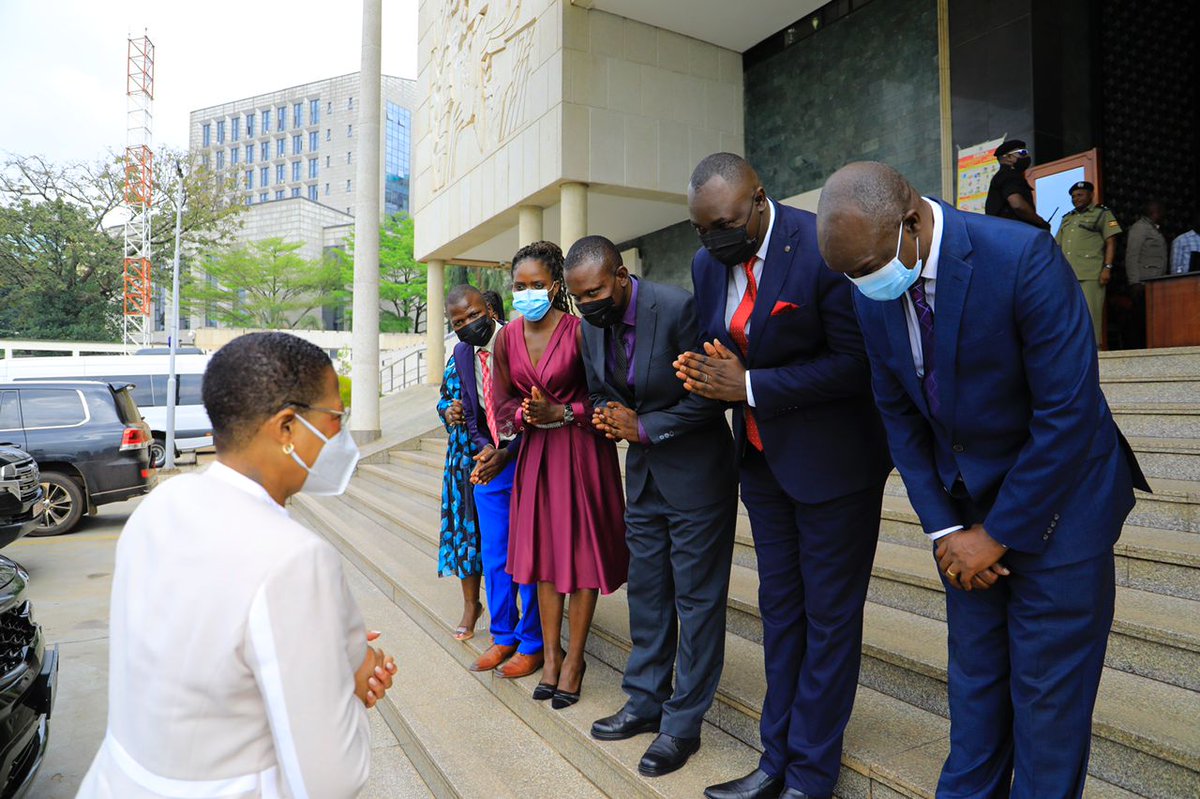
During the inauguration ceremony of the new executive team of the Uganda Parliamentary Press Association (UPPA) last week, the Speaker Anita Among dished out a few tips to journalists
"Don’t engage in hate reporting," she said (and rightly so). Hate reporting has no place in journalism.
It is her second bit of the advice that I found deeply troubling.
"Don’t disclose classified/unauthorised information [about parliament]," she added, this time firmly.
From what I have read, her statement went unchallenged by the gathered journalists, many of whom appeared to be mesmerised in her presence. She had just promised their Sacco Shs 50 million.
Yet if her wishes are upheld, it will set a very dangerous precedent on many fronts.
First, who defines what is “classified/confidential” information?
Is there an agreed basis for parliament and journalists on what constitutes confidential information like it may be the case with security organisations?
Is a story about the budget for the speaker’s office or the entire Parliament confidential even if it is funded by the taxpayer?
Here is what I think is going to happen [and it is already happening].
Many parliamentary journalists, afraid of upsetting Among and her colleagues, are going to self censor themselves and dance to the tunes of the House.
For many of these journalists, reporting about Parliament is their only source livelihood and can’t fathom life without accessing the marbled corridors of power.
In the same boat is the category of journalists who cover Parliament but are essentially politicians-in-waiting. These need the support and backing of in their future endeavours and therefore can’t upset the apple cart.
The few brave ones who will insist on writing accountability stories or who will ask tough questions will not be lucky. They are going to face the wrath of Parliament which could include refusal renew their accreditation, verbal threats or instructions to media houses to “deploy another person.”
All these scenarios are not new. They are engraved in the playbook titled: “Dealing with Noisy Journalists” authored years ago with a foreword written by the former speaker Rebecca Kadaga.
Kadaga used the playbook to ban NTV’s Francis Jjingo and Agnes Nandutu; Daily Monitor’s Yasin Mugerwa and Observer’s Suleiman Kakaire from reporting from Parliament for various reasons but related to their critical reporting.
Similarly, the new administration appears very sensitive to critical coverage.
I know for a fact that many independent minded journalists at Parliament have come under pressure to toe the official line. They are endangered species.
One, a veteran parliamentary reporter, told me recently that he has become depressed and was contemplating changing beats or leaving journalism all together. I encouraged him to hang on but I know it is difficult.
How to push back
Journalists need to press on whatever the case. These are not the best times to cover parliament but it will be a major abdication of their duty if they give Parliament a wide berth.
I know the risks are high but weighed against the fact that there is an eager public that relies on their work to understand what MPs do in their name, the trade-off is worthwhile.
UPPA needs to redeem its image amongst the fraternity.
The unflattering cartoons last week by Spire Ssentongo and Chris Ogon regarding the body’s “dangerously” close relationship with Parliament did not put the body in good stead. The photo showing the UPPA leadership bowing before Among is not the kind you can pin in the offices of an association that is supposed to be independent.
While it is only logical that UPPA maintain a working relationship with the House leadership {Speaker is the patron], they ought to keep a professional distance from the lawmakers they cover. This is basic journalism practice.
UPPA should avoid being used by lawmakers for selfish short term gains. It should instead lead the charge for a free and independent media at Parliament. Most importantly it should foster unity among journalists at Parliament.
Lastly MPs must stand up and defend the freedom of the parliamentary press. A free press at Parliament is also good for MPs.
Former journalists turned MPs like Ibrahim Ssemujju Nganda, Joyce Bagala, Bashir Kazibwe and others ought to take the lead because they know first hand the value of a free press.
Otherwise, at the moment the picture looks bleak for many journalists who cover Parliament. Without any concerted efforts to pushback on this affront, we can kiss farewell to bold, independent and accountability journalism at Parliament.
The author is editor of Nile Post and has covered politics extensively for the last 15 years.
