
The Uganda Medical Association (UMA) has said frontline health workers should not be blamed for the challenges facing Mbarara Regional Referral Hospital (MRRH), arguing that the concerns raised during an impromptu inspection by Health Minister Dr. Chris Baryomunsi highlight longstanding gaps within Uganda’s public healthcare system.
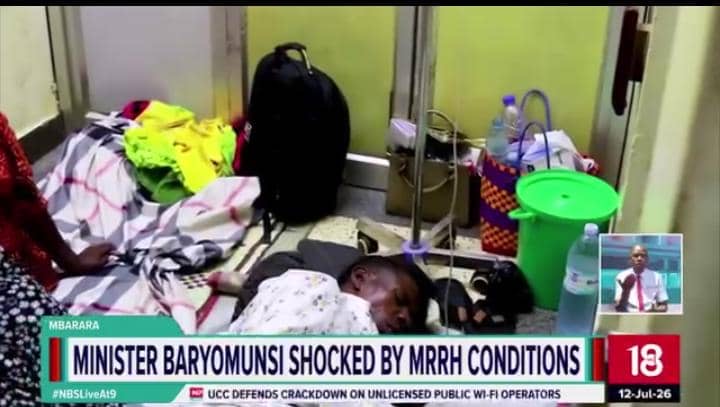
The association’s response follows Dr. Baryomunsi’s surprise visit to the hospital on the night of July 12, which was aired on NBS Television and revealed challenges including congestion, medicine shortages, delayed treatment, poor hygiene, and allegations that some patients were being charged for services meant to be provided free of charge.
During the inspection, the minister found that only two medical interns were attending to patients in the emergency department, while caretakers complained of spending days without receiving treatment and being forced to purchase medicines outside the hospital.
Patients also raised concerns over overcrowded wards, poor sanitation, and shortages of essential medical supplies including gloves and syringes.
Some patients further alleged that they had been asked to pay between Shs200,000 and Shs250,000 for services such as X-rays, CT scans, and MRI examinations, leaving some unable to access treatment.
The minister directed hospital management to investigate the allegations and address security concerns at the facility.
Responding to the revelations, UMA Ankole Branch Chairperson Dr. Elias Kiiza said the concerns raised by patients are genuine and require urgent attention, but should be viewed within the wider challenges affecting Uganda’s public health system.
Dr. Kiiza explained that Mbarara Regional Referral Hospital was originally designed to accommodate about 250 beds but currently handles more than 560 inpatients daily, while attending to over 600 outpatients every day.
The hospital serves a population of more than 3.5 million people across southwestern Uganda and also receives referrals from neighbouring Rwanda, Tanzania, and the Democratic Republic of Congo.
He added that the facility is operating at only about 26 percent of its approved staffing levels, forcing healthcare workers to provide services under extremely difficult conditions.
Dr. Kiiza said the minister’s observation that medical interns were managing the emergency department demonstrates the critical role interns play in sustaining Uganda’s healthcare system.
“It is therefore deeply concerning that proposals exist to abolish internship allowances. Medical interns constitute an essential component of emergency, maternity, surgical and critical care services in public hospitals. Removing their facilitation would only worsen existing human resource shortages and compromise patient care,” Dr. Kiiza said.
He urged government to reconsider any plans to remove internship allowances and instead focus on recruiting more healthcare workers, increasing funding for medicines and medical supplies, expanding infrastructure and bed capacity, improving staff welfare, and strengthening lower-level health facilities to reduce pressure on referral hospitals.
On allegations that some patients were extorted by hospital workers, Dr. Kiiza said UMA supports investigations to establish the facts while ensuring that genuine healthcare workers are distinguished from individuals who illegally impersonate medical personnel.
“The Uganda Medical Association wishes to reassure the public that the healthcare workers at Mbarara Regional Referral Hospital remain committed to providing ethical, compassionate and professional care despite difficult working conditions,” he said.
“While service delivery challenges undoubtedly exist, responsibility for these systemic constraints should not be placed solely upon front-line healthcare workers who continue to serve beyond the limits of available resources,” Dr. Kiiza added.
He said the situation at Mbarara Regional Referral Hospital should serve as a wake-up call for increased investment in public healthcare, noting that sustainable improvements will require more funding for human resources, infrastructure, medicines, equipment, and diagnostic services.
