
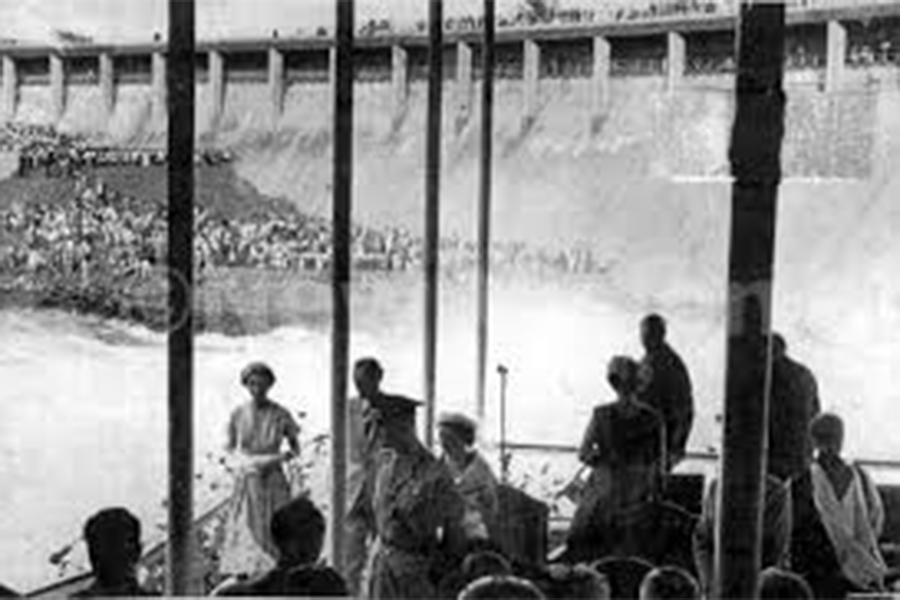
On this day in 1954, Queen Elizabeth II officially inaugurated the Owen Falls Dam in Jinja, in one of the most defining moments of Uganda’s colonial-era development.
The ceremony marked the beginning of large-scale hydroelectric power generation in Uganda and signalled the dawn of industrialisation across East Africa.
The Queen, accompanied by and the Duke of Edinburgh Prince Philip, arrived in Jinja by train to a grand reception by thousands of residents, colonial administrators, and traditional leaders.
At the highlight of the event, the Queen pressed a symbolic silver button, opening the sluice gates and releasing water through turbines—formally launching electricity generation at the site.
The construction of the dam dramatically altered the geography of the region, submerging the historic Ripon Falls, long regarded as the source of the Nile River, beneath the newly formed reservoir.
In her remarks, the Queen described the project as a powerful example of human ingenuity harnessing natural resources for economic growth and prosperity.
At the time, Owen Falls was the largest hydroelectric scheme on the continent, with an initial capacity of 150,000 kilowatts and plans to expand to ten turbines.
The project effectively turned Lake Victoria into a vast natural storage basin, then considered the world’s largest man-made reservoir by volume.
The dam’s development was guided by the 1947 Westlake Report authored by Sir Charles Redvers Westlake, which identified Owen Falls as the optimal site for both power generation and a strategic transport link.
His vision was that affordable electricity would attract industries such as copper smelting and textile manufacturing, transforming Jinja into an industrial hub.
These recommendations led to the formation of the Uganda Electricity Board in 1948, with Westlake serving as its first chairman.
Because of the Nile’s regional importance, the project also required delicate negotiations, culminating in a 1949 agreement with Egypt on water flow and storage.
Uganda’s Governor at the time, Andrew Cohen, championed the dam as a cornerstone of his modernisation agenda. The parallel construction of the Owen Falls Bridge further strengthened regional connectivity, forming a key link along the trade route from Mombasa to the interior.
In the decades that followed, the dam powered Uganda’s early industrial boom, supporting major enterprises like Nyanza Textile Industries and Uganda Breweries Limited.
Today, the facility—now known as the Nalubaale Power Station—remains a cornerstone of Uganda’s energy sector and a lasting symbol of the country’s industrial transformation.
