
The World Health Organization (WHO) has launched a new technical package outlining seven evidence-based strategies to help governments and communities reduce drowning deaths, urging countries to adopt coordinated measures to tackle one of the world's most overlooked public health challenges.
The PROTECT package was unveiled on Thursday in Accra, Ghana, ahead of World Drowning Prevention Day, observed annually on July 25.
Globally, nearly 300,000 people die from drowning every year, making it one of the ten leading causes of death among children aged between five and 14 years. More than 90 percent of these deaths occur in low- and middle-income countries, according to WHO.
"Every drowning is a tragedy, and most are preventable," WHO Director-General Dr Tedros Adhanom Ghebreyesus said.
"The seven PROTECT strategies give countries practical, evidence-based approaches to prevent these tragedies, including making water transport safer, teaching school children to swim and preparing for floods. Drowning prevention isn't the job of one ministry; it belongs to everyone, and the lives it saves are the reward."
The package translates WHO's Global Strategy for Drowning Prevention, launched in 2025, into practical policy guidance for governments.
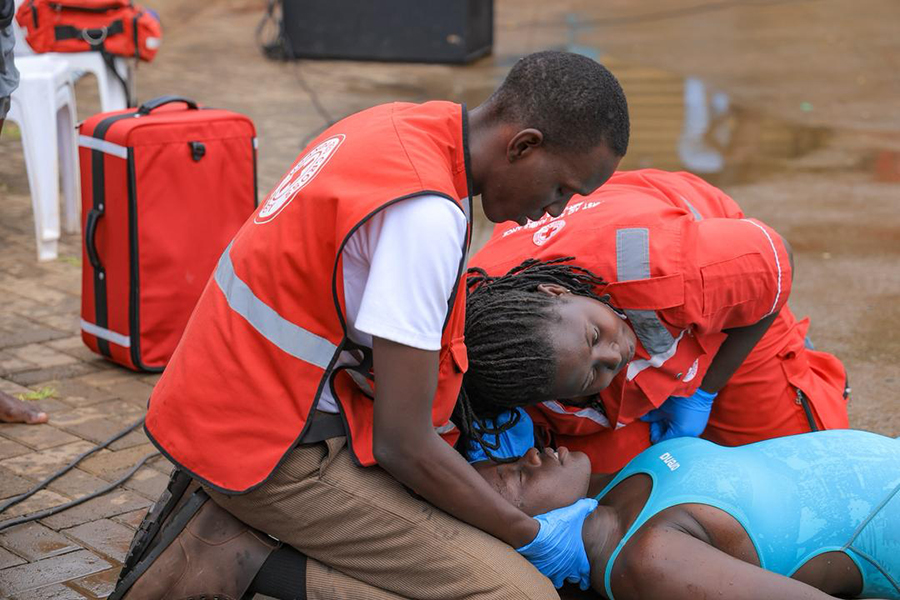
The seven interventions are grouped under the acronym PROTECT: improving physical infrastructure around water; strengthening rescue and resuscitation capacity; enhancing occupational safety for people working on water; improving water transport safety; expanding swimming and water safety education; strengthening childcare and safeguarding systems; and improving preparedness for floods and other water-related emergencies.
WHO said climate change is increasing drowning risks through more frequent floods, storms and heatwaves, making preventive action more urgent.
Uganda's drowning burden
The launch comes as Uganda continues to face a significant drowning burden, particularly in communities living around lakes, rivers and other water bodies.
According to findings from the Uganda National Drowning Prevention Strategy developed by the Ministry of Health and partners, drowning claims an estimated 1,400 to 3,000 lives annually, although experts believe the true burden is substantially higher because many deaths go unreported or are misclassified.
Children, fishermen, boat operators, passengers using water transport and communities living around Lake Victoria, Lake Albert, Lake Kyoga and the River Nile remain among the most vulnerable groups.
Uganda has also witnessed repeated fatal boat accidents on major water bodies, highlighting persistent gaps in water transport safety, use of life jackets, emergency response and public awareness.
To address these challenges, the government adopted the National Drowning Prevention Strategy (2023–2028), which seeks to strengthen surveillance, improve water transport safety, expand swimming and rescue skills, promote community awareness and enhance emergency response systems.
Uganda's drowning prevention efforts have received significant support from researchers at Makerere University School of Public Health, whose studies have helped generate evidence on the country's drowning burden and risk factors.
Working with the Ministry of Health, local governments and international partners, the School has conducted research on drowning hotspots, water transport safety, life jacket use and community-based prevention programmes to inform national policy.
The school has also supported awareness campaigns in high-risk fishing communities and contributed to training programmes on water safety and emergency response.
International partners, including the Walter Reed Project and other public health collaborators, have supported research, surveillance strengthening and capacity building aimed at improving injury prevention and emergency preparedness in Uganda. These initiatives complement broader government efforts to strengthen public health systems and reduce preventable deaths.
Public health experts say improved data collection remains essential because many drowning deaths occur in remote communities and are never captured in official records.
WHO said effective drowning prevention requires collaboration across sectors including health, education, transport, disaster management, local government and community organisations.
This year's World Drowning Prevention Day is being observed under the theme, "Unite to Turn the Tide," calling on governments and communities to work together to implement proven interventions that can save thousands of lives.
Health experts say Uganda's ongoing implementation of the National Drowning Prevention Strategy, coupled with stronger enforcement of water transport regulations, wider access to swimming and rescue training and continued investment in research, could significantly reduce drowning deaths in the coming years.
