
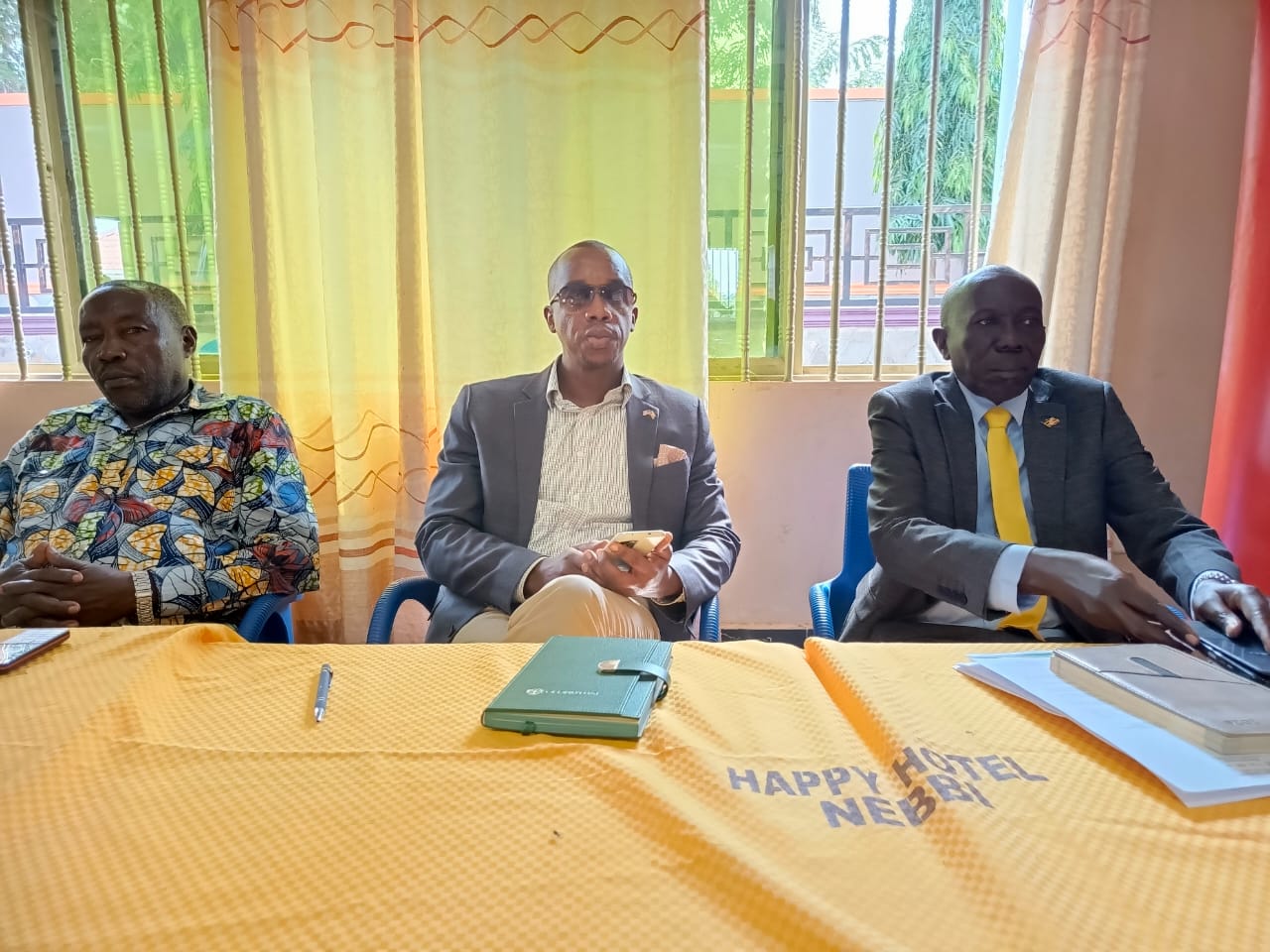
The State Minister for Health in charge of Primary Health Care, Dr Charles Ayume, has urged leaders in West Nile to incorporate traditional justice mechanisms into efforts to address Sexual and Reproductive Health and Rights (SRHR) cases, arguing that community-led interventions can help reduce stigma and improve access to support for victims.
Ayume made the remarks during a meeting with district leaders in Nebbi Municipality, where stakeholders reviewed the implementation of the PROTECT SRHR project between July 2025 and July 2026.
He said cases of teenage pregnancy, defilement and early marriage remain prevalent across the region, yet many victims do not report them to health facilities or the police.
According to the minister, traditional justice systems, if guided by health and legal standards, can help bridge the gap between communities and formal institutions by encouraging victims to seek treatment and counselling while cases are being addressed.
"I once had a maid from Nebbi whom I realised was a victim of defilement and the perpetrator was a teacher. She said the man didn't give any support and the baby was neglected, so she went to Kampala to make ends meet while the man remained comfortable in the district," Ayume said.
He argued that some cases continue to be quietly settled within communities without victims receiving medical care or legal redress.
"Some of these offenders need to be dealt with publicly to serve as examples to others. If a solution requires a person to be disciplined in public, I think it will have more impact. Others will know that the system is acting and no longer asking them politely," he said.
Ayume called on project implementers to identify and train members of traditional institutions to support community awareness, encourage victims to seek medical treatment and counselling, and strengthen referral systems to the formal justice sector.
However, he did not suggest that traditional justice should replace criminal prosecution for offences such as defilement, which remain criminal offences under Ugandan law.
Worrying trends
A report presented during the meeting showed increasing cases of gender-based violence (GBV), teenage pregnancy and early motherhood, alongside poor attendance for antenatal care (ANC) during the first trimester and declining male involvement in antenatal care and family planning.
The PROTECT SRHR project is a multi-sectoral initiative implemented through the health, education and community development departments to strengthen sexual and reproductive health services across participating districts.
PROTECT SRHR Team Leader Herbert Mugumya said Nebbi had some of the poorest reproductive health indicators among districts that do not host refugees.
"Among the districts that are not hosting refugees, Nebbi registered some of the worst indicators in teenage pregnancy, early marriages, gender-based violence and maternal deaths," Mugumya said.
He noted that many of the challenges originate at household and community level, making community-based interventions essential.
"Most of these issues involve parents, children and other community members, so many of the cases highlighted in the report can be addressed from within the community," he said.
Some district leaders questioned the language used in the project, arguing that terms such as teenage pregnancy and child marriage risk downplaying criminal offences.
Nebbi Resident District Commissioner Robert Abak said pregnancies involving girls below the age of 18 should be treated primarily as criminal cases of defilement.
"We need to arrest these criminals and put them in prison. When a 15-year-old girl becomes pregnant, that is a case of defilement, and defilement is a criminal offence," Abak said.
He attributed the rising number of teenage pregnancies largely to poverty, saying many young people are being lured into sexual relationships because of economic hardship.
"The biggest reason for the rise in teenage pregnancy is poverty. Young girls and boys are easily lured into sex because they cannot afford basic necessities," he said.
The four-year PROTECT SRHR project is funded by the Embassy of the Kingdom of the Netherlands at a cost of €20 million (about Shs84.5 billion).
It is implemented by the International Rescue Committee in partnership with World Vision Uganda, Reach A Hand Uganda and Humanity & Inclusion across Nebbi, Pakwach, Arua, Yumbe and Koboko districts.
According to the latest project report, 64.8 percent of expectant mothers missed antenatal care during the first trimester, while the teenage pregnancy rate stands at 22.1 percent.
The report also recorded 725 cases of gender-based violence involving adolescents aged 15 to 19 years, 594 new HIV infections and eight institutional maternal deaths.
