
Uganda's diplomatic missions abroad have been directed to make securing international markets for locally produced goods their top priority as the government intensifies efforts to grow exports, attract investment and drive economic transformation.
The directive was issued at the close of the Ministry of Foreign Affairs' Annual Retreat on the implementation of Uganda's Economic and Commercial Diplomacy (ECD) Strategy.
Addressing the retreat, Acting Minister of Foreign Affairs Haruna Kyeyune Kasolo said Uganda's embassies must move beyond traditional political representation and become the country's commercial frontline.
"Our missions abroad are not simply Uganda's political representatives. They are increasingly this country's commercial frontline," Kasolo said.
He urged ambassadors and diplomats to actively promote Ugandan products during international engagements.
"Our missions abroad should be able to market our products. Without markets back home, there is no business. Wherever our representatives go for meetings, they should ensure they carry some of these products as a way of promoting them," he said.
Kasolo singled out coffee, dairy products, fresh fruits, matooke and other agricultural commodities as priority exports, saying Uganda's diplomatic missions should treat the promotion of local products as a central objective of economic and commercial diplomacy.
"It is the promotion of Ugandan products abroad, especially coffee, milk and other products, including fresh fruits and matooke. There is a lot of demand out there, but no one is able to promote these products," he said.
He linked the strategy to the Parish Development Model (PDM), arguing that increased household production can only generate wealth if government succeeds in securing reliable export markets.
"Economic and Commercial Diplomacy and PDM are two ends of the same value chain. PDM organises production at the household and parish level, while ECD's task is to find the markets, the buyers, the investors and the value-addition partners that can absorb that production and turn it into foreign exchange and household income," Kasolo said.
Drawing on his recent visit to the United Kingdom, Kasolo highlighted the export potential of Ugandan produce.
"When I travelled to the UK, I looked for matooke. A small 10-kilogram box was selling for about £20, nearly Shs100,000. Yet here, an entire bunch sells for less than Shs10,000. We have a duty to support Ugandans through our missions," he noted.
However, he cautioned that identifying markets alone would not be sufficient unless Uganda guarantees consistent production and supply.
"We are pressurising our Heads of Mission abroad to look for markets for our products, but government agencies here must also ensure there is consistency in production because we can secure markets but have nothing to supply," he said.
Kasolo directed Uganda's diplomatic missions to align their market intelligence and buyer engagement efforts with the Parish Development Model value chains and work closely with the Ministries of Agriculture and Local Government to connect international opportunities with producer groups across the country.
He also called for greater accountability within Uganda's foreign missions, criticising some accounting officers for failing to work transparently with Heads of Mission.
"The Head of Mission is the representative of the President. Therefore, you are accountable. This must stop if we are to achieve our intended objectives," he said.
Kasolo further urged diplomats to focus on measurable outcomes rather than activities.
"Results-based reporting should be measured in contracts, investments, tourist arrivals and jobs—not meetings attended," he emphasised.
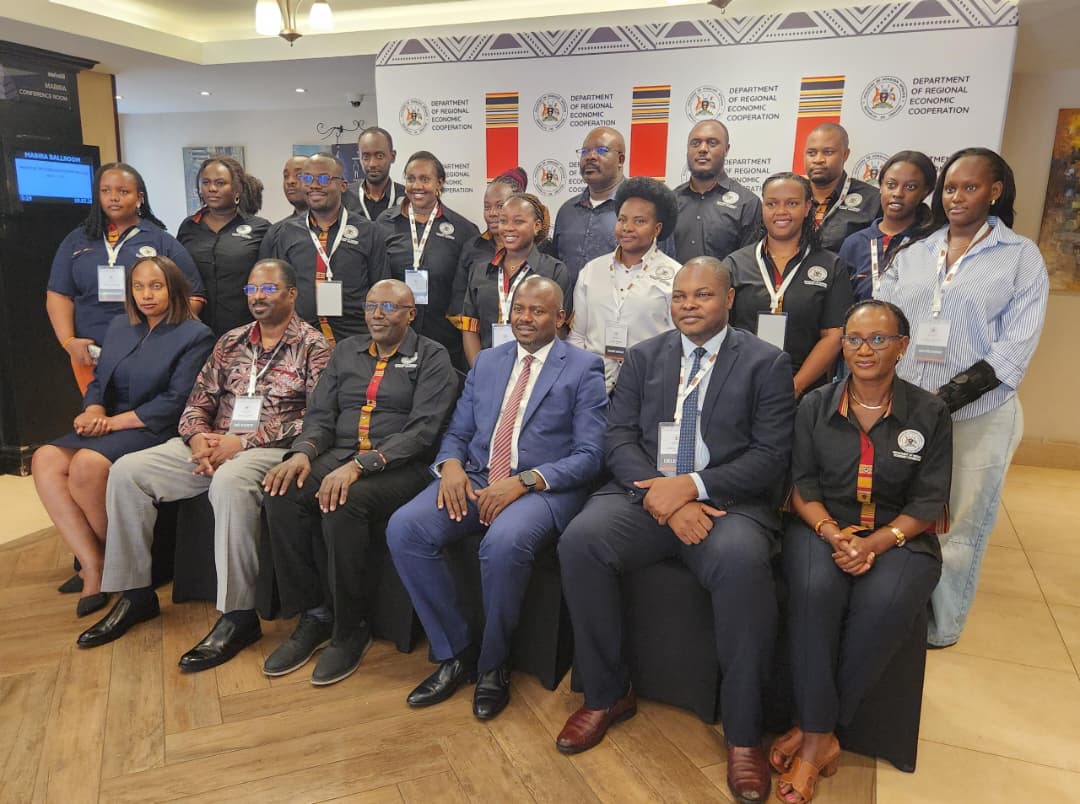
The four-day retreat, held from July 6 to July 9 under the theme, "Strengthening Institutional Collaboration for Effective Economic and Commercial Diplomacy Implementation," brought together officials from the Ministry of Foreign Affairs, Ministry of Finance, Ministry of Energy, Ministry of Tourism, Uganda Wildlife Authority, National Social Security Fund (NSSF), Heads of Uganda Missions abroad and other stakeholders.
Participants discussed trade promotion, investment facilitation, market access, tourism competitiveness, free zones, market intelligence, bankable projects and private-sector participation, all aimed at advancing Uganda's Ten-Fold Growth Strategy.
Addressing the retreat, Permanent Secretary and Secretary to the Treasury Ramathan Ggoobi said Economic and Commercial Diplomacy has become central to Uganda's economic transformation agenda.
"Economic and Commercial Diplomacy is no longer a complementary function but a frontline driver of Uganda's economic transformation," Ggoobi said.
He noted that Uganda's Ten-Fold Growth Strategy requires increased exports, foreign direct investment, tourism inflows and stronger diaspora engagement, stressing that domestic policies alone cannot deliver the country's long-term development ambitions.
Ggoobi challenged Uganda's diplomatic missions abroad to transform into agile economic delivery units focused on measurable results.
He urged the missions to move beyond reporting activities and instead focus on tangible outcomes, including increased exports, higher tourist arrivals, greater foreign direct investment and strategic partnerships that will support Uganda's ambition of building a US$500 billion economy.
