
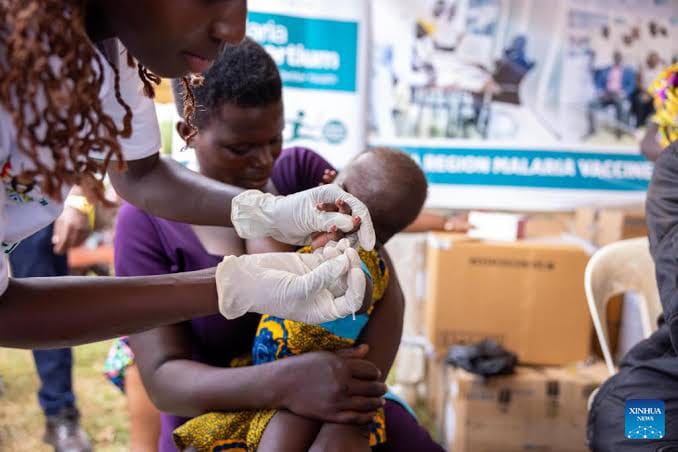
NEBBI — Thousands of children in Nebbi District remain at increased risk of malaria after the district missed its target for completion of the fourth dose of the R21/Matrix-M malaria vaccine by 63.4 percentage points.
New district health data indicates that only 26.6 percent of children aged between nine and 14 months had completed the fourth dose of the vaccine by June, against the Ministry of Health target of 90 percent.
The R21 malaria vaccine is administered in four doses to children aged between six and 18 months to reduce the risk of severe malaria.
Health officials warn that the low completion rate leaves many children exposed, especially as the rainy season increases the likelihood of malaria transmission.
Sister Joyce Opiem Cengmoko, the Assistant District Health Officer in charge of maternal health, attributed the low uptake of the fourth dose to poor health-seeking behaviour among caregivers and the long interval between the third and fourth doses.
The fourth dose is administered six months after the third dose, a gap she said has contributed to many parents forgetting to return with their children.
"We are really following them. We do follow up to homes, but sometimes we find children at home alone. The outreaches are a very hectic exercise coupled with our terrain, especially in Erussi and Goli," Sister Joyce said.
She added that limited resources have also affected efforts to conduct door-to-door follow-ups and immunisation campaigns.
"Financial challenges play a big role in achieving door-to-door immunisation. Primary Health Care funds alone cannot support the exercise, coupled with very poor health-seeking behaviour of our people. But we must follow them yet resources are limited," she said.
However, Sister Joyce said the district has recorded progress compared to the initial stages of the programme, noting that the malaria vaccine is still relatively new and communities will gradually adopt it like other routine childhood immunisations.
The R21 malaria vaccine rollout in northern Uganda was launched in Lira City in April 2025, while Nebbi District began administering the vaccine during the first quarter of the 2025/2026 financial year between July and September.
District records show that vaccine uptake among children aged six months was high, reaching 91 percent in the first quarter.
Coverage for the second and third quarters stood at 70 percent against the 90 percent target.
However, completion dropped sharply in the fourth quarter, when children due for the fourth dose at 18 months recorded only 26.6 percent coverage.
Nebbi District Health Officer Dr Justine Okwairwoth said the challenge is partly linked to changes in the immunisation schedule.
Previously, some childhood vaccines, including rubella vaccination, were administered and summarised at nine months, but the malaria vaccine schedule requires an additional dose when children reach one-and-a-half years.
"It has not been in practice with the mothers, so most of them end up forgetting. Since there is a six-month gap between the third and fourth dose, they are taking long to adjust," Dr Okwairwoth said.
He explained that most caregivers begin the vaccination process well but fail to return for the final dose.
"Coming with a malaria vaccine that starts at six months, they start well with the immunisation at six months, seven months and eight months, but the problem comes with the last dose, which is six months after," he said.
Dr Okwairwoth said although the fourth dose can still be given up to five years of age, health workers encourage parents to complete the schedule before a child turns two years.
Nationally, the Ministry of Health administered more than 3.1 million malaria vaccine doses between April 2025 and February 2026.
While uptake of the first dose among children aged six to 11 months was nearly 100 percent, coverage declined for subsequent doses, with the second dose at 67 percent and the third dose at 64 percent, according to health ministry data.
Health officials say improving completion rates remains critical because partial vaccination reduces the overall protection the R21 vaccine is designed to provide against malaria.
