
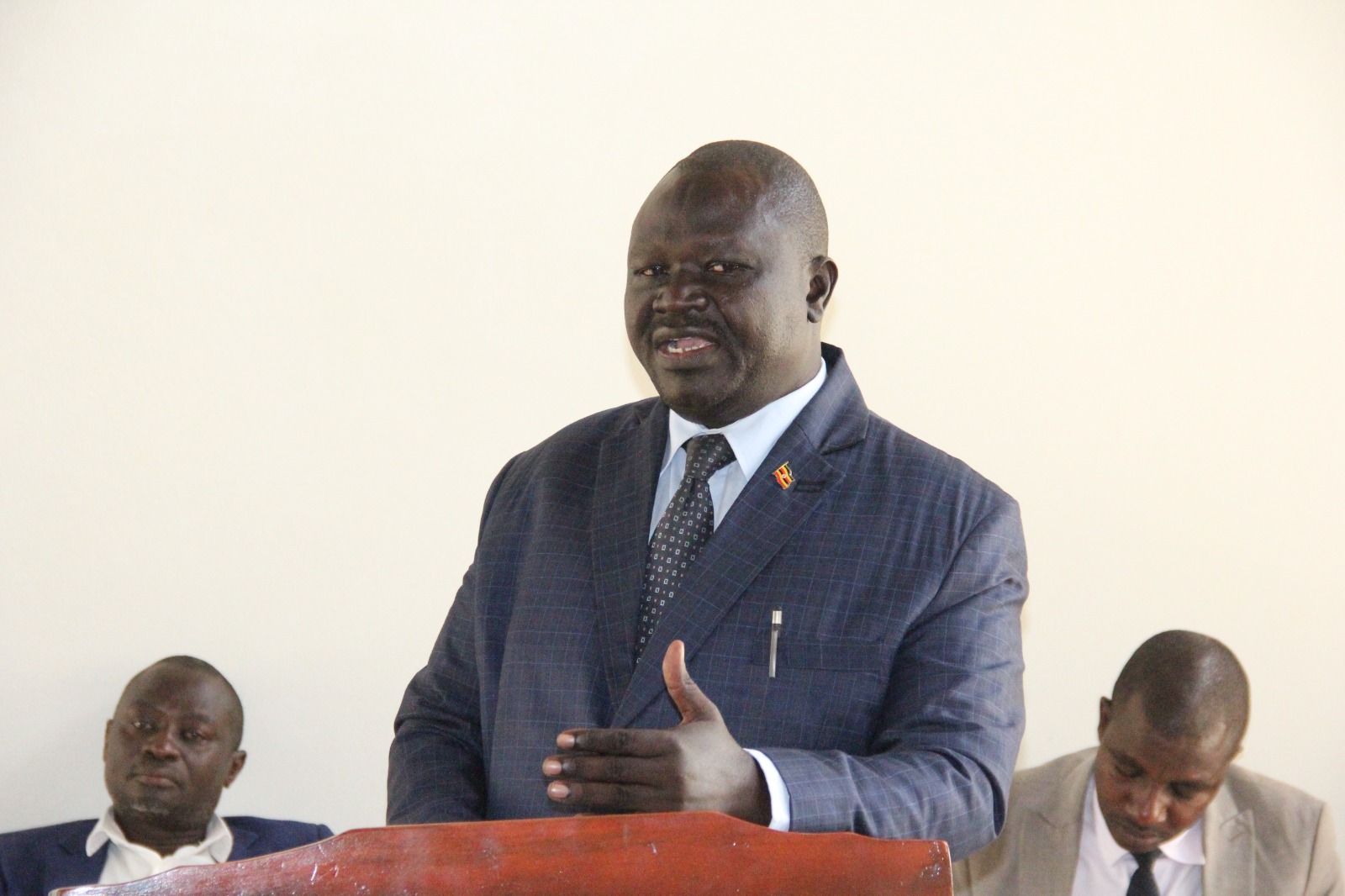
KITAGWENDA — The Chief Administrative Officer (CAO) of Kitagwenda District, Moses RK Dalili, has directed local government leaders to intensify sensitisation on the government’s micro-irrigation programme to help farmers increase production and cope with prolonged dry spells.
Dalili issued the directive on Thursday while addressing parish chiefs, sub-county chiefs and town clerks during a Parish Development Model (PDM) engagement meeting held at the district headquarters.
He said although government is supporting farmers to adopt micro-irrigation technologies, uptake of the programme in Kitagwenda remains low.
"Despite the government support, the number of farmers embracing micro-irrigation is still low. You must intensify sensitisation so that our farmers understand the benefits of the programme. Micro-irrigation is one of the most reliable ways of ensuring continuous production, even during the dry season," Dalili said.
Kitagwenda is among districts that frequently experience prolonged dry conditions, which often affect agricultural output, especially among maize farmers who largely depend on rain-fed agriculture.
Dalili urged local leaders to explain the government’s cost-sharing arrangement to farmers, under which beneficiaries contribute 25 percent of the cost while government covers the remaining 75 percent.
"Advise farmers to take advantage of this opportunity. Government meets the biggest share of the cost, while the farmer only contributes 25 percent. This investment will enable them to produce throughout the year and increase household incomes," he said.
According to district officials, 55 farmers benefited from the Micro-scale Irrigation Programme during the 2024/2025 financial year. In the current 2026/2027 financial year, four additional farmers are expected to receive support under the programme.
The Micro-scale Irrigation Programme was introduced by the government through the Ministry of Agriculture, Animal Industry and Fisheries in 2020 to improve climate resilience, promote commercial agriculture and increase access to modern irrigation technologies among smallholder farmers.
The programme provides financial support to farmers to acquire irrigation equipment, helping them shift from dependence on seasonal rainfall to year-round production.
It is also aimed at addressing the growing impact of climate change, including unpredictable rainfall patterns and prolonged droughts that continue to affect agricultural productivity across the country.
District leaders believe increased awareness and adoption of micro-irrigation will enable more farmers in Kitagwenda to maintain production during dry seasons, improve food security and raise household incomes.
