
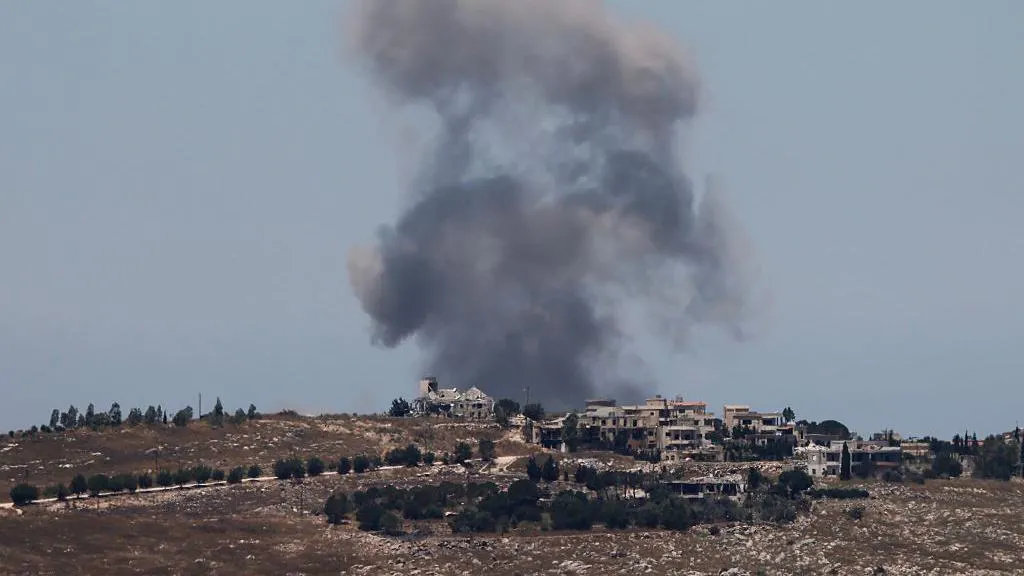
BBC - An Israeli drone strike on a car in southern Lebanon has killed four people, including a headteacher, Lebanese state media say.
Israel's military said the car had approached a security zone and had been deemed a threat.
It is the deadliest Israeli attack since the announcement of a ceasefire in Lebanon last month.
There has been a fragile calm since then, although Israel continues to carry out sporadic strikes, accusing Iran-backed Hezbollah of violating the deal.
Lebanon's state-run National News Agency reported that, apart from the headteacher, the victims included her mother, a female foreign domestic worker and a male Syrian worker.
It said the three women and the man were returning after visiting their family home in the town of Nabatieh al-Fawqa when a "drone launched a strike with a guided missile", killing them instantly.
The Israeli military said the suspects had posed a threat to its soldiers.
"Following identification, the Israeli Air Force conducted a precise strike in order to remove the threat."
Lebanon was pulled into the conflict on 2 March, when Hezbollah launched missiles into Israel in retaliation to an Israeli strike that killed Iran's supreme leader during the first day of the war it and the US started against Iran.
Israel responded with an air campaign across Lebanon and a ground invasion in the south.
Israeli attacks in Lebanon have killed at least 4,319 people since the current round of hostilities began, according to the Lebanese health ministry.
More than 12,203 have been injured, and more than 1.2 million people have been displaced, Lebanon says.
Israel say 36 of its soldiers and four civilians have been killed on both sides of the border.
A US-brokered ceasefire between Israel and Lebanon on 16 April failed to stop the fighting.
Israel and Lebanon agreed in June to renew the truce, and the US said it would help guide the creation of "pilot zones in which the Lebanese Armed Forces will take exclusive control of the territory to the exclusion of all non-state actors" - a reference to Hezbollah.
Parts of southern Lebanon remain under Israeli occupation, with no timeline for a possible pull out.
