
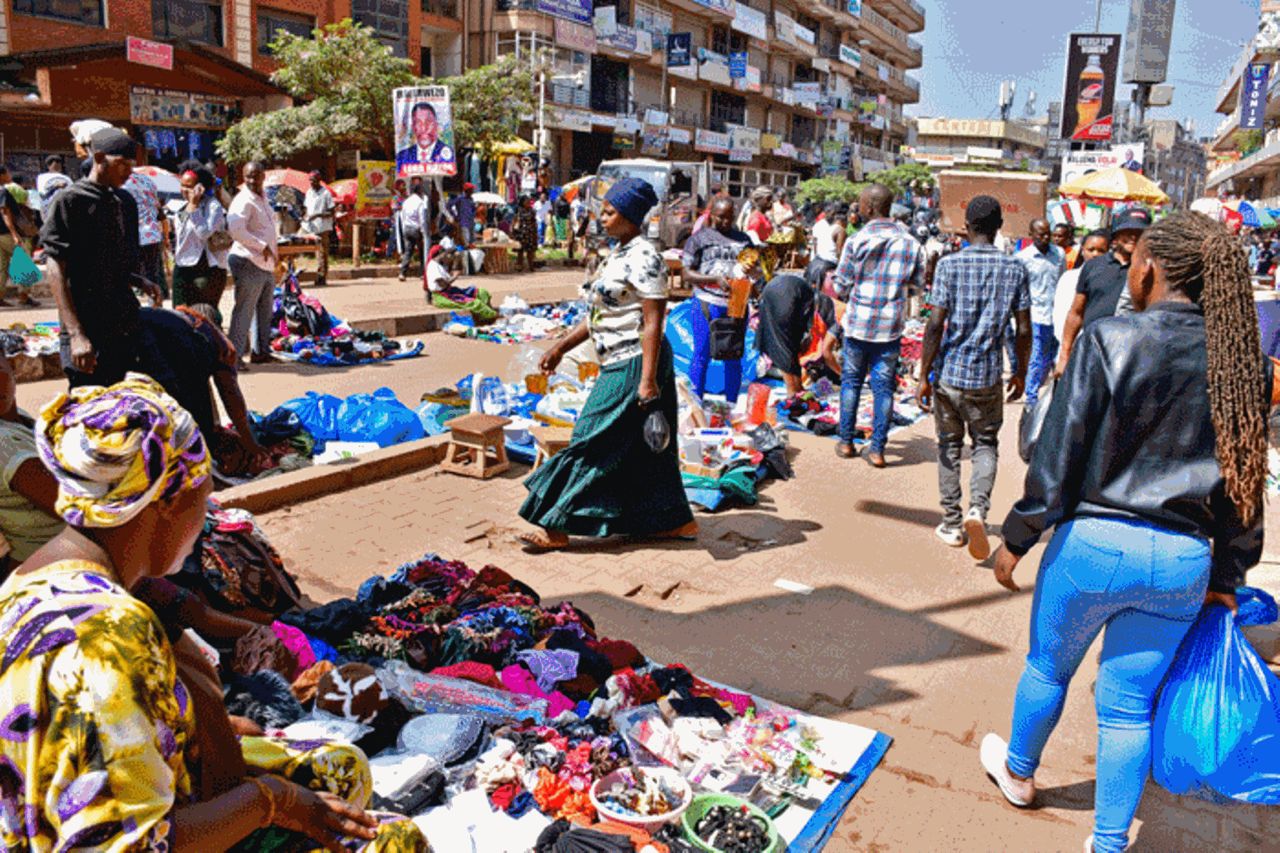
President Museveni has likened street vending to the business of making coffins, saying both are harmful to society and should give way to activities that contribute positively to the country's economy.
Speaking during his national address on Saturday, Museveni said the issue of trade order was among the concerns raised by the Inter-Religious Council of Uganda during recent meetings, with some religious leaders expressing concern over the government's crackdown on hawkers.
The President dismissed criticism of the operation, arguing that the removal of vendors from sidewalks is necessary to protect legitimate businesses, improve public health and enhance urban order.
"I told the Bishops and the Sheikhs that I can see that I am in real trouble. Very soon, I will be charged for damaging the business of the coffin-makers by reducing the deaths of Ugandans from AIDS, Corona, Ebola, Measles and so on," Museveni said.
"Yes, the coffin makers will lose business because it was a bad business that was at the expense of society. Instead, they should make chairs and beds for Ugandans that did not die."
Drawing the comparison further, Museveni described hawking as "an economy and health killer," arguing that it disadvantages traders operating from shops and markets while denying government tax revenue.
He said vendors selling goods on streets and pavements often operate outside the tax system because they are not registered or easily identifiable.
"Hawking kills the economy by denying the users of shops and markets business because customers buy from hawkers who do not pay tax because they are not identifiable; they do not pay rent. How will the economy survive if people do not pay taxes on rent and sales?" he asked.
The President also raised public health concerns, saying food and other products sold in open spaces are exposed to contamination, while authorities are unable to trace those responsible if unsafe goods reach consumers.
He further criticised hawkers for occupying sidewalks, saying the practice forces pedestrians onto roads where they compete with vehicles and motorcycles, increasing the risk of accidents and worsening traffic congestion.
"Selling must be in shops, markets or supermarkets. Even there, you must be registered so that you are accountable for what you sell and you also pay tax," he said.
Museveni, however, suggested that local governments should identify land where displaced vendors can operate legally, provided they are licensed, registered and meet their tax obligations.
"The local governments should look into the possibility of giving land for workplaces for the hawkers that have been sent away from the sidewalks. However, even there, everybody must be licensed, identifiable, accountable and must be paying taxes," he added.
The President also reaffirmed his government's commitment to restoring wetlands and protecting natural forests, accusing some Ugandans of knowingly encroaching on environmentally sensitive areas despite repeated government warnings since 1986.
He said wetlands are critical to Uganda's rainfall patterns and water security, estimating that about 40 percent of the country's rainfall is sustained by local wetlands together with ecosystems in neighbouring countries.
Museveni questioned officials who authorised wetland encroachment, saying the government would review such decisions while pressing ahead with environmental restoration.
"However, the operation to restore the wetlands and protect our natural forests will continue," he said.
