
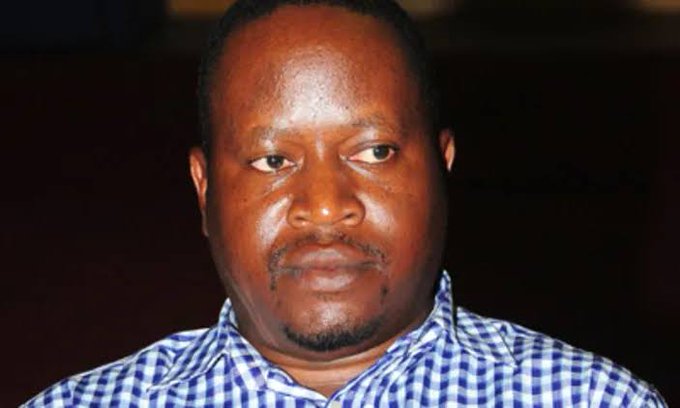
MTN Uganda has formally commenced the process of appealing a High Court judgment that awarded its former employee, Richard Mwami, more than Shs2.3 billion in damages for malicious prosecution.
Court documents filed on July 2 by the company's lawyers, Kampala Associated Advocates, show that MTN has lodged a Notice of Appeal and requested certified copies of the court record, six days after Acting Justice Isaac Bonny Teko delivered the judgment on June 26.
The High Court found MTN liable for maliciously prosecuting Mwami over a 2012 mobile money fraud case and awarded him Shs1.809 billion in special damages, Shs400 million in general damages and Shs100 million in exemplary damages, together with interest and legal costs.
Justice Teko held that MTN was the "moving force" behind the criminal proceedings despite evidence that the company's own forensic audit did not implicate Mwami in the fraud.
However, MTN argues that the judgment raises significant legal questions regarding the respective responsibilities of private complainants, investigators and prosecutors within Uganda's criminal justice system.
According to sources familiar with the company's legal strategy, the appeal will primarily challenge the High Court's finding that MTN was legally responsible for Mwami's prosecution.
The company contends that after uncovering suspected fraud involving billions of shillings on its mobile money platform, it fulfilled its legal obligation by reporting the matter to the Uganda Police Force.
It argues that subsequent investigations, evaluation of evidence, approval of charges and prosecution of suspects became the constitutional responsibility of the State through the Director of Public Prosecutions (DPP), whose prosecutorial powers are exercised independently.
Legal experts interviewed by this publication said the issue is likely to become the central question before the Court of Appeal.
"In Uganda, criminal proceedings are prosecuted by the State. That is why every criminal case is brought in the name of the Republic, for example, 'Uganda versus...' rather than in the name of the complainant," one senior lawyer said.
The lawyers noted that while complainants provide information to investigators, decisions on whether sufficient evidence exists to charge a suspect are made by the Police and ultimately the DPP, whose independence is guaranteed under the Constitution.
They cautioned that if the High Court ruling remains undisturbed, it could have significant implications for companies, financial institutions and individual citizens who report suspected criminal conduct to law enforcement agencies.
Several lawyers described the judgment as establishing a potentially far-reaching precedent, warning that complainants could increasingly face civil liability even after independent investigations and prosecutorial decisions have been made.
"The Court of Appeal now has an opportunity to clarify where the legal line should be drawn between reporting suspected criminal conduct and being held liable for malicious prosecution," another legal expert said.
The lawyers emphasised that their observations were not intended as criticism of the High Court's decision but as recognition that the appeal raises an important legal question requiring authoritative guidance from the appellate court.
In his judgment, Justice Teko found that MTN had done more than merely report suspected fraud to the authorities.
The court concluded that the company actively instigated and procured Mwami's prosecution, thereby satisfying the legal requirements for liability in a malicious prosecution claim.
On that basis, the court entered judgment against MTN while striking the Attorney General from the suit after finding that the claim against the Government had been filed outside the statutory limitation period.
Following the judgment, MTN said it was reviewing the decision with its legal advisers.
"We are studying the judgment carefully with our legal advisors and are considering all available options, including an appeal. MTN Uganda remains committed to the highest standards of corporate governance and to conducting its business in accordance with the law," the company said.
The filing of the Notice of Appeal now confirms that MTN intends to challenge the High Court's decision before the Court of Appeal in what legal observers expect to become one of Uganda's most closely watched corporate litigation cases.
Beyond the financial award, the appeal is expected to determine the extent to which companies that report suspected criminal activity can later be held liable for prosecutions ultimately conducted by the State, a ruling that could significantly shape Uganda's jurisprudence on malicious prosecution.
