
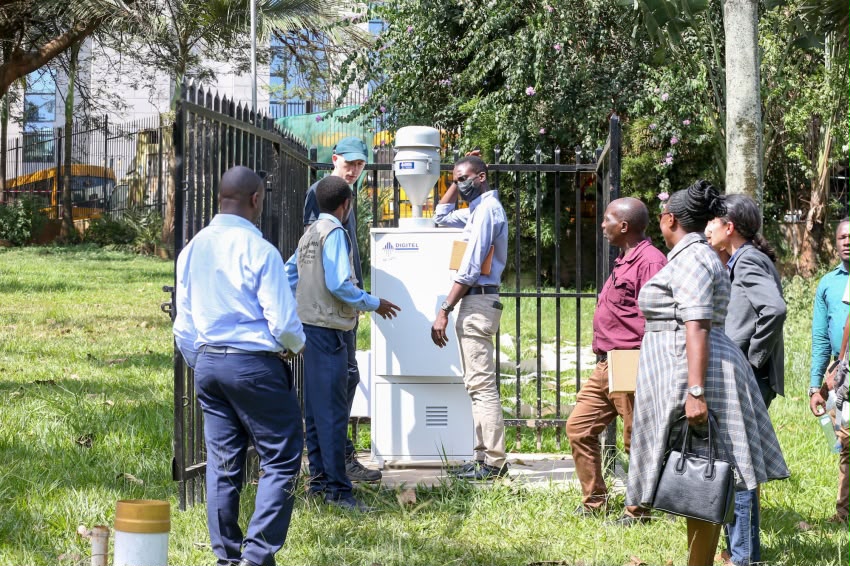
Kampala has been shortlisted among the world’s top 15 cities for the prestigious 7th Guangzhou International Award for Urban Innovation, marking a significant international recognition of the Kampala Capital City Authority’s (KCCA) efforts to build a cleaner, healthier, and more sustainable city.
The city earned this recognition through its Air Quality Improvement Project, which demonstrates how technology, community participation, and data-driven planning are being applied to address one of Kampala’s most pressing environmental challenges.
The announcement comes shortly after KCCA was named the best urban authority at the 2026 National Environment Sustainability Awards, further strengthening its reputation as a leader in environmental management and climate resilience.
The 7th Guangzhou International Award for Urban Innovation received a record 381 project submissions from 248 cities across 60 countries.
The initiatives cover innovation in climate resilience, green and low-carbon development, digital governance, artificial intelligence, public service delivery, and social inclusion.
Following a rigorous evaluation by a Technical Committee composed of nine international experts, only 15 cities were selected for the final stage of the competition.
The shortlisted cities are Bogota (Colombia), Bilecik (Türkiye), Chania (Greece), Gemeente Heerlen (Netherlands), Istanbul (Türkiye), Kampala (Uganda), Mandaluyong (Philippines), Neuquén (Argentina), Novy Urengoy (Russia), Ninghe District, Tianjin (China), Qingdao (China), Rabat (Morocco), São Paulo (Brazil), Shinan County (Republic of Korea), and Tharaka Nithi County (Kenya).
These initiatives will compete for five global awards later this year.
The Technical Committee also selected 30
Exemplary Initiatives to further promote exchange and sharing of urban innovation practices.
Kampala’s Air Quality Improvement Project reflects KCCA’s broader commitment to protecting public health and creating a more liveable city.
Over the past few years, the
Authority has established an air quality monitoring network of more than 100 monitoring devices across the city.
The system provides real-time data that enables planners and environmental experts to identify pollution hotspots, monitor trends, and guide interventions to reduce pollution.
To ensure community participation, KCCA partnered with Makerere University to implement a community-led air quality monitoring programme. Residents are trained as Air Quality Champions and equipped with smartphones and a mobile application that provides access to real-time air quality data across the city.
Using the application, the Air Quality Champions conduct awareness campaigns in communities affected by transport emissions, biomass use, and other pollution sources, while encouraging behavioural change and community action.
The Air Quality Improvement Project is part of KCCA’s wider environmental sustainability agenda, which includes intensified tree planting in schools, road reserves and public spaces, expansion of green areas, strengthened waste separation and recycling programmes, regular community clean-up exercises, and improved environmental enforcement.
KCCA has also integrated non-motorised transport into its infrastructure programme, ensuring pedestrian walkways are included in all newly constructed or rehabilitated roads to promote safer and greener mobility.
Officials say these interventions are improving environmental quality and making Kampala more resilient to climate change.
The finalists will present their projects before the winners of the 7th Guangzhou International Award for Urban Innovation are announced later this year.
The 7th Guangzhou Award opened for submissions in September 2025 and is jointly established by the City of Guangzhou, Guangzhou, United Cities and Local Governments (UCLG), and Metropolis.
Over its seven cycles, the award has received a total of 2,016 urban innovation initiatives from 815 cities in 105 countries.
It has become an important global platform for promoting urban innovation, facilitating exchange of governance experiences, and advancing the implementation of the United Nations Sustainable Development Goals (SDGs).
Guests attending the ceremony praised the award’s 14-year role in promoting exchanges and cooperation among global cities, sharing innovative governance experiences, and supporting the implementation of the 2030 Agenda for Sustainable Development.
They also expressed expectations for strengthened international cooperation through the Guangzhou Award platform to address global urban development challenges and contribute to building a shared future for mankind and advancing the Global Governance Initiative.
In December, the 2026 Global Mayors’ Forum and the 7th Guangzhou Award Ceremony will be held in Guangzhou, where the five winning initiatives will be officially announced and honoured.
