
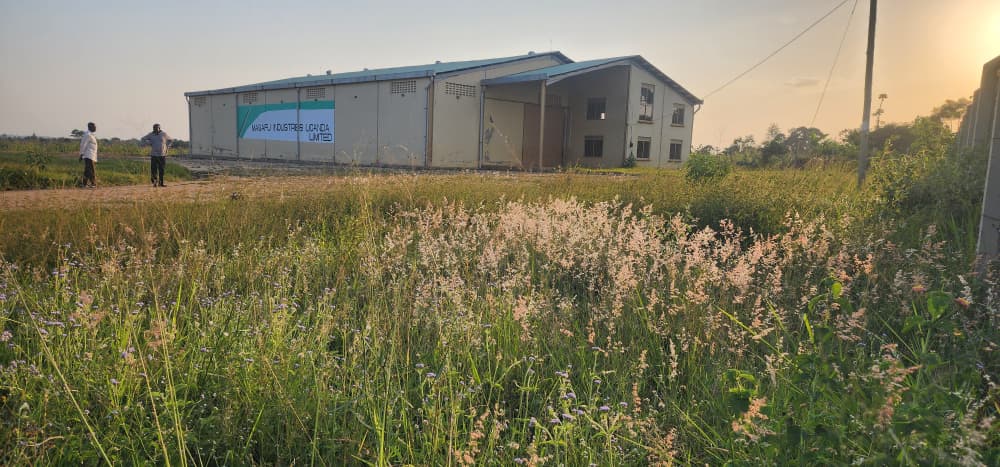
A multi-billion-shilling warehouse constructed to anchor the Busia Export Zone has remained abandoned for nearly five years, raising concerns over stalled government investments and missed economic opportunities.
Located along the Busia–Majanji Road in Masafu Town Council, Busia District, the warehouse was constructed by the Ministry of Trade in 2020 at a cost of approximately Shs2 billion.
The facility was intended to serve as a storage hub for goods produced by industries that were expected to be established within the Busia Export Zone.
Its strategic location near the Uganda–Kenya border was expected to strengthen cross-border trade, create employment opportunities and stimulate economic growth in Busia District and the wider region.
However, nearly five years later, the vision has not materialised. The warehouse now stands overgrown with bushes and largely unused, with only a few pieces of machinery left inside that were procured in anticipation of the planned industrial park.
Busia District Principal Assistant Secretary Muhammed Kayira said the warehouse became redundant because the industries it was designed to serve were never established.
"The warehouse was meant to store products from industries that were supposed to be established in the area. Having a warehouse without those industries has rendered it idle," Kayira said.
With billions of shillings already invested in the project, residents and local leaders are questioning why a facility once expected to transform the district’s economy has remained dormant.
Former Samia-Bugwe Central Member of Parliament Dennis Nyangweso attributed the delay to a long-standing ownership dispute over the land between Masafu Town Council and Busia District Local Government.
"There has been an ownership wrangle between the town council and the district. Questions arose over who owns the land and who should be the principal party in the memorandum of understanding, whether it should be Busia District or Masafu Town Council partnering with the Ministry of Trade," Nyangweso said.
However, district technical officials dismissed the land dispute as the primary cause of the project’s stagnation, instead pointing to inadequate financing that frustrated plans to establish industries at the site.
According to Kayira, the Ministry of Trade had allocated the warehouse to a private company that was expected to develop the industrial facilities, but the investor failed to proceed after missing out on anticipated funding from TradeMark East Africa.
"The Ministry of Trade allocated the warehouse to a private company that was expected to establish the required industries. Unfortunately, the company did not proceed because it failed to secure the anticipated funding from TradeMark East Africa," Kayira explained.
Busia District Chairperson John Charles Namayindi said the delay has denied the community employment opportunities and local revenue that were expected from the investment.
"The facility was expected to employ many people and generate substantial local revenue. It was anticipated to have a significant impact on the district, but unfortunately the community has missed out on those benefits," Namayindi said.
With the warehouse still idle, district leaders are now exploring options to salvage the investment, including attracting a new investor to revive the industrial park concept or repurposing the facility for another development project capable of delivering value to residents.
As discussions continue, the Busia export zone warehouse remains a symbol of stalled ambition and the challenges that continue to affect the implementation of large-scale public investments.
