
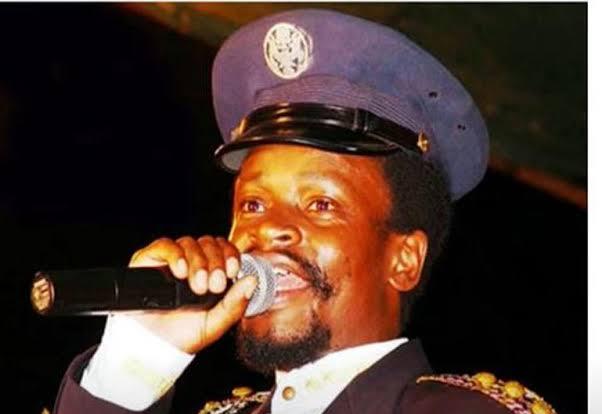
Deputy Speaker of Parliament Thomas Tayebwa has called for further DNA testing involving the wider family of the late Kadongo Kamu legend Prince Paul Job Kafeero as debate intensifies over an ongoing paternity dispute involving individuals claiming to be his children.
Writing on his X (formerly Twitter) account on Friday, Tayebwa suggested that additional genetic testing be conducted on Kafeero’s relatives to help resolve lingering doubts and bring closure to the matter.
“I propose we go ahead and do DNA with the rest of Kafeero’s brothers to close this chapter. Otherwise that resemblance cannot be wished away comrade Ateenyi. Total closure of this matter is needed especially for those children who are total photocopies of the late. Who fathered them? I trust you on handling such complicated matters and I’m sure you will handle,” he wrote.
In a separate post, Tayebwa questioned the limits of genetic testing in fully settling the dispute.
“I do not doubt science but if this gentleman (referring to one of the claimants who bears a beard similar to that of the late) is not Paul Kafeero’s son then we might need to do DNA of our parents when they’re still alive. Cheeiiiii!!!” he added.
Minister of Local Government Balaam Barugahara Ateenyi, who has been involved in the process, pointed to multiple laboratory confirmations backing the official findings.
“Three independent laboratories have confirmed this fact—not just one: MBN Laboratory, Police Forensic Laboratory, and Government Analytical Laboratory. These are verified findings,” he wrote.
The debate follows the release of official DNA results by the Police Forensic Directorate confirming that only four of the 25 individuals who claimed to be children of Kafeero are his biological offspring.
The confirmed children are Benedicto Kafeero, Simon Peter Kafeero, Thomas (Schwarzenegger) Kafeero and Elizabeth Nagawa.
The remaining 21 claimants were excluded following the tests.
Some of those affected have expressed uncertainty and distress over the findings. Godfrey Muwanguzi Kafeero said he is unsure of his next steps, noting that his mother has passed away and he lacks clarity about his lineage.
Another claimant, Stellah Nantongo, rejected the results and said she would seek alternative means to establish her parentage.
“You cannot tell me that the four children who came through the first DNA test are the same ones who came through today. They shouldn’t have exhumed our father, they should’ve left him in the grave,” she said.
“I am going back to Masaba where I was staying. Those who want to take me away can do what they want, I will not go. I will use alternative means to prove that I am indeed Kafeero’s child.”
The DNA exercise followed a court-ordered exhumation of Kafeero’s remains on June 1 to obtain samples for testing in a dispute over estate administration and determination of rightful beneficiaries.
The results were announced on Thursday at Uganda Police Headquarters in Naguru by officials from the Government Analytical Laboratory and the Uganda Police Forensic Services Laboratory.
The development has triggered widespread public debate, including renewed reflection on Kafeero’s music and lyrical themes on identity, legacy and posthumous reputation.
Prince Paul Kafeero, one of Uganda’s most influential Kadongo Kamu musicians, died on May 17, 2007 at St. Francis Hospital Nsambya after battling kidney failure. He was 36.
