
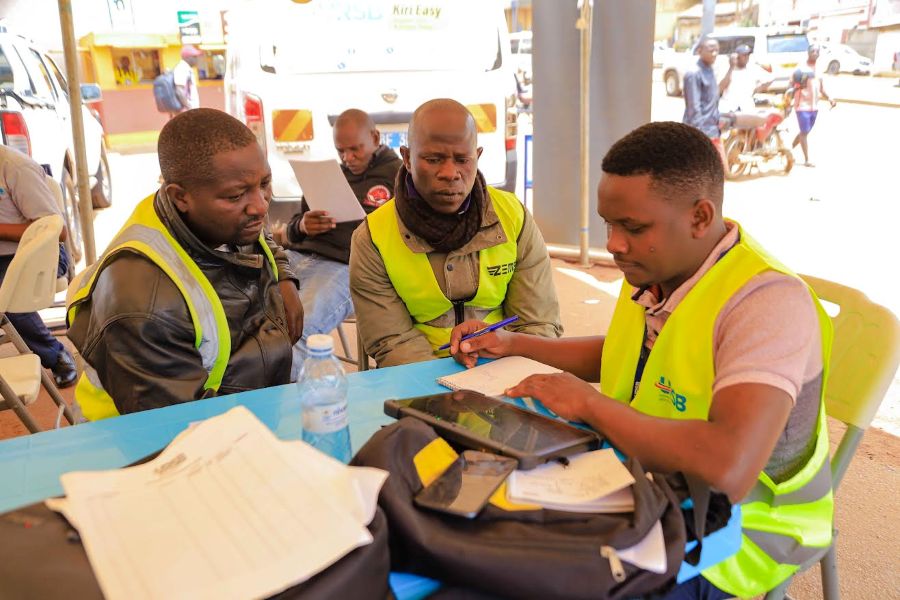
The Uganda Registration Services Bureau (URSB) has deregistered 37,702 companies for failing to comply with statutory filing requirements, a move officials say followed years of warnings and engagement efforts.
A list of the affected companies has since been published on the URSB website, confirming that they are no longer recognized as registered entities operating in Uganda.
According to URSB Principal Communications Officer Denis Nabende, the decision came after repeated efforts to encourage the companies to regularize their status, but many failed to respond.
“We actually put out a notice in July and August 2023 requiring companies that had not filed their returns and had been struck off to come back to URSB and indicate that they were going to regularize and then be brought back onto the register,” Nabende said.
“But between July 2023 and now, many did not come back.”
Nabende explained that annual returns are a legal requirement and serve as confirmation that a company is still operational and that key details such as shareholders and directors remain unchanged.
“Those returns indicate that the company is still alive. Nothing has changed in terms of shareholders and the directors are still the same,” he said.
He noted that some individuals register companies for specific purposes and later abandon them after achieving their objectives or failing to pursue business operations further.
According to URSB, the deregistered companies had failed to meet statutory obligations for at least five years despite being given sufficient time and opportunities to comply.
However, economists have expressed concern over the potential impact of the move on Uganda’s business environment and tax base.
John Walugembe, the Chairperson of the Federation of Small and Medium Enterprises Association, argued that many of the affected companies may never resume operations, resulting in lost economic opportunities.
“Instead of deregistering, URSB should have done more to look for those companies and hand-hold them because it is easier to turn these non-compliant companies into compliant companies than to get someone to register afresh,” Walugembe said.
He also urged URSB to review its digital compliance systems to ensure they accommodate businesses operating in areas with limited infrastructure and internet access.
“At the level of efficiency, I would say URSB has improved. But what we are saying is that improved efficiency should not be at the expense of entrepreneurs. Look at that entrepreneur in Zombo where electricity is not there for three months. How is he going to upload a resolution, internet and all? We must create a system that caters for all,” he said.
The development comes against the backdrop of Uganda’s vibrant entrepreneurial sector, which sees thousands of new business registrations every year. However, many businesses struggle to survive beyond their first year of operation due to financial, regulatory and operational challenges.
The deregistration exercise highlights the balancing act between enforcing corporate compliance and supporting businesses to remain active contributors to the economy.
