

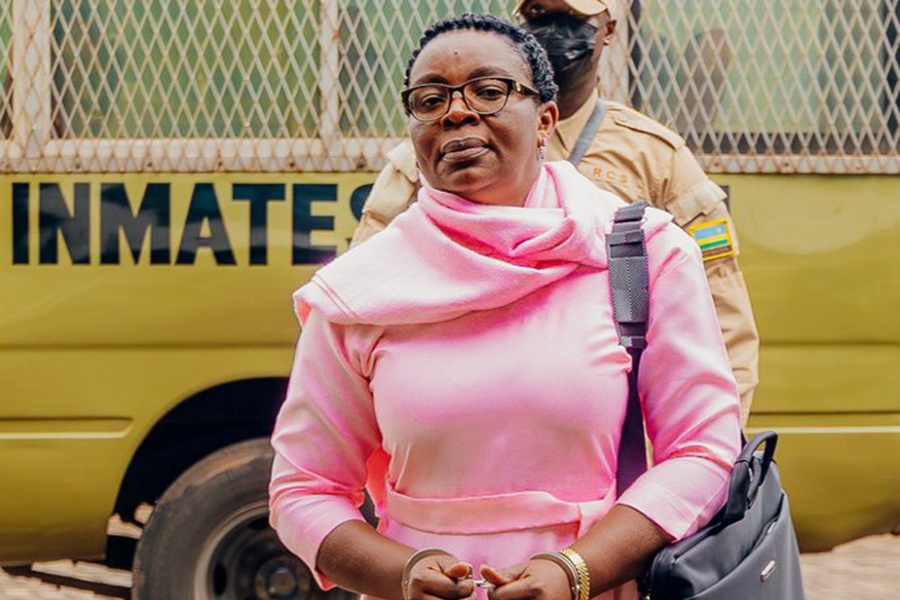
The trial of Rwandan opposition figure Victoire Ingabire Umuhoza opened before the High Court in Kigali on Monday, June 15, but proceedings were immediately overshadowed by allegations that she has been subjected to conditions in detention that violate her fundamental rights.
Ingabire asked the court to postpone the hearing, arguing that restrictions imposed while in custody have undermined her ability to prepare an adequate defence and negatively affected her wellbeing.
Addressing the court, she said she has been denied contact with members of her family, prevented from communicating with her co-defendants, and barred from attending religious services.
"I am not able to be tried because physically, emotionally, and spiritually, I am not ready," Ingabire told the court.
She argued that her inability to meet and discuss the case with co-accused persons whose files were merged with hers had significantly hampered preparations for trial. She also said restrictions on family contact and worship had taken a toll on her mental health, physical wellbeing, and religious freedom.
The opposition politician further raised concerns about detention conditions, alleging difficulties accessing personal care products required for existing medical and skin conditions.
Her legal team urged the court to assess the conditions under which she is being held, arguing that the issues raised go beyond administrative inconveniences and touch on basic rights and human dignity.
Supporters of Ingabire have described the restrictions as serious violations of internationally recognised standards for the treatment of prisoners, including the United Nations Standard Minimum Rules for the Treatment of Prisoners, commonly known as the Mandela Rules.
However, prosecutors opposed the request to delay the proceedings, maintaining that the concerns raised did not amount to legal grounds for postponement.
"The issues presented are largely emotional in nature," the prosecution argued, adding that matters relating to prison administration fall outside its mandate and should not prevent the trial from proceeding.
The prosecution further told the court that Ingabire has been receiving visitors and that any complaints regarding communication or detention conditions should be addressed through prison authorities.
Ingabire is facing six charges, including forming or joining a criminal organisation, conspiring to commit offences against the government, inciting public disorder, resisting lawful authority, participating in unlawful demonstrations, and spreading information allegedly intended to damage Rwanda's image abroad. She is being tried alongside eight co-accused persons, including media commentator Theoneste Nsengimana.
After hearing submissions from both sides, the court adjourned proceedings until June 16, when judges are expected to rule on Ingabire's objections and determine whether the trial will proceed.