
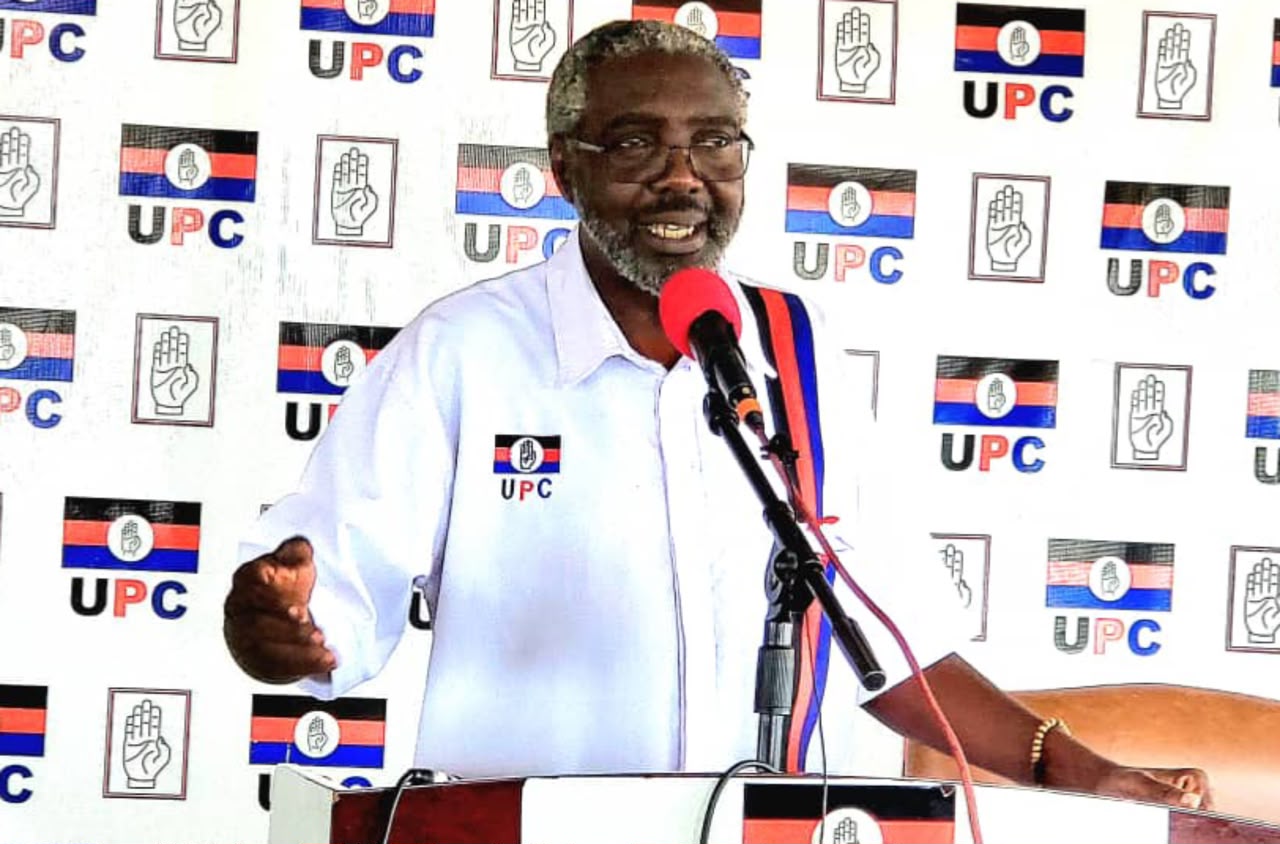
Uganda Peoples Congress (UPC) President Jimmy Akena has raised concerns over what he described as growing fiscal pressure, warning that rising borrowing levels and weak domestic revenue collection could push the country into an unsustainable economic position.
Speaking to the media in Kampala on Wednesday, Akena said government reliance on borrowing to finance national programmes, including debt servicing, was increasingly worrying and risked undermining long-term stability.
“If you are borrowing to pay debt, you are actually digging a hole for yourself,” Akena said. “You cannot borrow continuously without generating sufficient internal resources.”
Akena pointed to what he described as declining domestic revenue collections, saying the trend was affecting key government programmes such as the Parish Development Model (PDM), which was designed to drive grassroots economic transformation.
He claimed that expected funding streams for PDM were not materialising as planned, raising concerns about sustainability.
“Resources that were supposed to be evolving for PDM should be coming back into the system, but the level of collections is far below what was expected,” he said.
The UPC leader warned that continued fiscal strain could force government into further domestic borrowing, which he said would crowd out the private sector and weaken economic growth.
“When you go to the domestic market, you squeeze out others. The situation becomes precarious,” Akena said.
He further argued that a significant portion of the national budget is increasingly being consumed by debt repayment obligations, leaving limited fiscal space for development priorities such as health, production and infrastructure.
Akena also questioned the country’s economic planning priorities, arguing that borrowing should be tied to productive investments rather than recurrent expenditure.
“The budget is heavily tilted towards repayment of loans. If borrowing is not tied to production and revenue generation, then it becomes a long-term problem,” he said.
He urged government to re-evaluate its fiscal strategy and strengthen domestic revenue mobilisation in order to reduce reliance on external borrowing.
Akena further said Uganda needed to rethink how public funds are allocated, insisting that productive sectors should receive priority if the country is to achieve sustainable growth.
“We need to look at where the money is going. The productive areas must generate income, otherwise we are not building a strong economy,” he said.
His remarks come amid ongoing national debate over Uganda’s rising public debt levels and the effectiveness of flagship government programmes aimed at reducing poverty and boosting household incomes.
Government has in recent years defended its borrowing strategy, arguing that external financing is necessary to support infrastructure development and economic recovery.
However, Akena insisted that without stronger domestic revenue performance and improved accountability, Uganda risks long-term fiscal instability.
He called for urgent policy adjustments to ensure that borrowing does not outpace the country’s ability to repay, warning that failure to act could undermine future development programmes.
