
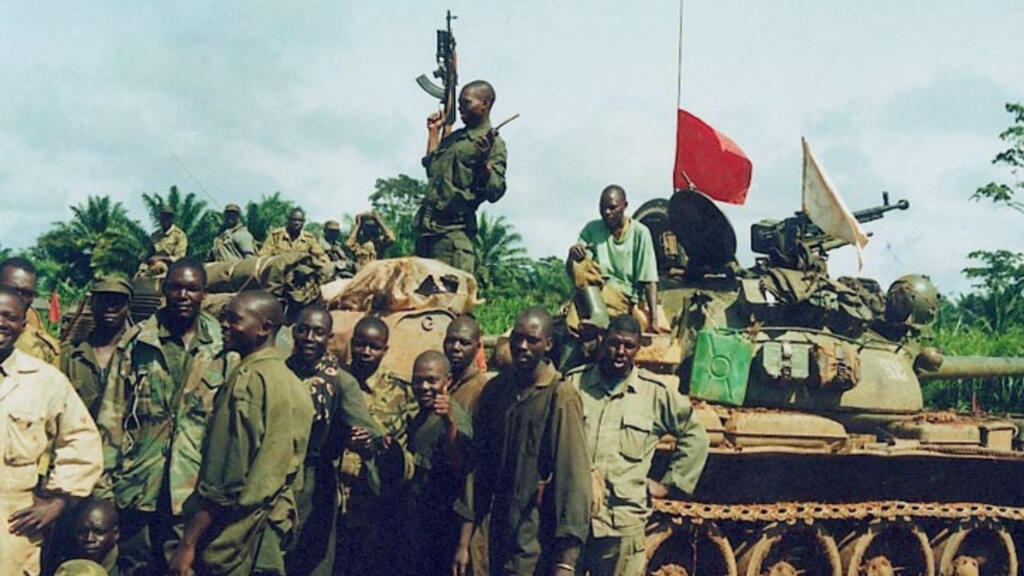
On this day in 2000, Ugandan and Rwandan forces began implementing a United Nations-backed demilitarisation agreement in the Congolese city of Kisangani in a last-minute attempt to prevent another outbreak of fighting between the two former allies.
The agreement followed weeks of rising tensions between the Uganda People’s Defence Forces (UPDF) and the Rwandan Patriotic Army (RPA), both of which were operating in the Democratic Republic of the Congo during the wider Second Congo War.
After mediation efforts in Mwanza, Tanzania, the two governments agreed that May 29 would mark the official start of a phased withdrawal of troops and heavy weapons from Kisangani.
Under the arrangement, both armies were expected to pull their forces roughly 100 kilometres away from the city centre while leaving behind only limited joint security detachments to protect strategic installations under the supervision of United Nations observers.
In the days leading up to May 29, senior military delegations from both Uganda and Rwanda arrived in Kisangani to oversee the process. Reports from the city indicated that artillery positions were being dismantled. At the same time, tanks, ballistic missiles, and other heavy weapons were removed from frontline positions as preparations for the withdrawal got underway.
But even as the operation officially began, tensions remained dangerously high.
Both sides quickly accused each other of failing to fully comply with the agreement. Ugandan and Rwandan commanders traded allegations that troops were being hidden in surrounding forests and that reinforcements were quietly being moved into nearby positions instead of withdrawing completely.
The growing mistrust slowed the implementation of the ceasefire and left both armies heavily armed and stationed close to one another inside the city.
The failure of the May 29 demilitarisation process would prove catastrophic.
Just one week later, on June 5, fighting erupted again in Kisangani after a series of military provocations and clashes near strategic positions in the city. The confrontation escalated into the infamous Six-Day War, one of the deadliest urban battles of the Second Congo War.
For six days, Ugandan and Rwandan troops fought fierce battles using artillery, mortars, and heavy weapons in densely populated civilian neighbourhoods. Entire sections of Kisangani were reduced to rubble as civilians became trapped between the rival armies.
Human rights organisations and United Nations reports later estimated that around 1,000 civilians were killed while thousands more were injured during the fighting. Homes, schools, hospitals, and churches suffered widespread destruction.
The battle shattered relations between Kampala and Kigali, turning former allies into regional rivals and reshaping politics in the African Great Lakes region for years to come.
