
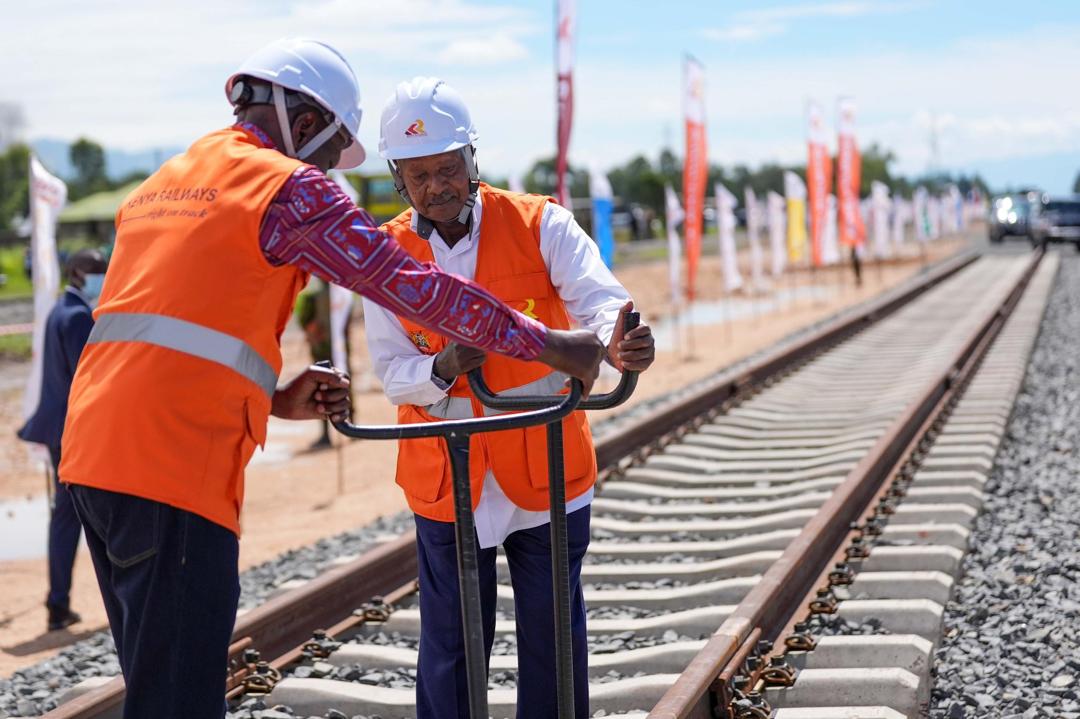
Uganda is preparing to issue its first sovereign sukuk as part of the financing plan for the Standard Gauge Railway (SGR), marking a major shift in how the government raises money for large infrastructure projects.
The sukuk is expected to finance 15 per cent of the €2.7 billion required for the railway, alongside funding from Export Credit Agencies and Development Finance Institutions.
A sukuk is a financial instrument used in Islamic finance and is often compared to a bond. However, unlike a conventional bond, a sukuk does not involve interest payments.
Under Islamic law, known as Sharia, charging or receiving interest, referred to as riba, is prohibited. Instead of lending money and earning interest, sukuk investors receive returns linked to ownership or use of a real asset or project.
That distinction is the foundation of the entire system.
In a conventional government bond, investors lend money to the state and the government promises to repay the amount with interest over time. The relationship is essentially creditor and borrower.
A sukuk works differently. Investors buy a share in an underlying asset, infrastructure project or revenue-generating activity. The returns paid to investors come from income generated by that asset, such as lease payments or project revenues, rather than from interest.
In practical terms, Uganda’s sovereign sukuk could be structured around part of the Standard Gauge Railway itself.
The government could identify railway assets or sections of the project and place them into a special purpose vehicle created specifically for the transaction. Investors would then buy sukuk certificates representing proportional ownership in those assets.
The money raised would go towards construction of the railway. In return, the government would make agreed payments tied to the use of the infrastructure over a defined period. At maturity, the government would buy back the assets, allowing investors to recover their principal investment.
Although the economic outcome can resemble a normal bond, the legal and financial structure is designed to comply with Islamic finance principles.
Uganda’s move reflects a broader trend across Africa and the Middle East, where governments have increasingly turned to sukuk markets to diversify funding sources and attract investors who specifically seek Sharia-compliant investments.
Countries such as South Africa, Nigeria and Egypt have already issued sovereign sukuk to finance infrastructure and budget needs. The market has also grown rapidly in Gulf countries and parts of Asia, particularly in Malaysia and Saudi Arabia, where Islamic finance is deeply established.
For Uganda, the attraction is partly about widening the investor base.
Officials leading the current roadshow in Kenya, Tanzania and Zanzibar are seeking to gauge investor appetite, assess pricing expectations and build relationships ahead of the formal issuance.
The government hopes the sukuk will attract investors from Islamic banking markets in East Africa and beyond who may not normally participate in Uganda’s conventional debt market.
The structure could also help Uganda access long-term infrastructure financing without relying entirely on traditional commercial borrowing, which has become increasingly expensive as global interest rates remain elevated and debt servicing pressures grow.
At the same time, sovereign sukuk issuances are typically more complex than ordinary treasury bonds.
They require specific legal frameworks, Sharia compliance reviews, identifiable underlying assets and specialised advisers to structure the transaction. Uganda’s roadshow delegation includes legal advisers, arrangers, book runners and Islamic banking institutions, reflecting the technical nature of the process.
Questions may also emerge around transparency, project execution and repayment obligations, particularly because the SGR itself has faced years of delays linked to financing and regional coordination challenges.
The success of the inaugural sukuk will therefore depend not only on investor appetite, but also on confidence in Uganda’s fiscal management and the viability of the railway project itself.
The government has indicated that more detailed information on the planned issuance will be released in the coming days as preparations continue for the official launch.
