
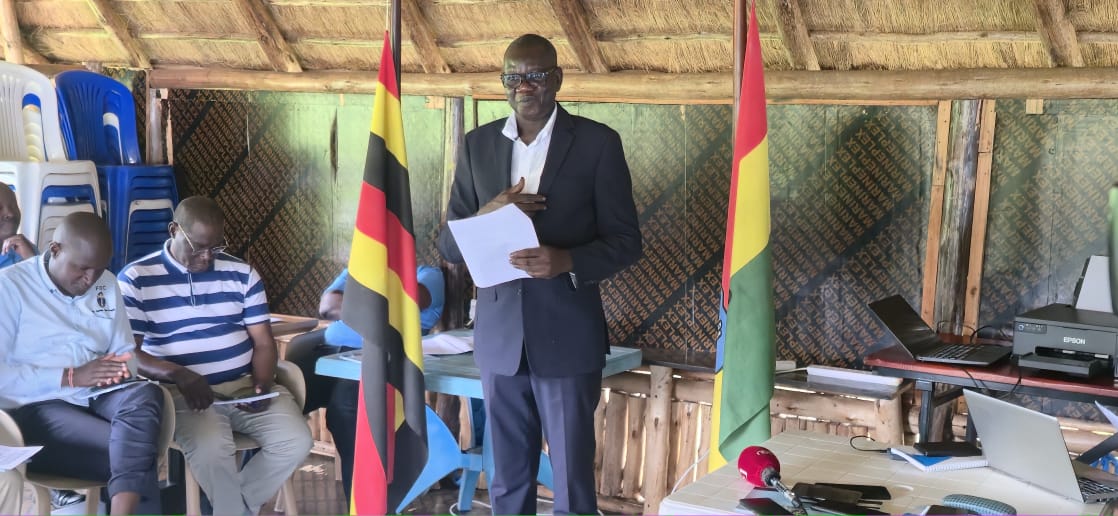
Patrick Amuriat Oboi has raised concern over the sharp decline in the number of elected leaders under the Forum for Democratic Change (FDC), attributing the downturn to both internal party challenges and changing political dynamics in Uganda.
Speaking during a retreat for newly elected Members of Parliament on the FDC ticket held at Kiyindi Landing Site, Amuriat revealed that the party secured only nine parliamentary seats in the 12th Parliament, down from 32 seats in the 11th Parliament.
“Without any shade of doubt, FDC has over the last 10 years registered attrition originating from blackmail of its leaders, internal differences, political fatigue, weak grassroots structures, defection of members, and suppressed funding,” Amuriat said.
He further pointed to the emergence and rapid rise of the National Unity Platform (NUP) as a major factor behind FDC’s declining political influence, arguing that the party had increasingly occupied FDC’s traditional opposition space.
According to Amuriat, NUP attracted several leaders, supporters, and financiers who had previously backed FDC.
“The emergence of what seemed to citizens a better alternative in the National Unity Platform not only caused a shift of support in our strongholds but also robbed us of some of our leaders, supporters, and long-standing financiers,” he noted.
However, Amuriat’s assessment was challenged by Paul Mwiru, who argued that FDC’s losses stemmed more from internal decisions than external political competition.
Mwiru accused some party leaders of deviating from the party’s founding principles and damaging public trust through perceived closeness to President Yoweri Kaguta Museveni and the ruling establishment.
“That’s not correct. Leaders stand for issues that resonate with the masses. Some within FDC chose to align with President Museveni, and that affected public trust,” Mwiru said.
“If those efforts fail, they are welcome to join us in NUP,” he added.
Despite the party’s reduced parliamentary presence, Amuriat urged the newly elected legislators to remain active and vocal in Parliament, particularly on national issues such as political transition and governance reforms.
“Debates about transition in this country will be central in the 12th Parliament. Despite your small number, you must put up a spirited fight it is not the size of the dog that matters, but the size of the fight in the dog,” he emphasized.
The retreat, which brought together FDC’s top leadership and incoming legislators, also focused on strategies to rebuild grassroots structures, restore confidence among supporters, and reclaim lost political ground.
Amuriat additionally criticized former party members who defected from FDC, including former Deputy President Yusuf Nsibambi, accusing them of weakening the party’s unity and strength.
He nevertheless called on current members to work toward reconnecting with former supporters and rebuilding the party’s support base.
Meanwhile, newly elected MPs welcomed the retreat as a timely initiative aimed at preparing them for legislative responsibilities in the 12th Parliament.
Hassan Kaps Fungaroo said the induction would help align legislators with the party’s parliamentary agenda.
“We are happy the party organized this retreat. It is important for us to be reoriented on what is expected in the 12th Parliament,” Fungaroo said.
Similarly, Ann Ebaju Adeke noted that discussions around political transition would be central in the next Parliament and said the retreat would equip MPs with the necessary tools to engage effectively.
Moses Attan also shared his experience campaigning in a highly contested political environment, crediting his victory to grassroots mobilization and vigilant monitoring of the electoral process.
The retreat underscores what many within FDC describe as a critical moment for the party as it attempts to redefine its role within Uganda’s changing political landscape while preparing its legislators to remain influential despite reduced numbers in Parliament.
