
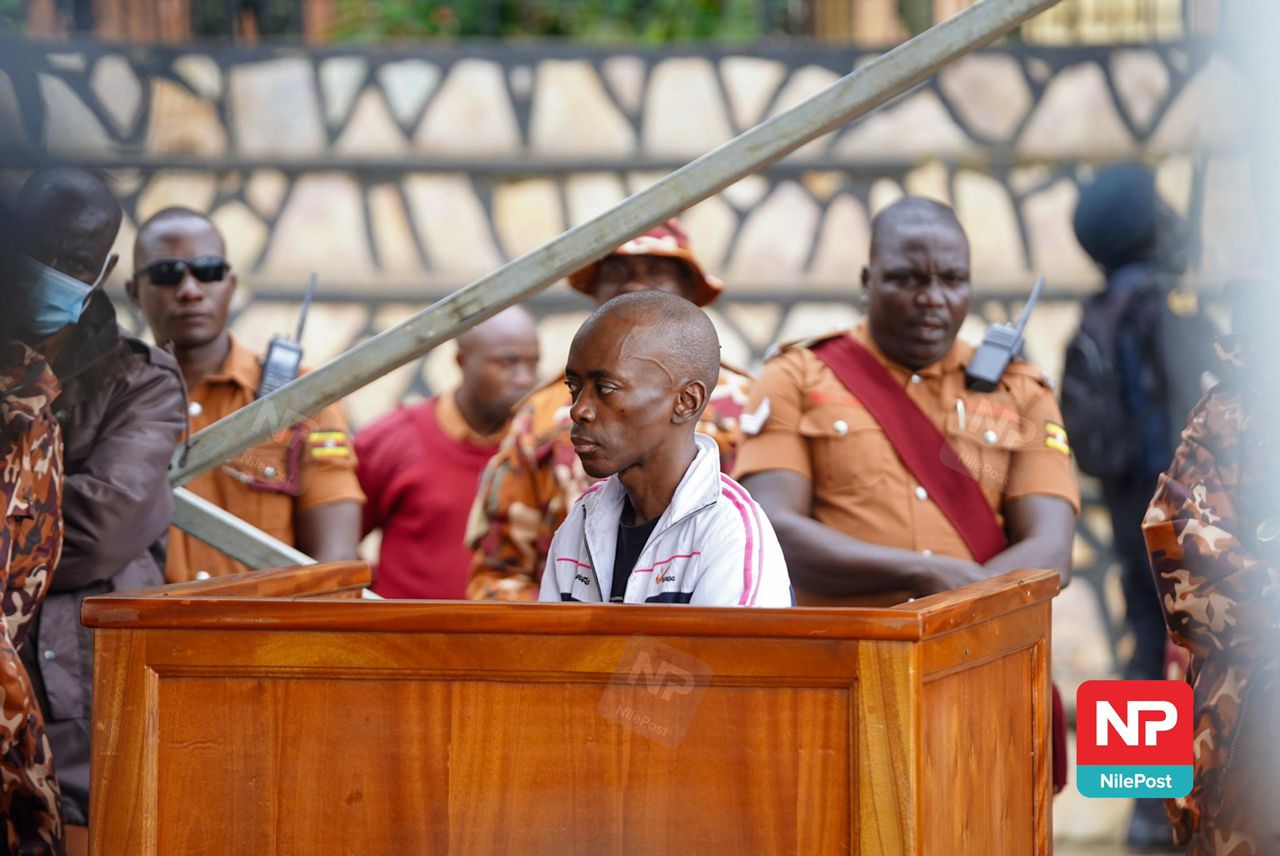
The decision by Lady Justice Alice Komuhangi Khauka to sentence Christopher Onyum Okello to death has renewed debate about what capital punishment actually means in Uganda’s modern legal system.
At face value, a death sentence is the most severe penalty available under Ugandan law. It remains firmly grounded in both the Constitution and the Penal Code Act, applying to offences such as murder, aggravated robbery, treason, terrorism resulting in death, and aggravated defilement.
Okello’s conviction falls squarely within this category. But while the sentence carries symbolic and legal weight, its practical implications are shaped by nearly two decades of judicial reform and state practice.
The most significant shift came with the landmark 2009 ruling in Susan Kigula & 416 Others v. Attorney General. In that case, the Supreme Court declared mandatory death sentences unconstitutional, ending the automatic imposition of death upon conviction for capital offences.
Instead, judges must now weigh aggravating and mitigating factors before determining whether a death sentence is justified. This introduced discretion into sentencing and effectively narrowed the circumstances under which death can be imposed.
As a result, the death penalty has become an exceptional punishment, typically reserved for what courts describe as the most extreme cases. Okello’s sentencing reflects a judicial conclusion that his crime met that high threshold.
However, sentencing is only the beginning of a long legal process. Anyone condemned to death in Uganda has an automatic right of appeal, moving from the High Court to the Court of Appeal and, if necessary, to the Supreme Court. This process can take years, during which the sentence is not carried out.
Even after all appeals are exhausted, execution is not immediate. The Kigula ruling introduced what is widely known as the “three-year rule.” If a prisoner is not executed within three years after completing the appeals process, the death sentence must be commuted to life imprisonment.
In Ugandan practice, life imprisonment is generally interpreted as 20 years without remission, unless a court explicitly orders a natural life sentence.
Beyond the courts, there is also an executive layer. Once judicial avenues are exhausted, the case is referred to the Advisory Committee on the Prerogative of Mercy, which advises the President on whether to pardon the convict, reduce the sentence, or allow the execution to proceed.
This introduces a political and humanitarian dimension to the process, placing the final decision within the executive branch.
In reality, however, executions have not been carried out in Uganda for decades. The last executions took place in 1999 at Luzira Upper Prison, and no death warrants have been signed since then.
This has created a de facto moratorium, where courts continue to issue death sentences, but the state has refrained from implementing them.
The result is a system that operates on two levels. Legally, the death penalty remains valid and enforceable. Practically, it functions more as the harshest possible sentence a court can pronounce, often leading instead to prolonged incarceration or eventual commutation.
In Okello’s case, the sentence underscores the court’s view of the gravity of the crime and its rejection of mitigating arguments such as insanity.
But the ultimate outcome will depend on the appeals process, the passage of time, and executive discretion within a system that has steadily moved away from carrying out executions.
