
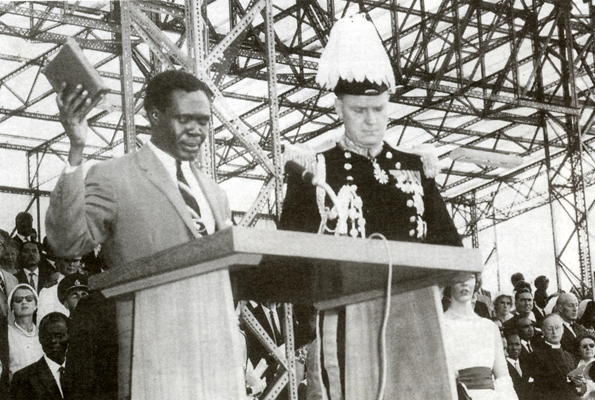
On this day in 1962, Milton Obote was officially sworn in as Prime Minister, marking Uganda’s transition to internal self-government just months before full independence.
The appointment followed the general elections held days earlier, which reshaped the country’s political landscape.
Obote’s Uganda People's Congress secured 37 seats in the National Assembly and formed a decisive alliance with Kabaka Yekka, which held 21 seats nominated by the Lukiiko.
The coalition gave Obote a clear parliamentary majority, allowing him to replace Benedicto Kiwanuka, whose Democratic Party had previously led the government.
Obote was sworn in by Walter Coutts, becoming the first Prime Minister of an internally self-governing Uganda.
The transition also marked a structural shift in governance. The position of Chief Minister, previously held by Kiwanuka, was abolished and replaced by the more powerful office of Prime Minister.
Following his swearing-in, Obote began forming a new government that reflected the UPC-KY alliance, a partnership that would shape Uganda’s early post-independence politics.
The appointment was a key step in the final phase of decolonisation, setting the stage for Uganda to attain full independence later that year on October 9, 1962.
