
On this day in 1993, Zambian President Frederick Chiluba arrived in Uganda for a three-day state visit, marking a significant moment in regional diplomacy as African nations navigated economic reforms and shifting political dynamics.
Chiluba was received in Kampala by President Museveni, with the two leaders holding discussions focused on trade, regional security, and economic cooperation.
At the time, both Uganda and Zambia were implementing structural adjustment programmes aimed at liberalising their economies and attracting investment.
Talks between the two countries also centred on strengthening ties within the Common Market for Eastern and Southern Africa (COMESA), as governments across the region sought deeper economic integration.
Regional stability featured prominently in the discussions, particularly ongoing conflicts in the Great Lakes region and the evolving role of the Organization of African Unity, which many leaders were pushing to become more proactive in conflict resolution.
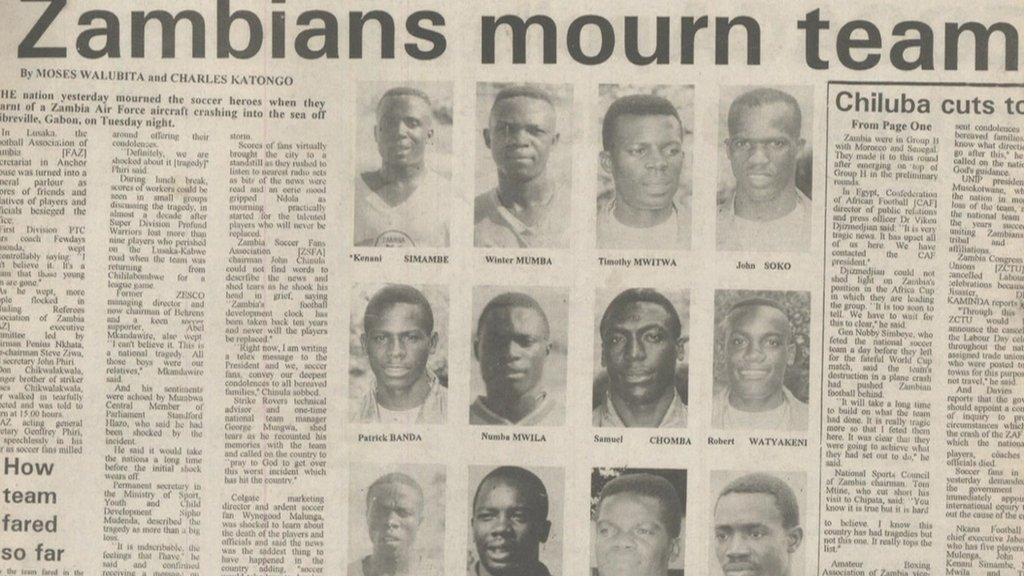
But even as high-level meetings were underway in Kampala, a tragedy was unfolding that would soon plunge Zambia into mourning.
At the same time, the Zambian national football team, widely known as Chipolopolo, was en route to Senegal for a 1994 FIFA World Cup qualifier. The squad was travelling aboard a de Havilland Canada DHC-5 Buffalo operated by the Zambian Air Force.
On the evening of April 27, shortly after taking off from a refuelling stop in Libreville, Gabon, the aircraft crashed into the Atlantic Ocean, killing all 30 people on board.
The victims included 18 players, members of the technical bench led by Godfrey Chitalu, and the flight crew. The disaster remains one of the darkest chapters in African football history, devastating Zambia’s sporting fraternity and the nation at large.
Upon receiving news of the crash, Chiluba immediately cut short his visit. He departed Uganda on April 28 to return home and lead the country through a period of national grief.
What began as a diplomatic mission aimed at strengthening regional cooperation was abruptly transformed into a moment of collective mourning, forever linking Chiluba’s Uganda visit to one of Africa’s most painful sporting tragedies.
