
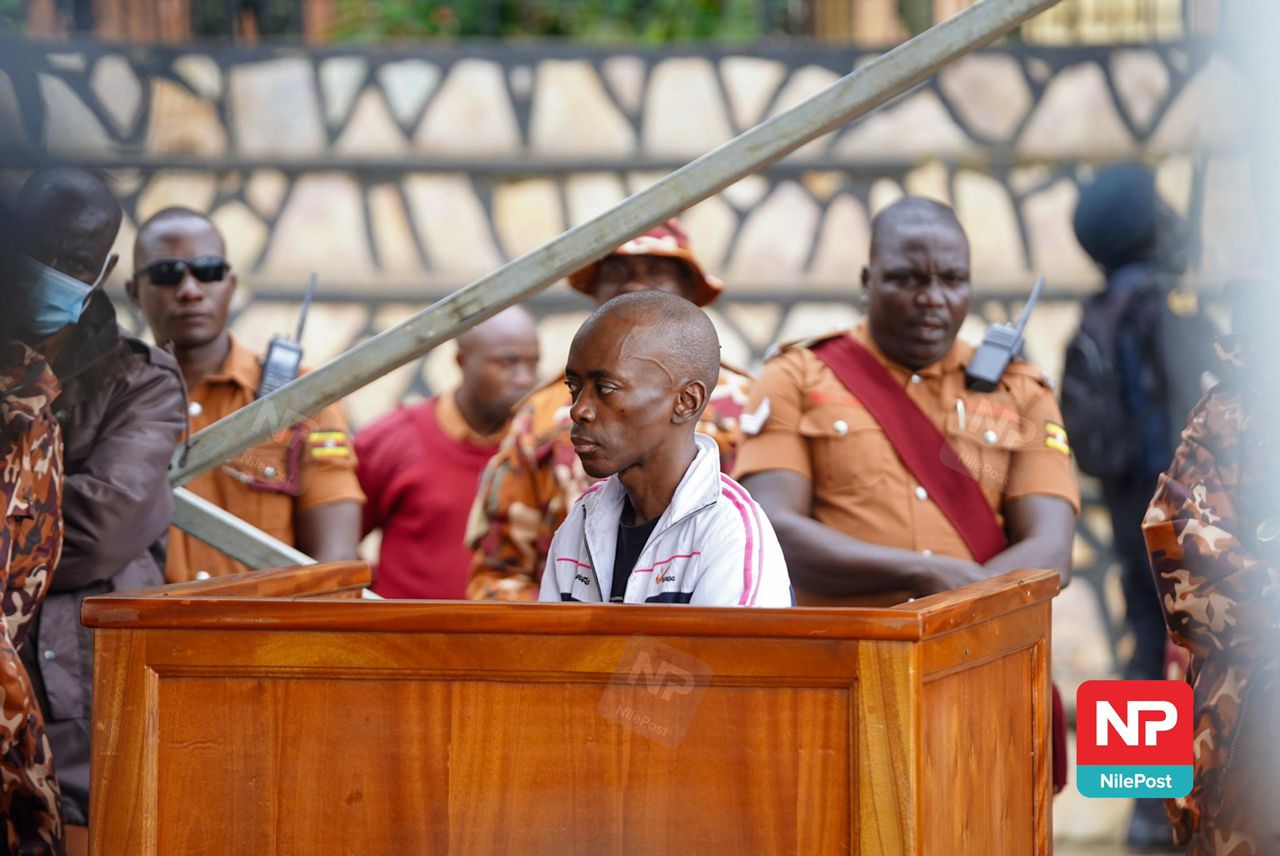
Christopher Okello Onyum stunned the High Court with a series of admissions as he mounted his defence in the ongoing Ggaba murder trial, arguing that his past conduct demonstrates a deteriorating mental state rather than criminal intent.
“I tried to rob a bank,” Okello told court, presenting the claim as part of a pattern of behaviour he said was driven by psychological instability.
He added that he had also “attempted to kill” members of his brother’s family during the same period, which he linked to what he described as overwhelming fear and mental distress.
Testifying in his own defence, Okello said these incidents were not isolated but formed part of a broader episode in which he believed unidentified individuals were pursuing him with the intention of killing him.
He told the court that the fear forced him to flee his home in Bunga and live on the streets, leaving him disoriented and constantly in fear for his life.
According to his testimony, this perceived threat significantly impaired his judgment in the period leading up to his arrest, forming the basis of his defence strategy that seeks to challenge the prosecution’s portrayal of him as deliberate and calculating.
The defence is now centring its case on Okello’s mental condition, arguing that his state of mind at the time of the alleged offences should be a key consideration for the court.
The trial, being heard before the High Court of Uganda, has reached a critical stage, with judges weighing Okello’s account against earlier prosecution evidence, including witness testimony and statements attributed to him during investigations.
The Ggaba case has drawn widespread public attention due to the nature of the crime, which involves the killing of young children—an घटना that shocked residents and raised broader concerns about community safety and mental health awareness.
Legal observers note that claims of mental distress in criminal trials often require corroboration through medical evaluation and expert testimony, which can play a decisive role in determining criminal responsibility.
As proceedings continue, the court is expected to assess whether Okello’s account establishes grounds for diminished responsibility or other legal considerations tied to mental health, or whether the prosecution’s case of intentional wrongdoing prevails.
The outcome could have significant implications not only for the accused but also for how mental health is weighed in serious criminal proceedings within Uganda’s justice system.
