
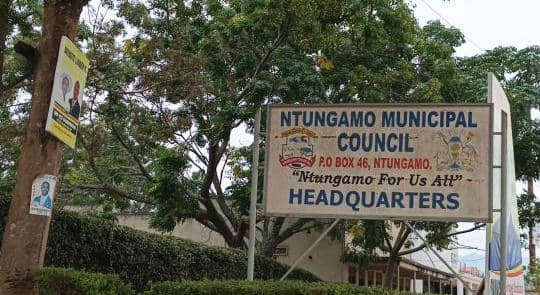
Urban development in Ntungamo Municipality is gradually advancing, guided by a comprehensive physical development plan and expanding infrastructure aimed at transforming the town into a vibrant commercial and administrative hub.
However, progress is tempered by private land ownership, the scale of infrastructure expansion, and limited investment capacity, requiring coordinated efforts between authorities, landowners, investors, and the community to achieve long-term urban growth.
Before its elevation to a municipality in 2010, Ntungamo was a town council with modest infrastructure and limited administrative functions.
Since then, it has evolved into the administrative and commercial centre of Ntungamo District, serving around 20,000 residents. Its streets now present a mix of bustling trading activity alongside areas still awaiting development.
Dual-purpose commercial-residential buildings dominate the town centre, while open plots, temporary structures, and containers occupy other spaces. Residents note that these gaps have slowed visible progress.
Ambience and Land Ownership Challenges
Ntungamo’s physical development plan, valid until 2029, is clear in its vision. Implementation, however, faces challenges as much of the land is privately owned, often under customary tenure. Many landowners lack the financial capacity to develop their plots, while larger investors are scarce.
Steven Muhwezi, Senior Physical Planner at Ntungamo Municipality, said: "We plan for private land, and when it comes to implementation, we face difficulties.
"Some landowners don't have the money to develop. You can prepare a plan, and ten years down the line, its implementation may be below 50% because many activities are supposed to be carried out by landowners, not the authority."
In the town centre, some vacant land is held by the National Forestry Authority (NFA) and has not yet been gazetted or transferred to the municipality for development.
The Town Clerk of Ntungamo Municipal Council explained: "Until it’s gazetted and handed over to the government for planning, allocation, and development, the status quo will remain."
Addressing Unauthorized Structures
To manage temporary and unauthorized structures, the municipal council has issued a 14-day notice for their removal, with plans to relocate some to the central market.
However, the market itself requires major redevelopment, estimated at over 17 billion shillings.
Street lighting remains concentrated in the central business district, leaving many areas dark, though peri-urban roads under development are equipped with lights. Flood-prone zones are also being addressed as part of ongoing infrastructure improvements.
Ntungamo’s location along the Mbarara–Kabale Highway connects it to regional markets, while its fertile agricultural hinterland supplies over 150 tonnes of matooke daily to neighbouring countries.
Over the next 15–20 years, the municipality aims to:
- Expand roads and transport networks
- Develop hotels and recreational facilities
- Improve street lighting across all areas
- Ensure orderly urban growth through strict compliance with the physical development plan
These initiatives are part of Ntungamo’s long-term vision as it prepares to attain city status, balancing planned growth with the realities of private landownership and investment constraints.
