
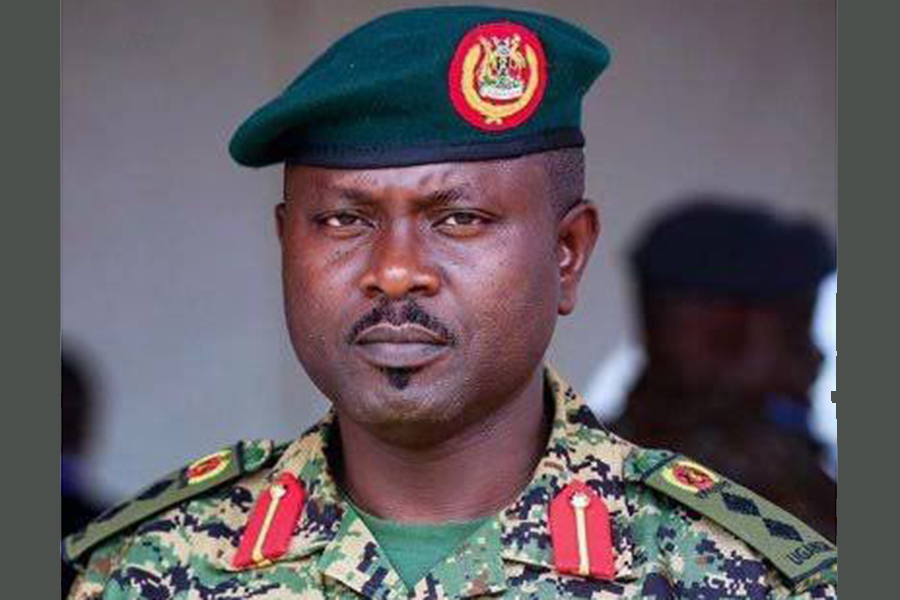
The UPDF spokesperson, Colonel Chris Magezi, has rejected allegations contained in a recent United Nations report linking the Ugandan army to attacks against civilians in South Sudan, describing the findings as incomplete and the accompanying media coverage as biased.
In a statement dated Tuesday, March 10, 2026, Magezi said Uganda’s military deployment in South Sudan is legitimate and conducted with the full approval of both governments.
“The current UPDF operation in South Sudan is completely legitimate. UPDF was invited by the sovereign government of the country, and the deployment was approved by Parliament of Uganda,” the statement read.
Magezi added that the Ugandan military has never deliberately targeted civilians during its operations over the past four decades.
“UPDF has never targeted civilians in its 45-year cherished history, which is why it remains extremely popular with the people wherever it operates,” the statement continued.
Magezi’s response follows the release of a report on February 27, 2026 by the UN Commission on Human Rights in South Sudan, which warned that the country’s political and military leadership is undermining the 2018 Revitalized Peace Agreement and pushing the country toward renewed conflict.
Presenting the report to the UN Human Rights Council in Geneva, Commission Chair Yasmin Sooka said investigators documented widespread attacks on civilians carried out by government forces during 2025.
According to the Commission, these attacks included unlawful killings, aerial bombardments of civilian homes and medical facilities, conflict-related sexual violence, and the abduction and forced recruitment of boys.
“Government forces have carried out widespread and systematic attacks against civilians. These acts may constitute war crimes and crimes against humanity under international law,” Sooka said.
The report also claimed that some of the aerial bombings were carried out by the South Sudan People’s Defence Forces (SSPDF) with documented support from Ugandan forces.
Magezi dismissed those claims, arguing that the report does not adequately reflect Uganda’s position or the role its forces have played in stabilizing South Sudan.
Magezi said the UN report was “not exhaustive,” and criticized media coverage for failing to include Uganda’s perspective, which he said has been repeatedly communicated to the United Nations.
Magezi maintained that UPDF intervention helped prevent further violence in South Sudan’s capital, Juba, and halted atrocities by the armed militia known as the White Army.
“The people of South Sudan are happy with UPDF operations in the country, which prevented internecine fighting in Juba and stopped the White Army’s atrocities against the population,” the statement continued.
The UN Commission’s investigation also highlighted growing political repression in South Sudan.
In March 2025, the ruling SPLM-IG party detained several opposition members across the country, including eight opposition leaders among them the First Vice President, charging them with serious crimes in September the same year.
Commissioners said the arrests raise serious concerns about arbitrary detention, violations of due process, and executive interference in the judiciary.
“Credible electoral processes are unrealistic in a context where civic space is repressed, conflict rages, and key opposition leaders are arbitrarily detained during a politicized trial,” Sooka said.
South Sudan is scheduled to hold its first national elections in December 2026.
The Commission warned that attacks on civilians, particularly in Jonglei state, have increasingly taken on ethnic dimensions, with Nuer communities allegedly targeted due to perceived political affiliations.
Commissioner Barney Afako said the pattern of attacks demonstrates a failure by state institutions to protect civilians.
“Air and ground attacks on civilians by government forces, mostly targeting civilians in opposition-affiliated areas – predominantly Nuer communities – are part and parcel of the ruling party’s systematic dismantling of the peace agreement. When leaders treat negotiated peace commitments as expendable, they create conditions in which violence flourishes,” Afako said.
The UN Commission urged South Sudan’s government to immediately halt aerial bombardments, forced recruitment, and other violations of international law, and to release opposition leaders held in what it described as unlawful detention.
It also called on the African Union, the United Nations, and regional governments to press South Sudan’s leadership to restore the 2018 peace agreement and accelerate the establishment of the long-delayed Hybrid Court for South Sudan to prosecute serious crimes.
Despite the accusations, Magezi reiterated that Uganda’s position remains focused on promoting political dialogue, preventing widespread violence, and ensuring regional stability.
“Uganda’s position is premised on continued political dialogue between the parties, prevention of widespread violence, and securing regional stability,” the statement concluded.
Magezi is not the only Ugandan official to comment on the report.
In a recent interview with NTV, the Minister of State for Foreign Affairs, Henry Oryem Okello, also dismissed the UN report as “hogwash and lies.” Okello disparaged a report by the Commission on Human Rights in South Sudan, whose investigation found that the Uganda People’s Defence Forces (UPDF) Air Force conducted aerial bombardment across South Sudan last year.
“Why should Uganda get involved in the killing of civilians, yet UPDF is the very army that has brought peace and stability in the region, from South Sudan to Somalia to the Eastern Democratic Republic of Congo (DRC)?” he asked.
“We are the one army that is known to be involved in ensuring that there is peace, stability, and security in the region. And now the UN is accusing us of killing civilians. I think this is just hogwash and lies.”
Minister Oryem said some elements within the UN might be against Uganda, but that they would investigate the matter and respond.
“The UN is such a big institution, but within it, there are individuals who, of course, might not favor Uganda or think Uganda should be maligned, and I think this is what it is,” he said.
“Nevertheless, we are going to investigate this matter thoroughly, and we are going to respond to the UN Human Rights Report.”
Additionally, Uganda’s Ambassador and Permanent Representative to the United Nations, Adonia Ayebare, took to his X (formerly Twitter) account on Tuesday to state that the report was “authored by an adhoc body with advisory role to the UN human rights council. Uganda was not given a chance to respond to their findings. Interestingly when they presented their recommendations on South Sudan in Geneva Uganda was not even mentioned.”
