
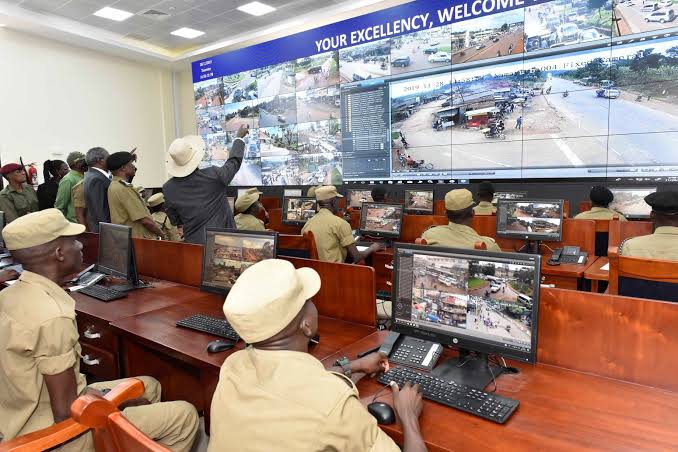
The Uganda Police Force (UPF) is accelerating its shift toward technology-driven, intelligence-led policing, with officials citing measurable gains in crime detection, traffic enforcement and inter-agency coordination.
The transition, anchored in expanded CCTV coverage, the Intelligent Transport Monitoring System (ITMS), digital record management and automated traffic control, reflects what security leaders describe as a strategic move from manpower-heavy enforcement to data-supported operations.
President Museveni has consistently argued that technology must complement personnel in modern policing.
Addressing the Police Council in recent years, he emphasised that the force should focus not only on increasing numbers but also on equipping officers with advanced tools and specialised skills.
“Instead of just increasing numbers, we should focus on technology and specialised training to enhance our effectiveness,” the President said, urging police leadership to modernise systems to match evolving criminal methods.
Museveni has previously defended the installation of CCTV cameras across the country especially in the wake of rampant assassination of public figures until three years ago, describing them as critical to crime detection and prevention.
He has publicly stated that cameras provide the “eyes and ears” necessary to identify suspects, track movements and reconstruct crime scenes, particularly in urban centres.
CCTV Expansion and National Command Centre
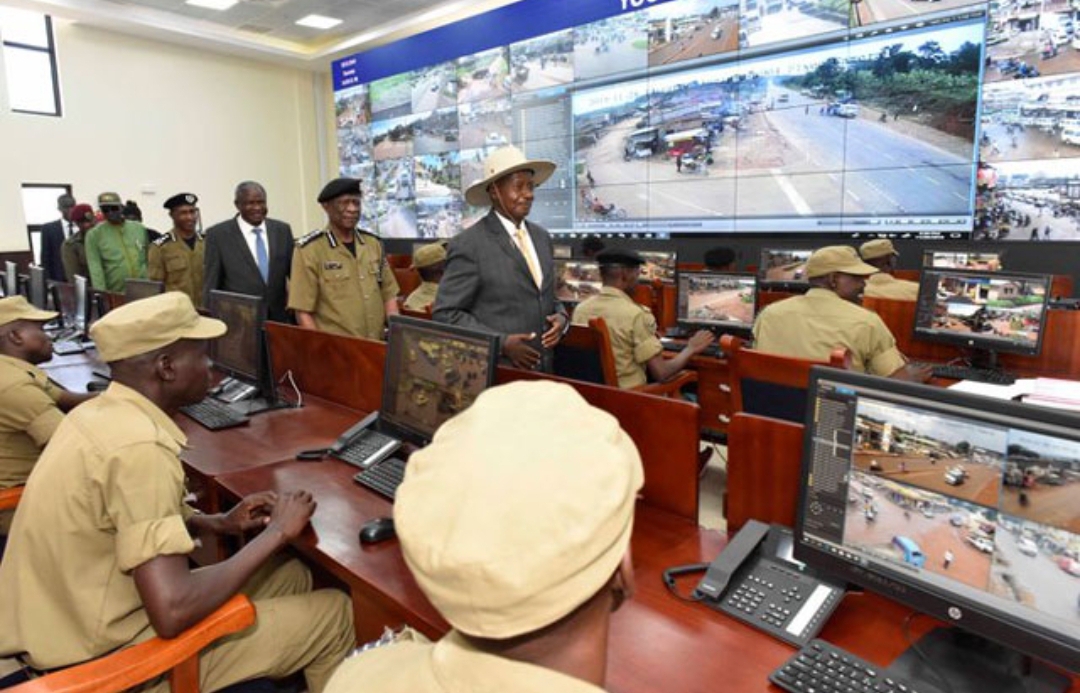
Since its rollout in 2018, the national CCTV network has expanded across the Kampala Metropolitan area and major municipalities including Mbarara, Gulu, Jinja, Masaka, Arua and Kabale.
The National Command and Control Centre in Naguru monitors live feeds and coordinates rapid response deployments.
Police officials have previously told Parliament that tens of thousands of operational and intelligence-led incidents have been managed using CCTV support, with thousands of investigations directly aided by video evidence.
Undersecretary Aggrey Wunyi informed legislators during budget discussions that Phases I and II of the CCTV project were operating efficiently and that Phase III aims to increase camera density, eliminate blind spots and introduce body-worn cameras for officers.
The system has increasingly been used to reconstruct criminal activity, identify suspects and strengthen prosecutorial evidence through visual documentation.
Intelligent Transport Monitoring System (ITMS)
The Intelligent Transport Monitoring System represents another major pillar of Uganda’s smart policing strategy. Integrating Automatic Number Plate Recognition (ANPR), digital number plates and real-time tracking capabilities, the system has transformed both traffic enforcement and criminal investigations involving vehicles.
Police officials report that in 2025 alone, the system aided in the recovery of more than 50 vehicles and motorcycles reported stolen.
In one high-profile case, investigators used digital tracking tools to trace a vehicle linked to the murder of businessman Anthony Mutinisa.
Movement data enabled detectives to track the vehicle’s route, leading to the arrest of suspects in Kanungu District and the recovery of the car.
Officers involved in the operation described the case as evidence of how automated monitoring systems can significantly shorten response time and improve investigative accuracy.
Security analysts note that such tools mark a shift from traditional checkpoint-based policing toward real-time, data-driven enforcement models.
Traffic Control Centre and Smart Signals
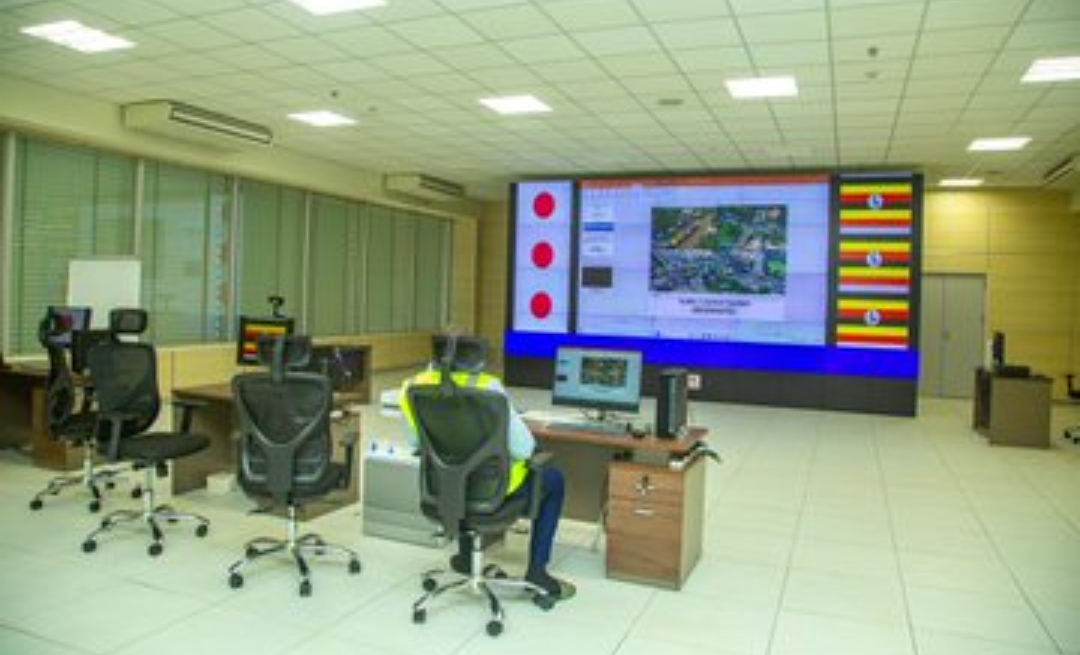
In September 2025, authorities launched a state-of-the-art Traffic Control Centre in Kampala, described as the first facility of its kind in East Africa.
The centre serves as a central hub equipped with advanced monitoring systems, smart signal control technology and real-time data analytics designed to reduce congestion and improve road safety.
Traffic managers can adjust signal timing dynamically based on live traffic flow data, enabling quicker responses to gridlock and accidents.
With vehicle numbers rising steadily in the capital, officials say the facility is intended to modernise urban traffic management and reduce reliance on manual traffic direction.
Motor Vehicle Registry Digital Portal
Complementing enforcement reforms, the Motor Vehicle Registry (MVR) has introduced an electronic portal to streamline vehicle registration and record management.
The platform enables faster ownership verification, improves data accuracy and supports vehicle recovery efforts.
By digitising records and reducing paperwork, the system addresses long-standing bottlenecks while strengthening transparency in transport administration.
Balancing Innovation and Oversight
While police leaders highlight the gains made through technological integration, experts caution that sustained impact will depend on continued officer training, reliable infrastructure and robust cybersecurity safeguards.
Digital policing tools require regular maintenance and strong data protection mechanisms to safeguard against system vulnerabilities.
Legal and regulatory frameworks must also evolve to ensure public trust as surveillance
As digital systems mature and inter-agency integration deepens, the Uganda Police Force is positioning itself within a global transition toward intelligence-led service delivery.
Officials maintain that technology is not replacing officers but strengthening their capacity to prevent crime, respond faster and deliver more accountable policing.
With expanded CCTV coverage, automated transport monitoring and real-time traffic analytics now embedded in operations, Uganda’s law enforcement landscape is entering a new era — one defined increasingly by data, coordination and digital oversight.
