
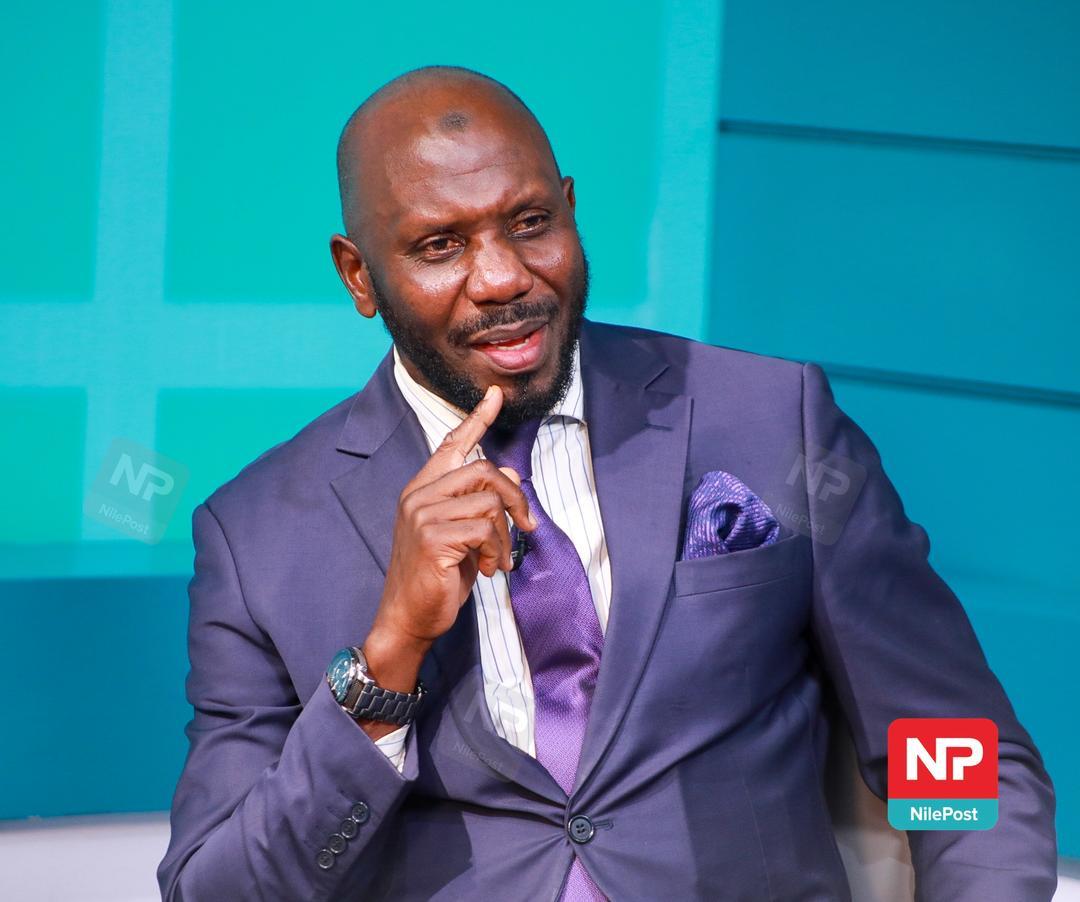
Former Kawempe North Member of Parliament Latif Ssebagala Ssengendo has called for a structured and inclusive national dialogue to address growing political tensions following Uganda’s January 15, 2026 general elections.
Speaking to Canary Mugume on NBS Face Off on Sunday, Ssebagala described the recent elections as “a very big eye-opener” that exposed significant challenges within the country’s electoral and political processes.
“The last election for us was a very big eye-opener in how politics is moving around. What transpired in the recent election, where we found many people who had gathered declaration forms from different polling stations and started celebrating, only for different results to appear at the tally centre, shows that we must reflect as a country,” he said.
His remarks follow a high-level meeting held on February 5, 2026, at State House Nakasero between President Museveni and a delegation of opposition legislators led by Yusuf Nsibambi, Member of Parliament for Mawokota South and Deputy President (Central Region) of the Forum for Democratic Change (FDC).
Other opposition politicians in attendance included Okot Bitek (Kioga County, FDC), Moses Kabusu (Kyamuswa County, PFF), Roland Ndyomugyenyi (Rukiga County), Fred Kayondo (Mukono South, DP), Richard Lumu (Mityana South, DP), and Ssebagala.
According to participants, the discussions focused on promoting national stability, peace and reconciliation in the aftermath of a tense post-election period.
In an earlier interview with NBS Television, Nsibambi defended the engagement, stating that he acted in the interest of his constituents and the country.
“No one sent me. I am an elected MP, and I will engage with whoever I believe is necessary for the good of my constituents and the country,” he said.
Among the key issues raised during the State House meeting was the continued detention of individuals linked to political activities.
The delegation reportedly appealed for pardons and called for an independent investigation into the detention of Muhammad Muwanga Kivumbi, Deputy President for Buganda of the National Unity Platform (NUP) and Member of Parliament for Butambala County.
Ssebagala said their concerns extended beyond high-profile political figures to include what he termed “underdogs who are not talked about” and who remain in detention without sufficient public attention.
Addressing criticism from sections of the opposition, he said the meeting marked a shift from past practices where engagements with the President were often conducted discreetly.
“All along, we have been heavy on many strong opposition leaders going to meet the President in secrecy, but now the new era we are bringing is meeting the President openly,” he said.
He noted that the President welcomed the delegation publicly and even offered a photo opportunity after the meeting. While some members declined to appear in photographs, Ssebagala described the openness as a positive step.
“The mere fact that the President accepted to give us the appointment and meet us openly is one credit, because Ugandans have been taught that meeting the President should be in secrecy when you are in the opposition,” he said.
Ssebagala stressed that dialogue should not be treated as a one-off event but as a continuous and inclusive process.
“When we talk about dialogue, it’s not an event; it’s a process where we are going to involve many stakeholders. The journey of a thousand miles begins with one step. We have begun the step,” he said.
Describing himself as “independent with an opposition mind,” he called for unity among opposition political parties and leaders, urging them to structure dialogue in a manner that involves all actors.
“I am looking forward to a day when all political parties in the opposition have a meeting somewhere. Political parties have their leadership, and there is a need to structure dialogue in a way that involves everybody,” he said.
The State House engagement has generated mixed reactions within opposition ranks. While some view it as a constructive move toward de-escalation and reconciliation, others question its unilateral nature.
Despite the differing opinions, Ssebagala maintains that dialogue remains essential for national cohesion.
“I don’t think there is any genuine Ugandan who can say no to dialogue. The question is how it can be structured to involve everybody,” he said.
