
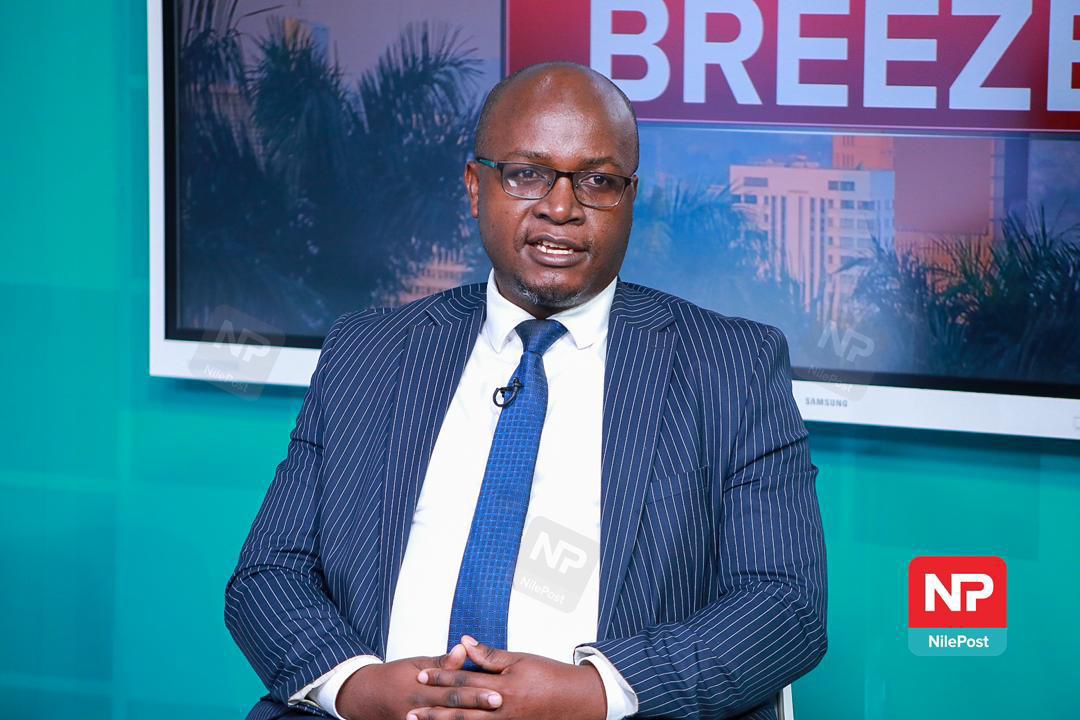
Political and business strategist Ronald Egesa says Uganda’s democratic institutions have steadily lost their authority, with Parliament reduced to a ceremonial body operating under overwhelming executive control.
Egesa argues that the prolonged consolidation of power in the presidency has stripped core democratic institutions including Parliament, the Judiciary and elections of their capacity to effect political change.
“Every key tenet of democracy as it should be has been demystified because of the long stay in power,” Egesa said, adding that elections can no longer be viewed as a credible avenue for changing government.
He questioned claims that the outgoing 11th Parliament’s legislative record amounted to meaningful progress, challenging supporters to point to laws that have significantly improved the lives of ordinary Ugandans.
“Give me three bills that critically changed the lives of Ugandans,” Egesa said, arguing that Parliament now passes laws without substantive national impact.
According to Egesa, the legislature has been “emasculated” and subordinated to the executive, with real decision-making power concentrated in the presidency.
“President Museveni is the Alpha and the Omega. What he wants to use Parliament for, he will use. What he doesn’t want, he will not use,” he said while appearing on a local radio station.
Egesa dismissed debates about the quality or independence of individual legislators, saying MPs operate within a system where outcomes are predetermined.
He cited reports that the ruling NRM’s Central Executive Committee had already endorsed candidates for Speaker and Deputy Speaker ahead of the swearing-in of the new Parliament as further evidence of executive interference.
“A Speaker and Deputy Speaker have effectively been imposed on Parliament before MPs even take oath,” Egesa said, calling it a breach of parliamentary autonomy.
He further described Uganda’s governance structure as having drifted away from republican principles, characterising it as a personalised system of rule.
“Uganda is no longer functioning as a republic. It operates like a monarchy centred on one individual,” he said.
Egesa pointed to the 2017 removal of presidential age limits as a critical turning point, noting that the deployment of security forces in Parliament underscored the role of coercion in constitutional change.
“When the Constitution needed to be amended, the military was brought into Parliament and the law was changed,” he said.
He concluded that Uganda’s political system should be assessed based on its current realities rather than democratic standards that, in his view, no longer apply.
“What the president wants goes. What he doesn’t want does not go. That is the system we live under today,” Egesa said.
