
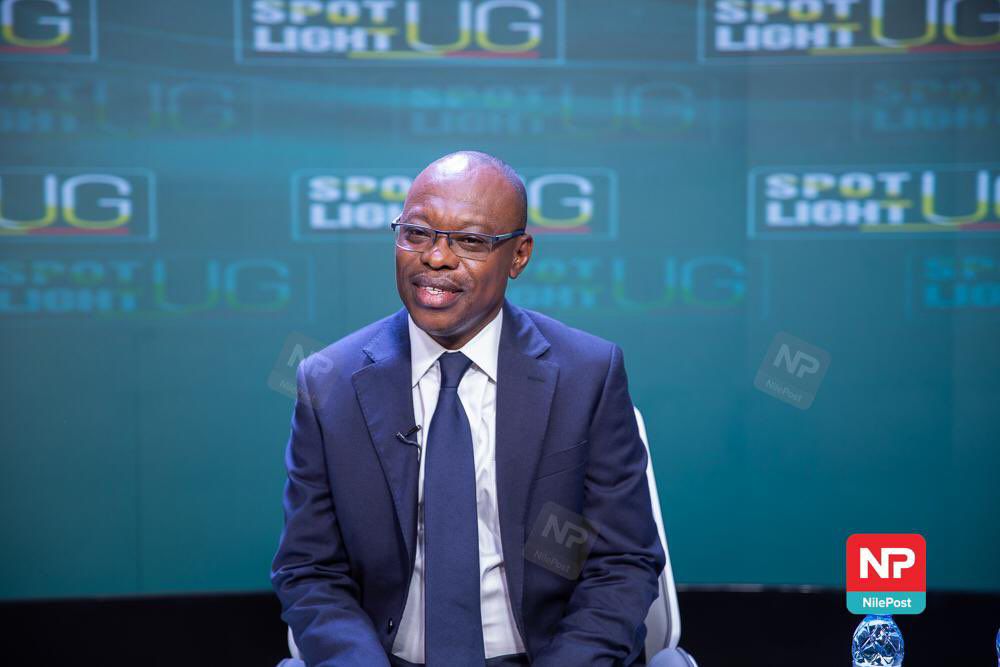
The Ministry of Justice and Constitutional Affairs has reaffirmed its commitment to ensuring justice for all Ugandans, revealing that the government has implemented 99 percent of the electoral reform recommendationsissued by court following the 2016 presidential election petition.
Speaking during Spotlight Uganda hosted by NBS Television under the theme “Justice for All: Access to Prosecution and Legal Reform,” the Director Legal and Advisory Services at the Ministry of Justice and Constitutional Affairs, John Bosco Suuza, outlined the Ministry’s mandate, achievements, and ongoing reforms aimed at strengthening the rule of law.
Suuza emphasized that it is the constitutional duty of the Ministry to ensure that both the Government of Uganda and the citizens at large receive adequate legal services.
“It is our responsibility to ensure that the Government of Uganda and Ugandans generally receive proper legal services,” he said.
Reflecting on the aftermath of the 2016 general elections, Suuza noted that the presidential election petition filed by Prime
Minister Emeritus Amama Mbabazi resulted in critical guidance from court, which in turn necessitated a series of electoral reforms.
“The court gave guidance on what needed to be done, and that required certain electoral reforms. We set to work, and I can confidently say that 99 percent of those recommendations were implemented,” he said.
Among the key reforms highlighted was the requirement for the Electoral Commission (EC) to share the national voters’ register with all candidates before elections, allowing candidates’ agents to cross-check the register during the voting exercise. This, Suuza explained, was one of several reviews undertaken following court recommendations.
Suuza further revealed the scale of legislative work undertaken by the Ministry, noting that it has reviewed, drafted, and advised on over 1,000 pieces of legislation.
“This includes 156 Acts of Parliament and 538 statutory instruments,” he said, underscoring the Ministry’s central role in shaping Uganda’s legal framework.
Clarifying the constitutional position of the Attorney General, Suuza explained that the office is uniquely established under the Constitution of Uganda.
“The Attorney General is the principal legal advisor of the government and represents the government in court whenever it is sued. It is the only ministerial position expressly provided for in the Constitution,” he said.
To enhance access to justice and improve government legal representation across the country, the Ministry has been establishing regional offices to ensure that the Attorney General is effectively represented in different parts of Uganda.
In addition, the Ministry continues to support access to justice initiatives by responding to requests from intending legal aid service providers, offering assistance where possible to expand legal services to underserved communities.
