
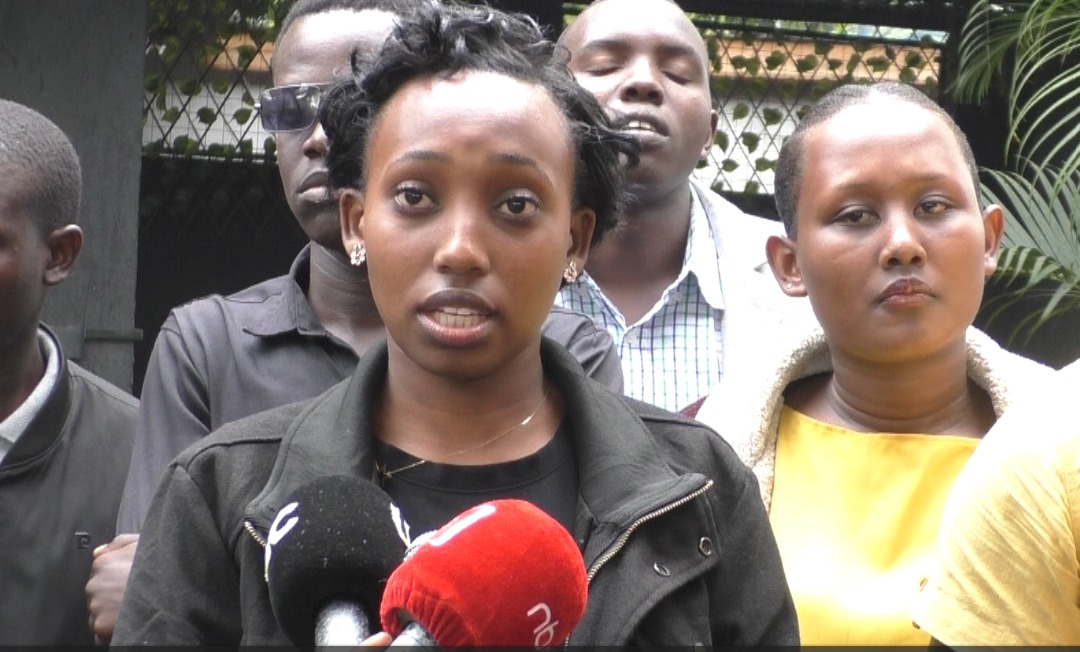
Disgruntled young leaders affiliated with the ruling National Resistance Movement (NRM) have accused the party of manipulating the recently concluded National Youth Council (NYC) elections, warning that they will support independent candidates if their grievances are not addressed.
The Lira District Youth Chairperson, Daniel Moro, said the elections were unfair and highly commercialised, favouring candidates from privileged backgrounds over those from humble households.
Addressing the media in Kampala, Moro said the NYC elections were marred by irregularities, repeated delays, and financial influence, undermining the democratic principles that the NRM claims to uphold.
“During the primary election, we realised that some candidates were predetermined. People from well-connected families and those linked to the Secretariat were favoured at the expense of others from humble backgrounds,” Moro said.
He added that the elections were postponed multiple times—from the originally scheduled date of September 26 to September 30—which increased both the cost and confusion for candidates, particularly those with limited financial means.
Moro also criticised the growing commercialisation of politics within the youth structures of the party, warning that it excludes capable young leaders who cannot afford to compete financially.
“Politics has become too commercialised. If you are a son or daughter from a poor family, you cannot participate in this democratic process. This trend is discouraging and contrary to the values of our party,” he noted.
He said he and other concerned youth had petitioned the NRM Secretariat to address these irregularities but had not received a response. Moro appealed to President Yoweri Museveni, the NRM National Chairman, to meet them and resolve their grievances.
“We call upon the National Chairman to give us a listening ear. Many young people are getting demoralised. When it is time for mobilisation, the party calls on the youth, but when the youth seek opportunities to lead, they are sidelined,” Moro said.
He warned that if their concerns are not addressed, they would consider supporting independent candidates who were unfairly left out of the election process.
“We plan to rally behind competent candidates who were excluded because of lack of finances or connections. If the leadership does not listen, we shall meet and decide our next course of action,” Moro cautioned.
Similarly, Grace Nuwahereza Beshekyesa, a representative of the Uganda National Students Association (UNSA) to the NYC, accused the NRM Electoral Commission of unfairly disqualifying her and other UNSA delegates from contesting in the elections.
Nuwahereza, who was vying for the position of Secretary for Student Affairs, said the decision to block her nomination was abrupt and lacked transparency, despite party guidelines allowing UNSA representatives to contest and vote.
“From time immemorial, UNSA representatives have been allowed to participate both as candidates and delegates who can vote. The NRM guidelines also clearly stated that the four UNSA representatives are eligible to contest,” she said.
She explained that she and her colleagues were initially cleared to collect nomination forms, but just two hours before the nomination deadline, their forms were rejected without any written explanation.
“We were told our nominations could not be accepted after the organizers received a call from the Electoral Commission instructing them not to allow us to contest. This was done without any formal communication or justification,” Nuwahereza added.
She described the incident as an injustice against young leaders who have remained loyal to the ruling party, urging the NRM Secretariat to respond to their petitions.
“We have officially written to the party seeking clarification, but to date, we have not received any response. This is unfair to us as young people who have worked hard to grow within the party,” she said.
The controversy underscores growing discontent among NRM youth members, who claim that internal elections are increasingly dominated by money, favouritism, and partisan influence, undermining meritocracy and the democratic process within the party.
Speaking to the media, other NRM youth aspirants echoed similar concerns, saying the elections were marred by favoritism, financial influence, and unfair disqualifications, leaving many young people frustrated and sidelined.
“People within the NRM Secretariat are fronting candidates of their own interests, injecting billions of shillings into these elections. As a result, the leaders we get are not the ones we deserve,” Isaac Suubi chairperson youth Jinja City .
They accused the Electoral Commission of partisanship and failing to respond to multiple petitions submitted by aggrieved youth leaders.
“We have written several petitions to the party, but our concerns have not been addressed. The persons in charge always delay and play us around. That is why we are speaking out through the media,” said Suubi.
He called on President Museveni to intervene and convene a reconciliation meeting, warning that failure to act would lead to the youth refusing to vote for the party in upcoming elections.
“We want to send a very strong message that if our concerns are not listened to, we will not vote for the NRM this time around,” Suubi said.
He also criticised the undue influence of the national treasurer and other party stakeholders in determining candidates, saying the process is increasingly commercialised and exclusionary for young leaders without financial backing.
