
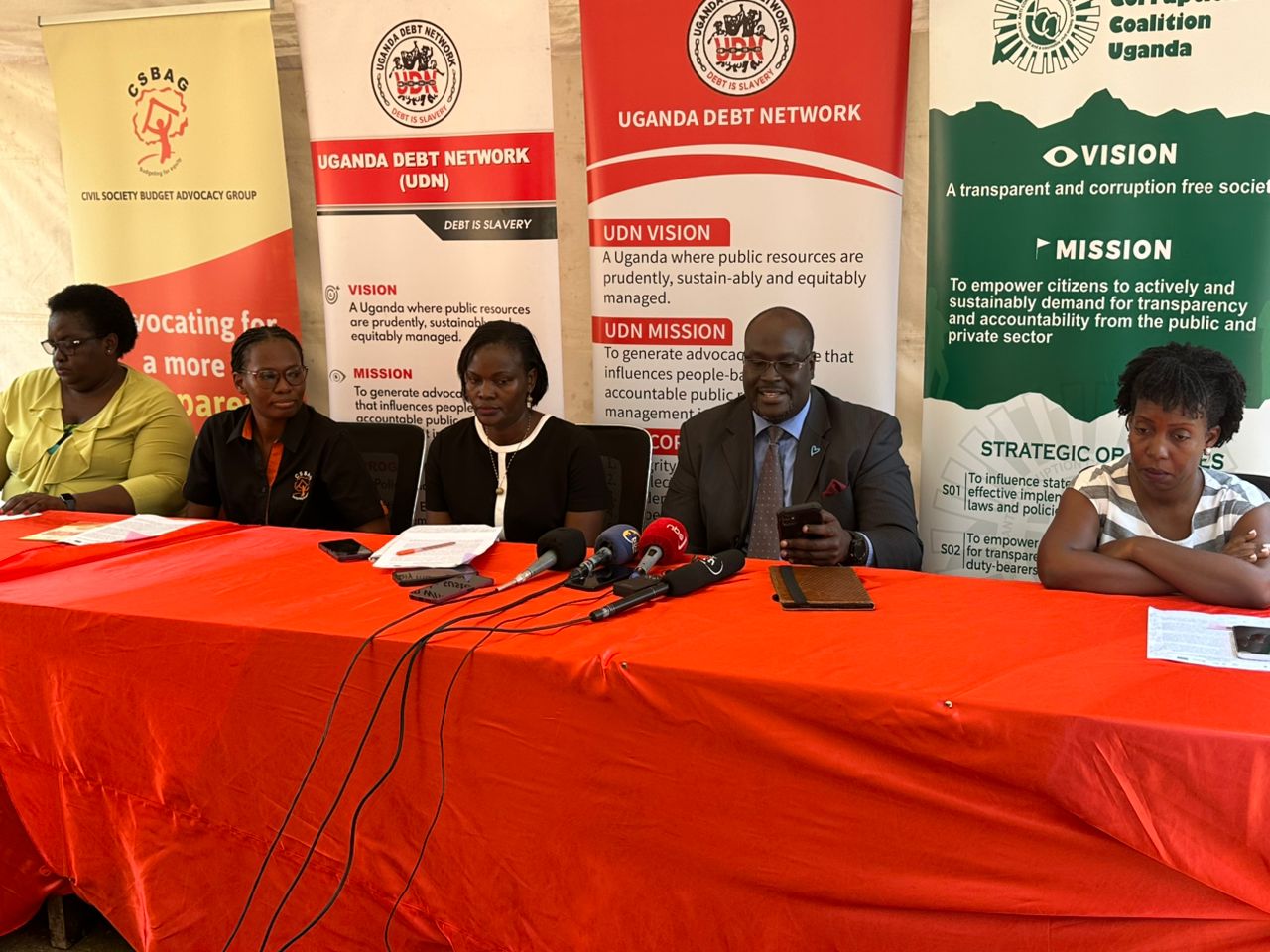
Civil society organisations (CSOs) have raised alarms that Uganda’s escalating public debt and government bailouts of state-owned enterprises (SOEs) are undermining funding for children’s services, despite reforms aimed at improving education and welfare.
In a joint press statement, Esther Mutumba, Program Manager at Uganda Debt Network (UDN), commended the government for achievements such as adopting the school feeding policy, increasing capitation grants for universal education, and efforts to curb child labor.
However, she warned that budget priorities for the 2026/27 financial year threaten to reverse these gains.
“Uganda’s total public debt stock stood at Shs 116.2 trillion by June 2025, equivalent to 51.3 percent of GDP. Rising liabilities from state-owned enterprises and contingent obligations are putting severe strain on local government financing for child-focused sectors,” Mutumba said.
As of June 2024, loan guarantees amounted to USD 220.1 million, while SOE liabilities surged to Shs 19.7 trillion about 10 percent of GDP. Of this, 54 percent were non-debt obligations, with the remaining 46 percent directly linked to debt.
“These financial obligations have redirected crucial national resources toward bailouts and debt servicing, significantly reducing funds available for local governments. This results in delayed disbursements, stalled development projects, and chronic underfunding of programs serving children,” Mutumba emphasized.
The CSOs also highlighted a persistent issue: inadequate funding for maintaining medical equipment. According to the Auditor General’s 2024 report, the Health Infrastructure Department required Shs 20 billion for equipment maintenance but received only Shs 1.8 billion in the 2025/26 budget.
“This shortfall has left the Ministry of Health unable to maintain critical equipment such as CT scanners, MRI machines, and ICU facilities. The risk is a weakened healthcare system that undermines children’s access to safe, reliable services,” Mutumba noted.
Further concerns were raised about resource imbalances within the Ministry of Gender, Labour and Social Development. The youth and children’s department received just 25 percent of its program budget in 2025/26, compared to 74 percent allocated to disability and elderly services.
“While we commend the 61 percent increase in recurrent allocations for youth and children between FY2024/25 and FY2025/26, the imbalance remains glaring and continues to disadvantage children,” the statement said.
CSOs called for a sustainable debt management strategy that reduces dependence on bailouts and safeguards allocations to local governments.
They urged the government to commit at least 15–20 percent of the national budget to education, aligning with global standards, and to ring-fence funds for critical services such as medical equipment maintenance.
They also stressed the need for innovative financing, including expanding the domestic revenue base by strengthening the Uganda Revenue Authority’s capacity to curb tax evasion.
“As we head into FY2026/27, reprioritising children in fiscal policy is not optional—it is urgent. Without it, Uganda risks building a weak human capital base that undermines long-term development,” the CSOs warned.
Damon Wamara, Executive Director of the Uganda Child Rights NGO Network (UCRNN), urged the government to urgently reduce public debt and redirect resources towards child-centered services, warning that ballooning debt repayments are crippling local government budgets tasked with protecting children.
“The current debt burden leaves probation offices and other frontline child protection services underfunded, undermining efforts to safeguard children’s rights at the community level,” Wamara said.
He also called on the government to accelerate the national school feeding program, describing it as the most effective tool for keeping children, especially in rural areas and Karamoja, in classrooms.
“Food is the greatest factor in retaining and enrolling children in rural Uganda. For many, school meals are their only chance at a balanced diet,” Wamara added, noting that schools with feeding programs consistently record the highest retention rates.On the ongoing teachers’ strike, Wamara warned that the absence of teachers in public schools has left children vulnerable to abuse, neglect and exploitation.
“With schools closed, more children are exposed to sexual violence, trafficking and other violations. Teachers must be recruited, motivated and facilitated to return to class because schools are also where children access food, health monitoring and protection,” he said.
Wamara called for increased financing to education and child protection, stressing that without addressing teacher welfare and school feeding, Uganda risks failing to meet its goal of universal quality education.
