
Finance Minister Henry Musasizi has unveiled a far-reaching economic agenda aimed at accelerating Uganda’s growth trajectory towards what he described as a structural shift to a $500 billion economy.
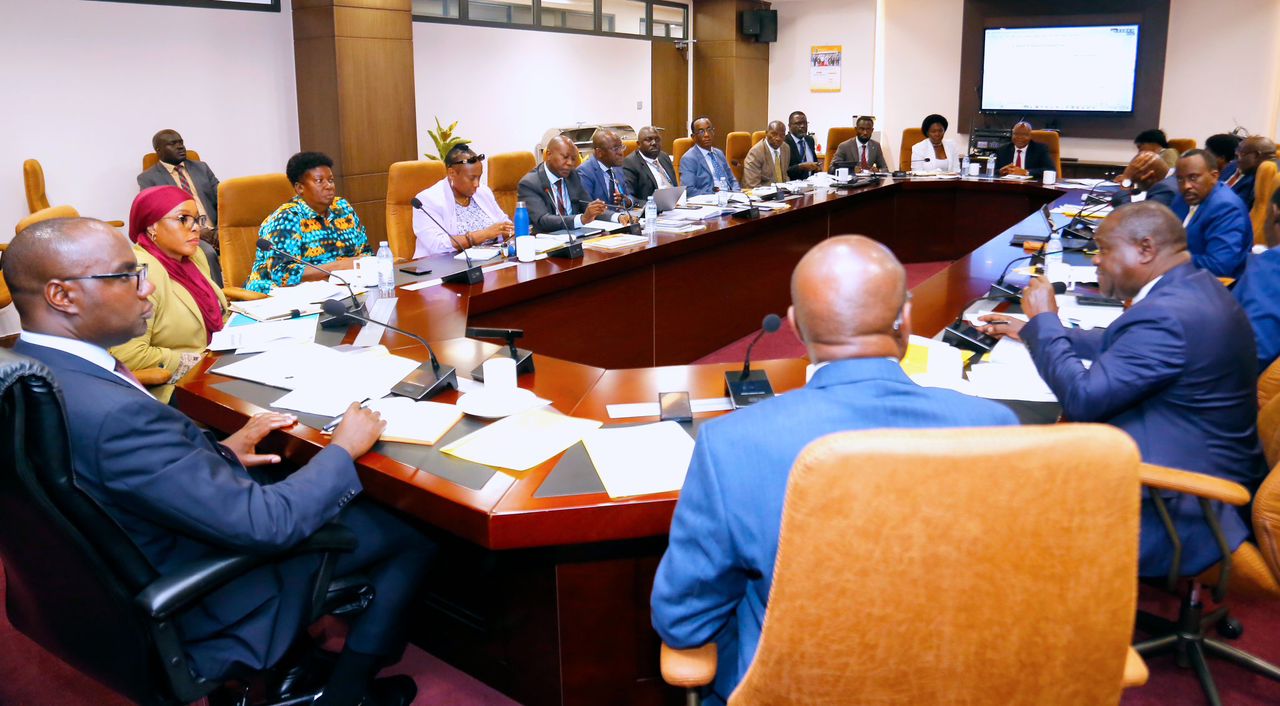
Speaking during his first top management meeting with senior leadership of the Ministry of Finance, Planning and Economic Development, Musasizi said his tenure would focus on transforming the country’s economic performance through a combination of fiscal tightening, revenue expansion, and strategic investment planning.
He framed the agenda as a move away from incremental growth towards what he called “exponential economic take-off,” anchored on five key policy priorities.
At the centre of the plan is an ambitious long-term target of expanding Uganda’s economy to $500 billion. Musasizi said the government will pursue what he termed a “tenfold growth strategy,” designed to significantly scale up production, investment, and national output over time.
On fiscal policy, the Minister signalled a stricter approach to public expenditure, saying government would shift away from spending as an end in itself towards a stronger focus on measurable results and accountability. He emphasised the need for tighter budget discipline, more stringent procurement processes, and enhanced value-for-money audits across public programmes.
In what he described as a key pillar of reform, Musasizi also announced plans to intensify domestic revenue mobilisation in order to reduce dependence on external borrowing.
He said the government would implement the second phase of its revenue mobilisation strategy, with the goal of raising the tax-to-GDP ratio to at least 20 percent.
The Minister further underscored the importance of linking economic growth to household welfare, reaffirming government’s commitment to the wealth creation agenda.
He said priority would be given to supporting the commercialisation of smallholder enterprises to ensure that economic expansion translates into improved incomes and broader participation in the money economy.
On the oil and gas sector, Musasizi stressed the need for strong institutional safeguards as Uganda moves closer to production. He warned against overreliance on resource revenues and said oil earnings would be managed through “bulletproof institutional guardrails” to prevent mismanagement and ensure long-term national benefit.
He added that oil revenues would primarily be directed towards infrastructure development, while cautioning that Uganda’s goal is to become an oil-producing country without becoming oil-dependent.
Together, the five-pronged strategy signals a more assertive fiscal and economic direction focused on scale, efficiency, and structural transformation.
If implemented effectively, the plan would represent one of the most ambitious economic reform agendas in Uganda’s recent policy history.
