
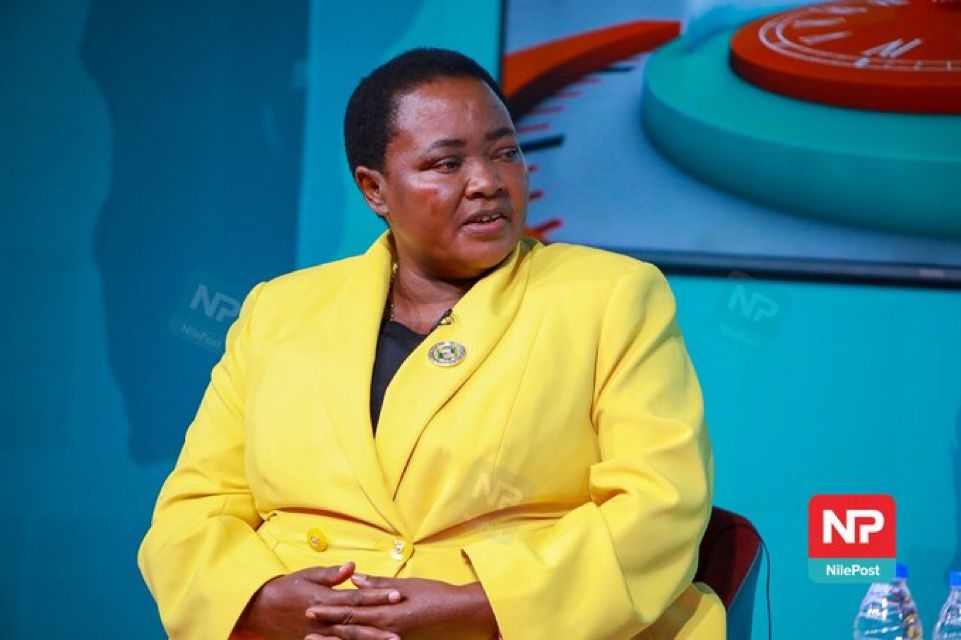
Prime Minister Robinah Nabbanja has shown accountability, transparency, and citizen-centered governance as the guiding principles for Uganda’s political administrators, citing unprecedented legislative and policy achievements during her tenure.
She says her leadership has been marked by historic productivity in Parliament.
“During my term as Prime Minister, we have passed 132 bills, an unprecedented achievement in Uganda’s history. We have answered 1,194 parliamentary questions and provided 920 responses through ministers,” she noted.
While acknowledging that the volume of legislation might appear overwhelming, Nabbanja insisted it is a reflection of Uganda’s democratic commitment to serve its citizens.
Drawing on her political journey from district council to the nation’s highest administrative office, the Nabbanja said her grassroots experience equipped her to deliver results.
She addressed infrastructure concerns, attributing the delay on the Mityana–Mubende road to cash flow challenges, but confirmed that payments had now been processed to resume works.
On poverty alleviation, Nabbanja praised the Parish Development Model (PDM) for reducing the poverty rate from 39% to 33%.
“By all standards, the PDM has been widely accepted. People are seeing tangible progress,” she said.
She also highlighted Uganda’s move toward local pharmaceutical production, including vaccines and pesticides made from locally sourced raw materials, as part of efforts to boost the economy and empower farmers.
Addressing Uganda’s regional position, Nabbanja said progress was sometimes slowed by the need for coordination with neighboring countries, given Uganda’s landlocked status.
“If we were not landlocked, we would have already achieved what Kenya and Tanzania have accomplished,” she remarked, stressing that interconnectivity remained a priority.
Turning to party politics, Nabbanja defended the NRM as a popular, democratic mass party characterized by intense internal competition. She acknowledged occasional disruptions during primaries but maintained that the party remains committed to free and fair elections.
“Once you secure the NRM flag, it’s almost a guaranteed win,” she said, adding that the party’s openness had even allowed figures like Bobi Wine to contest for leadership.
On political rivalries, she declined to comment on tensions between Speaker Anita Among and former Speaker Rebecca Kadaga, saying, “They are both mature individuals, best to ask them directly. I focus on the responsibilities entrusted to me by my boss.”
As for the opposition’s grievances, Nabbanja was blunt, “If they believe they are being suppressed by this regime, they are free to leave.”
