

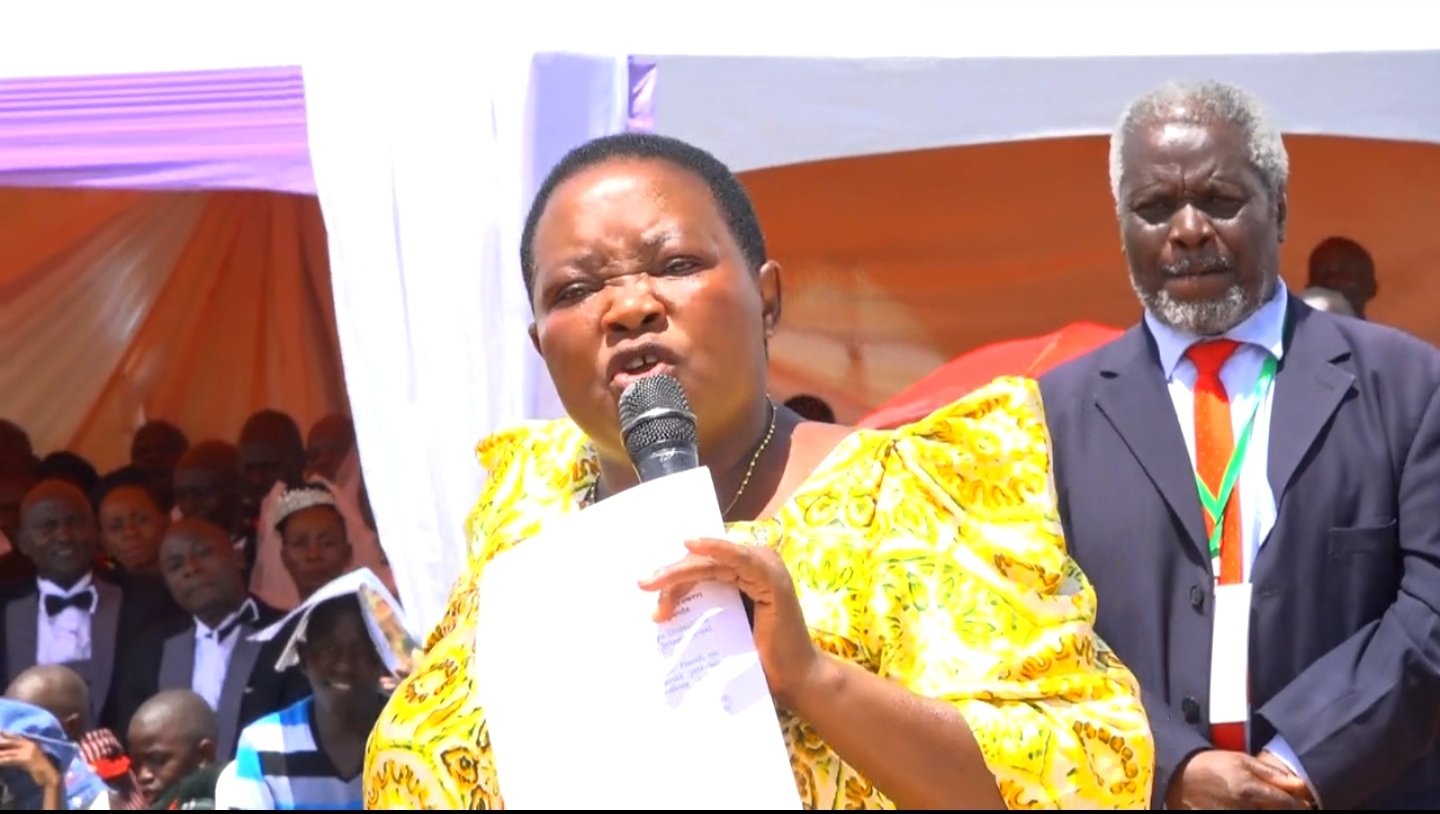
The Prime Minister of Uganda, Robinah Nabbanja, has defended the National Resistance Movement (NRM) as a genuinely democratic party, emphasizing that unlike other political organizations, it offers equal opportunities for members to contest positions and participate in decision-making processes.
Speaking during NBS Barometer on Tuesday, Nabbanja highlighted that the NRM is a mass party that prides itself on inclusivity and democracy.
According to Nabbanja, this approach is why NRM elections remain highly competitive and attract individuals from diverse backgrounds, rather than being a group of handpicked members, as in some other parties.
“The NRM is a mass party, unlike others that meet in a single room. We practice democracy, and our members are not handpicked as in some other parties. That’s why we are so competitive,” Nabbanja said.
Her remarks come amid recognition that the ruling party’s unique structure encourages internal competition as a key driver of growth and political strength.
Nabbanja stressed that the NRM allows people from all corners of the country to express interest in various roles, making it a truly representative political entity.
“One of the key strengths of the NRM is that we give our voters an opportunity to choose who can hold the NRM card. Unlike other parties, which handpick their candidates, we provide a platform where individuals, regardless of their background or status, can step forward and be chosen by the people,” she stated.
In contrast to other parties where leadership positions may be decided by a small group of elites, the NRM’s grassroots approach allows members and voters at all levels to shape the party’s direction and leadership.
Nabbanja emphasized that this democratic approach is not just theoretical but a core practice that sets the NRM apart.
“We [the NRM Executive] do not handpick our flag bearers; we let the people decide. That is why we have so many competitive elections within the party, as it allows for fresh ideas and strong leaders to emerge,” she noted.
While internal competitiveness can sometimes create tension, Nabbanja framed it as a healthy and necessary aspect of the party’s functioning.
She argued that competition reflects the party’s openness to a wide range of individuals, from grassroots activists to seasoned political figures.
“Competition within the NRM is a sign of a thriving democratic process. It means that we are allowing for the best ideas and most capable leaders to rise to the top,” Nabbanja said.