

Private school owners in Uganda have been encouraged to embrace the government’s newly introduced “Hands-On Skilling” curriculum, designed to equip learners with practical skills and foster self-reliance.
The call was made by Jossy Busiku Wanemba, Chairperson of the Nakawa–Kampala division branch of the National Private Educational Institutions Association (NAPEA), during a recent visit to the Luzira Kindergarten Centre and Progressive Junior School.
The new curriculum, spearheaded by the Ministry of Education, aims to go beyond traditional academic learning by promoting hands-on skills development.
Under this approach, students engage actively in both practical and theoretical tasks, allowing them to apply what they learn in real-world scenarios.
The ultimate goal is to empower students with the tools they need to pursue personal projects and career paths that enhance their future livelihoods.
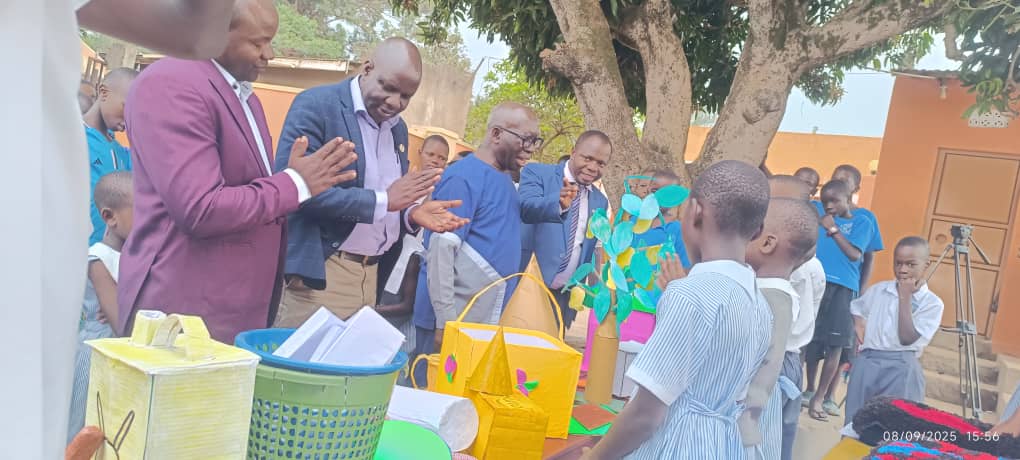
The importance of this new direction was highlighted during a visit to Luzira Kindergarten Centre and Progressive Junior School, where pupils showcased various hands-on projects.
The exhibition included creative projects and innovations that demonstrated the students’ skills in a variety of fields, from arts and crafts to basic engineering and sustainable agriculture.
Wanemba, in his remarks, stressed the importance of private schools integrating this hands-on learning approach into their curriculum to ensure that students are equipped with both practical skills and theoretical knowledge.
"It is essential for schools to prioritize this model to remain relevant in today’s fast-evolving job market," he noted. "If schools neglect this, they risk leaving students unprepared for the future."
Dr. Tonny Mukasa Lusambu, a retired Commissioner in the Ministry of Education, lauded the hands-on projects exhibited by the students, calling them an invaluable asset in preparing young people for future challenges.
"This curriculum is a bright opportunity for learners. It not only prepares them for academic success but also makes them capable of standing on their own feet after school," Dr. Lusambu remarked, acknowledging the crucial role of both parents and teachers in ensuring the program’s success.
At the heart of the exhibition, Nnalongo Justine Busiku, the head teacher of Luzira Kindergarten Centre and Progressive Junior School, emphasized that the primary aim of such programs is to combine both the intellectual and physical aspects of learning.
"We believe that effective education involves engaging both the heart and the hands. By encouraging our pupils to develop practical skills, we are preparing them to be self-reliant and innovative in their futures," Busiku explained.
The hands-on curriculum has also gained significant approval from parents. Many interviewed during the exhibition expressed their satisfaction with the new approach, noting how their children have benefited from the practical learning opportunities.
"I see a marked difference in my child’s ability to think critically and solve problems creatively," said one parent. "This curriculum provides them with the skills they need to excel in a fast-changing world."
Other parents urged their peers to support the initiative and encourage their children to actively participate in these hands-on programs.
“As a parent, I encourage my children to get involved in every activity because it not only makes learning fun but also develops practical skills that will benefit them later in life,” another parent added.
The government’s “Hands-On Skilling” curriculum represents a significant shift in educational philosophy, one that moves beyond rote memorization and passive learning to an approach that nurtures critical thinking, creativity, and independence.
With private schools like Luzira Kindergarten Centre and Progressive Junior School leading the way, the hope is that more institutions will follow suit and invest in their students' future readiness.
As the education system continues to evolve, this curriculum holds the potential to transform the learning experience for students, giving them the opportunity not only to excel academically but also to acquire the hands-on skills they need to thrive in the world beyond the classroom.