
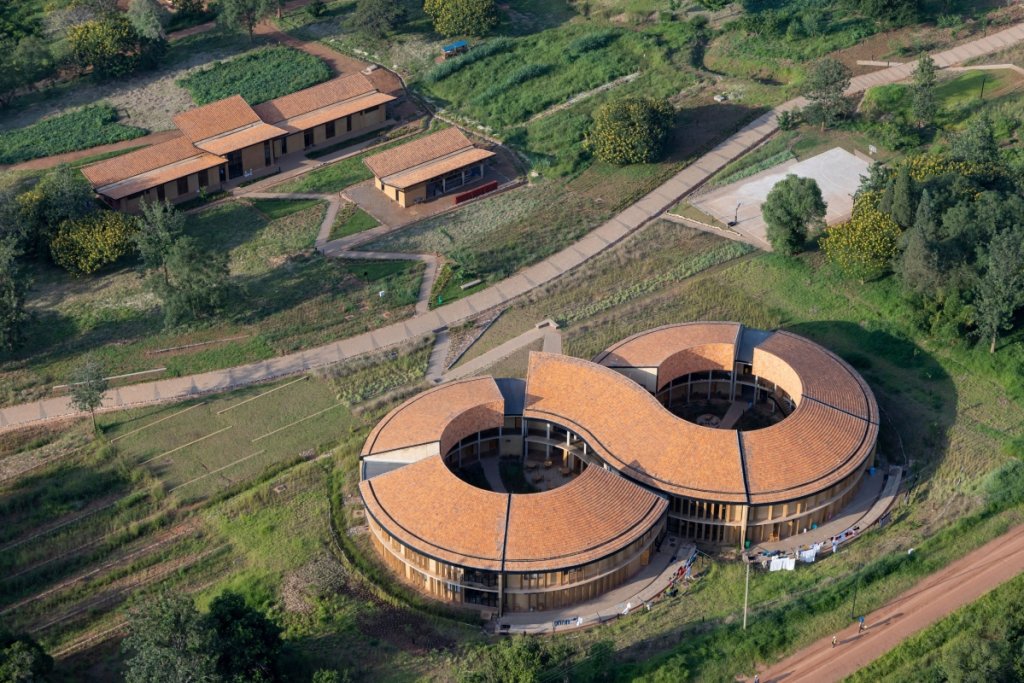
The Rwanda Institute for Conservation Agriculture (RICA) has been awarded the 2025 Veronica Rudge Green Prize in Urban Design by Harvard University, in recognition of its groundbreaking campus design that blends ecological sustainability with community-centred learning.
The award, considered one of the most prestigious in the field of urban planning and design, was announced by the Harvard Graduate School of Design (GSD) and marks the first time an African project has received the honour.
RICA, located in Rwanda’s Bugesera District, was designed by MASS Design Group, a Kigali- and Boston-based firm known for its commitment to socially responsive architecture.
The campus sits on 1,300 hectares of land and includes academic, residential, agricultural, and food processing facilities arranged in a layout inspired by Rwanda’s agrarian traditions.
The design emphasizes regenerative systems, integrating off-grid renewable energy, passive cooling, closed-loop sanitation, and stormwater management.
All infrastructure supports the institute’s mission to educate a new generation of agricultural leaders equipped to advance food security, environmental sustainability, and rural livelihoods.
Harvard’s award jury praised RICA as a rare example of architecture and planning that is deeply rooted in place, yet visionary in ambition.
In their citation, the jurors described the campus as “an urban landscape of learning—rooted in community, shaped by climate responsibility, and guided by a holistic view of health for people, animals, and ecosystems.”
The design was commended for its use of locally sourced materials, including stone, timber, and compressed earth blocks, which significantly reduce the project’s carbon footprint. According to MASS, the campus is expected to be carbon positive by 2044.
More than 90 percent of the construction workforce was locally hired, and 96 percent of building materials were procured within Rwanda, underscoring the project’s economic and social investment in the surrounding communities.
The master plan encourages interaction through its central circulation spine, which connects academic buildings to farms, dormitories, and gathering spaces, reinforcing the institute’s hands-on learning approach.
The Veronica Rudge Green Prize is awarded every two years to projects that advance the public realm and improve urban life through design.
Previous winners include the High Line in New York City, the Medellín MetroCable in Colombia, and the Cheonggyecheon Stream restoration in Seoul.
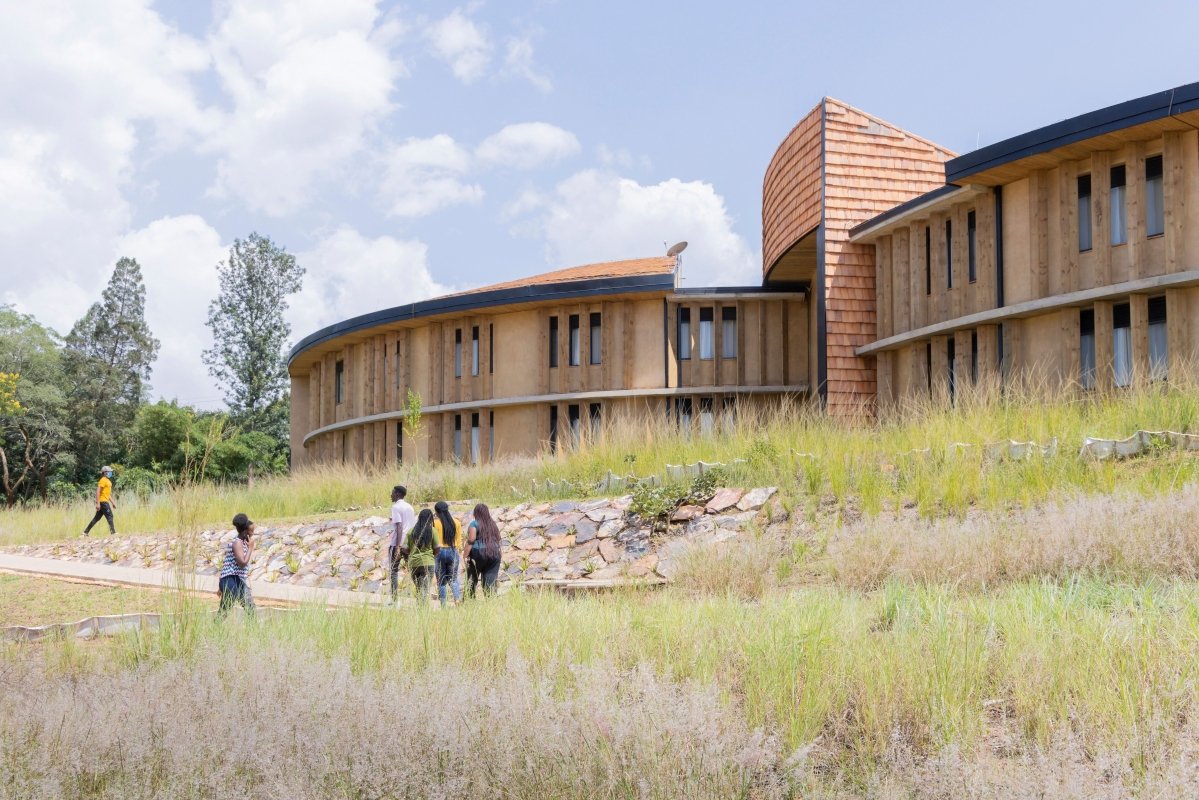
RICA joins this distinguished list as a model of rural development that combines infrastructure, education, and ecology in a coherent and impactful way.
RICA was established through a partnership between the Government of Rwanda, the Howard G. Buffett Foundation, and other stakeholders.
Its academic programme integrates conservation agriculture, livestock systems, entrepreneurship, and environmental resource management.
By aligning its pedagogy with its physical environment, the institute aims to equip students not only with knowledge but with the tools to implement sustainable solutions across the country and the region.
MASS Design Group has received international acclaim for its work in Africa, the United States, and Latin America.
The firm’s projects include the Butaro District Hospital in Rwanda, the National Memorial for Peace and Justice in Alabama, and healthcare and educational facilities in Haiti and Liberia.
Their design for RICA continues their mission to create architecture that serves both people and the planet.
The recognition by Harvard signals growing global interest in campus models that go beyond academic function to embody environmental and social purpose.
As the world grapples with climate change, food insecurity, and resource scarcity, the Rwanda Institute for Conservation Agriculture stands as a timely and tangible example of how education, design, and sustainability can be meaningfully intertwined.
